
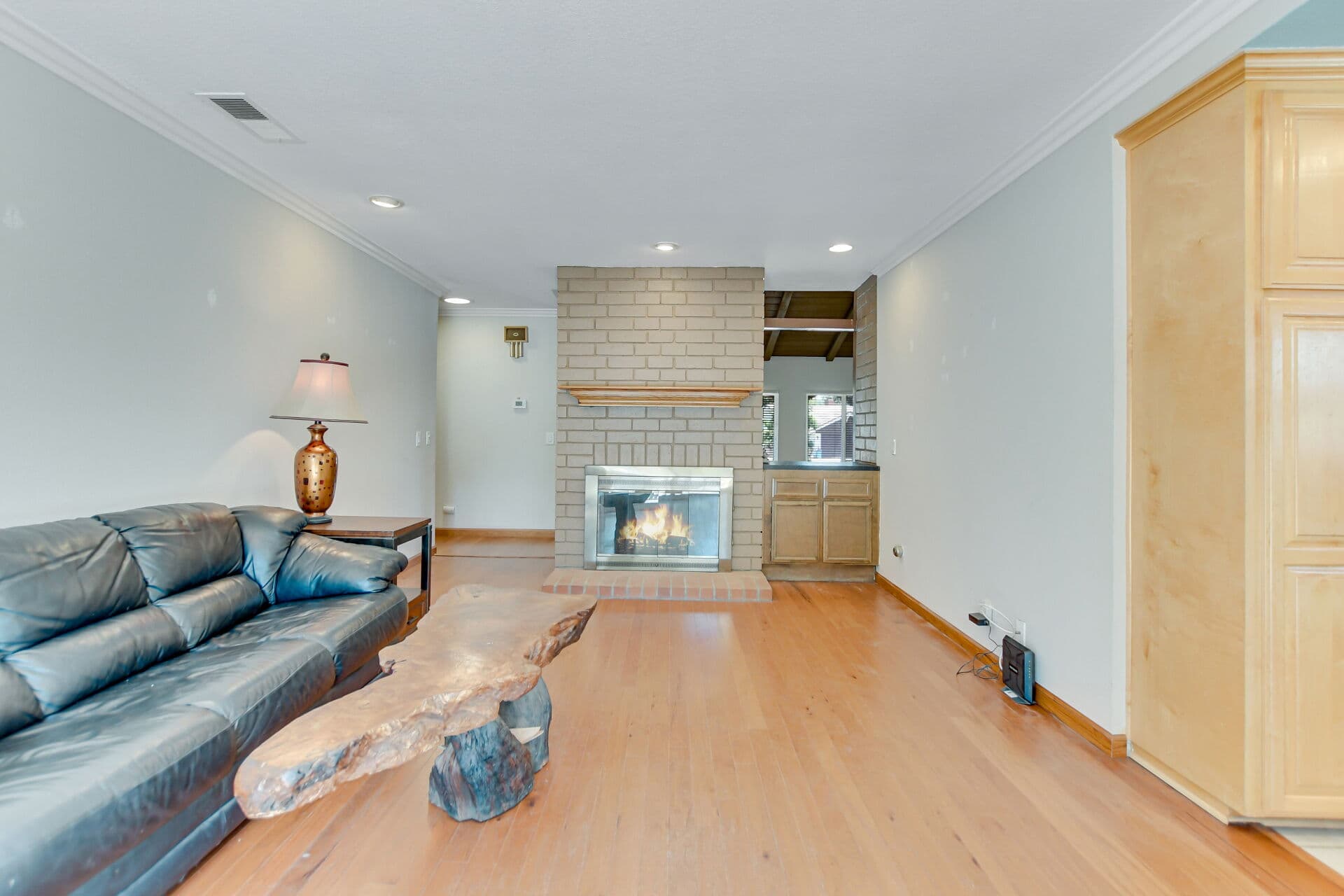
Older attached communities are frequently the most appealing ones to walk through. Mature trees, generous setbacks, courtyards that were designed rather than squeezed in, unit plans with rooms rather than zones, and locations that were chosen when there was still a choice. They also carry a building's worth of ageing components, and the difference between a good older complex and an expensive one is almost never visible on a tour. This article covers what the older stock genuinely offers, where the risk actually sits, and the order to investigate it in. It deepens the condo and townhome guide.
What age gives you
SITE AND TREES. Older developments were commonly built at lower density with more open ground, which is why their landscaping reads as a park rather than as a border. Mature canopy is not something a newer property can buy; it is something it has to wait for.
SPACE AND PLAN. Older units often have larger secondary bedrooms, real hallways, separate dining space and more storage than a compact modern plan of the same stated size. What you lose is open sightlines and modern fittings — both of which are renovation problems rather than structural ones.
CONSTRUCTION. Wood-framed buildings of older vintage are frequently well built and highly serviceable, which is precisely why so many are still in use. Age by itself is not a defect.
LOCATION. Older attached communities tend to sit where the town was already established, which usually means shorter distances to everything — the walkability the townhome living guide treats as the central reason attached housing suits certain lives.
Where the risk actually sits
Not in age. In DEFERRED MAINTENANCE, which is a different thing and is measurable.
THE MAJOR COMPONENT INVENTORY. Roofs, exterior paint and siding, plumbing supply and waste lines, electrical service and panels, decks, balconies, stairs and railings, paving and drainage, elevators and gates, pool and boiler equipment. Every one of them has a service life. In an older complex, several will be near the end of theirs simultaneously, and the only question that matters is whether the community has planned and funded for that or has been postponing it.
PLUMBING is the most common expensive surprise, because original supply piping in older buildings eventually reaches a point where leaks stop being incidents and start being a pattern. Ask directly whether the property has been repiped, in whole or in part, and when.
ELECTRICAL is the most common constraint on how you live. Older service and panels limit what you can add — cooling, a heat pump, an induction range, vehicle charging — and expanding capacity can involve common-area work and approval, as the utilities and metering guide explains.
EXTERIOR ELEVATED ELEMENTS. Balconies, decks, walkways and stairs supported by wood framing are a well-known failure point, and California requires periodic inspection of certain such elements in multifamily buildings. Treat the requirement as a concept, verify the current statute, and ask the association directly whether the inspections have been performed and what they found.
MATERIALS OF THE ERA. Buildings of certain vintages may contain materials that require specialised handling when disturbed during renovation. This is a renovation-cost and process issue rather than a reason to avoid a building, and it is worth raising with a contractor before planning any work that opens walls, floors or ceilings.
The diligence sequence
Do these in order, because each one tells you what to ask in the next.
FIRST, WALK THE PROPERTY as an owner. Look at roof edges and gutters, the base of exterior walls, drainage at low points, the undersides and railings of decks and stairs, the condition of paving, and any part of the site that looks patched rather than repaired. You are collecting questions, not conclusions.
SECOND, READ THE RESERVE STUDY as a condition survey. It lists the major components, their remaining life and the funding plan. Components already past their expected life are the list of conversations to have.
THIRD, READ THE MINUTES over a meaningful run of meetings. Water intrusion, roof discussions, plumbing failures, deck repairs, pest findings, bids obtained and deferred, and any assessment discussion all show up here in plain language first.
FOURTH, ASK FOR THE REPAIR HISTORY. A community that has repiped, re-roofed, rebuilt decks or upgraded electrical has converted future cost into past cost, and that is worth more than a pristine lobby.
FIFTH, INSPECT YOUR UNIT and add the specialty inspections the walk and the documents suggested. The scope and its limits are covered in the condo inspection guide, and older buildings are exactly where the gap between the unit report and the building's condition is widest.
What age changes about financing and insurance
Two downstream effects deserve early attention rather than late discovery. Lenders reviewing a condominium look at the association as well as the borrower, and a community with thin funding, significant deferred work or active litigation can narrow the loan options for every unit in it — including the one you will eventually be selling. The warrantability guide covers what that review examines.
Insurance likewise reacts to building age, construction, roof condition and claims history, on both the association's master policy and your own. Quote early rather than at the end, with the association's documents in hand, because the master policy's terms decide where your coverage has to begin — the seam the HO-6 guide explains.
Then weigh the whole thing honestly. An older complex that has done its work is often the better buy: the character is real, the components are new, and the cost of getting there was paid by someone else. An older complex that has postponed its work is a purchase with an invoice attached, and the invoice arrives on a schedule you do not control.
Anthony Grynchal has been licensed in California since November 2009, and his rule for older complexes is to buy the maintenance record rather than the vintage. Charm is visible on the tour; the expensive part is in the paperwork. This is general information, not legal or engineering advice; commission qualified professionals for a specific property.
Frequently asked questions
Is buying an older condo complex risky?
Age itself is not the risk — deferred maintenance is, and it is measurable. Read the reserve study, the meeting minutes and the repair history to see whether the major components have been planned and funded or postponed. A complex that has already repiped and re-roofed has converted future cost into past cost.
What should I ask about plumbing in an older complex?
Ask directly whether the property has been repiped, in whole or in part, and when. Original supply piping in older buildings eventually reaches a point where leaks become a pattern rather than incidents, and repiping is one of the larger common-area projects an association undertakes.
Do older condo buildings have balcony inspection requirements?
California requires periodic inspection of certain exterior elevated elements — balconies, decks, walkways and stairs supported by wood framing — in multifamily buildings. Verify the current statute and ask the association whether the inspections have been performed and what they found.
Does a condo's age affect financing and insurance?
Indirectly, through the association. Lenders review the association's finances, reserves and litigation, and deferred work can narrow loan options for every unit. Insurers respond to building age, construction, roof condition and claims history on both the master policy and your own, so quote early with the documents in hand.

Written by
Anthony Grynchal
Anthony Grynchal is a California real estate professional with eXp Realty, licensed since November 2009 (California DRE# 01873626), and the Designated Local Expert™ for Claremont — where he has lived for more than 33 years.
More about AnthonyPublished · Updated