A house on the market has to be seen. That is straightforward when one household lives there and everyone agrees. It is more complicated when a marriage is ending, when one person may still be living in the rooms buyers are walking through, and when the two owners are no longer coordinating their days with each other.
None of that makes a good sale impossible. It makes the logistics worth planning instead of improvising. What follows is the property-side view only. Whether a sale should happen, on what timeline, and on whose terms is a legal matter for counsel and, where relevant, for the court. I want to say plainly that I hold no position on which spouse should get what. My job on a divorce listing is to run an even-handed process, give both parties identical information at the same moment, and let the decisions sit where they belong.
Access is the first real decision
Showing access sounds like a scheduling detail and is actually the item that determines how the listing performs. Buyers see what they can get into. A home that is genuinely available gets seen; a home that is hard to reach gets skipped, and the market rarely announces that it skipped you.
The workable arrangements in an occupied divorce listing tend to be one of these.
- Fixed windows. Agreed blocks of hours on set days when the home is reliably available and the occupant is reliably elsewhere.
- Notice-based access. A defined notice period with a standing understanding that reasonable requests are accommodated.
- Open access. Practical when the home is empty, and simplest of all.
Fixed windows are usually kindest to an occupant, because uncertainty is the part that wears people down. Knowing that Tuesday afternoon and Saturday morning belong to the listing, and the rest of the week does not, is far easier to live with than a phone that might ring at any moment.
The corresponding honesty is that narrow windows cost showings. That is not an argument, it is a trade, and both parties should hear it stated the same way at the same time. When one spouse is living in the property, the specific pressures are covered in When One Spouse Still Lives in the Claremont House.
Staging when a household is dividing
Ordinary staging advice assumes a settled household that can edit itself calmly. A dividing household often cannot, and the standard checklist can land badly.
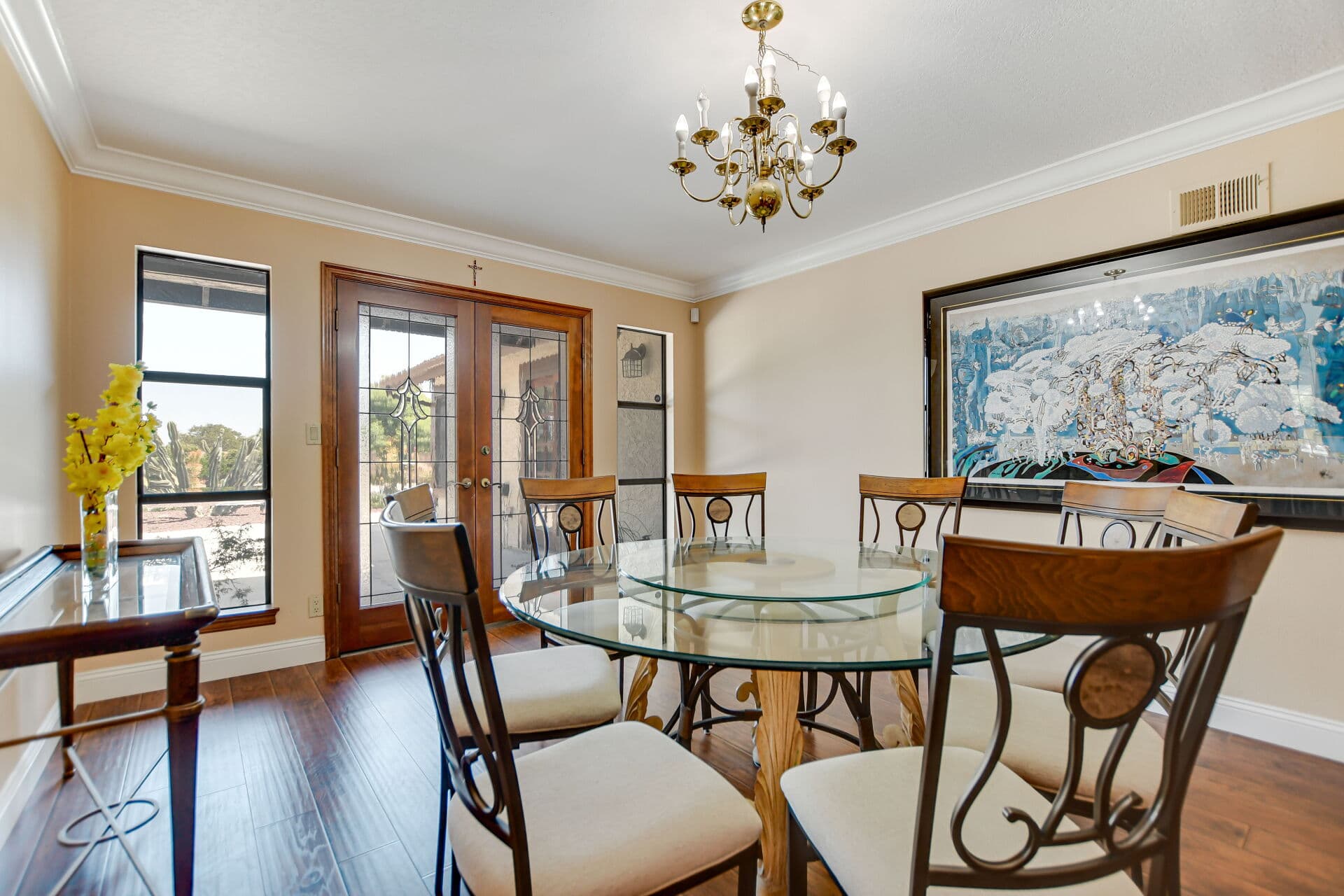
Some of it still applies without complication. Clean, bright, uncluttered, and neutral photographs well and shows well, in Claremont as everywhere. Fresh paint, decent light bulbs, clear counters, and a tidy yard are cheap and reliable.
The harder part is the personal layer. Family photographs, children's artwork, a lifetime of accumulated things that belong to two people who are separating them. Removing that material is standard staging practice and also, in this situation, an emotional task and occasionally a contested one. There is a separate piece on that side of it, and the point I would make here is procedural: decide who does the sorting, when, and where the results go, before anyone opens a cupboard.
Where furniture and belongings are themselves part of what is being divided, do not let staging become an accidental division. Moving a table into storage should not be the moment anyone loses track of who owns the table. Inventory first, stage second.
Children, pets, and the parts nobody plans for
Showings displace people. In a family home mid-divorce, that displacement usually lands on whoever is there with the children.
The practical fixes are unglamorous and effective. Schedule around school hours where possible. Cluster showings so the family leaves once rather than four times. Keep a bin or a bag ready so the last ten minutes of tidying is quick rather than frantic. Arrange for pets to be out of the house rather than shut in a room, which shows badly and is hard on the animal.
None of this is unique to divorce, but the tolerance for friction is lower, so the systems have to be better.
Privacy at the door
Buyers and their agents are curious. Someone will notice a half-empty closet, or a spare room set up as a bedroom, and ask about it. Neighbours walk past. In a town the size of Claremont, word travels without anybody intending it to.
The rule I follow, and recommend, is that the reason for the sale is not marketing information. The property has features and the seller has a timeline. Beyond that, nothing gets volunteered. This is not concealment of anything a buyer is entitled to know, since disclosure obligations run to the condition of the property and are met in full and in writing. It is simply that a family's circumstances are not part of the listing.
I will also not disclose one party's position to the other party's advantage. Both get the same facts on the same schedule.
Feedback and how it should travel
Showing feedback in a divorce listing needs a distribution rule, agreed in advance. The failure mode is predictable: one spouse hears a comment first, relays a version of it, and a disagreement forms around a report rather than around the underlying facts.
Send it to both parties, in writing, unedited, at the same time. Comments about the kitchen are about the kitchen. Comments about price are information, not an instruction, and neither party has to act on them.
Practical sequence
In the ordinary case, the order of operations is: agree the access arrangement in writing, separate and inventory anything contested, do the neutral preparation work, complete the personal edit, photograph, then launch with the schedule already fixed rather than negotiated week by week.
That sequence is boring, which is the point. A divorce listing that is boring to run is one where the disagreements stayed with the people qualified to resolve them.
For the wider picture, see the Claremont divorce sales hub, and for the case for a single neutral agent handling exactly these arrangements, read Choosing a Neutral Realtor for a Claremont Divorce Sale. Legal questions belong with your attorney and tax questions with your CPA. Anthony Grynchal has been licensed in California since November 2009.
Frequently asked questions
How much showing access does a divorce listing really need?
Enough that a buyer who wants to see it can. Fixed windows on set days work well for an occupied home and are easier to live with than open-ended availability. Narrower access does cost showings, and both parties should hear that stated the same way.
Should we stage a home while belongings are still being divided?
Do the neutral preparation freely, but inventory anything contested before it moves. Staging should never become an accidental division of property. Who owns what is a legal question for counsel, not something a moving box should decide.
Do buyers get told the sale is because of a divorce?
Not by me. Property condition is disclosed fully and in writing because California requires it. The reason behind the sale is not marketing information, and volunteering it serves nobody.
Who receives showing feedback in a divorce listing?
Both parties, at the same time, unedited. Agreeing that rule at the start prevents disagreements forming around secondhand accounts rather than the underlying facts.

Written by
Anthony Grynchal
Anthony Grynchal is a California real estate professional with eXp Realty, licensed since November 2009 (California DRE# 01873626), and the Designated Local Expert™ for Claremont — where he has lived for more than 33 years.
More about AnthonyPublished · Updated