
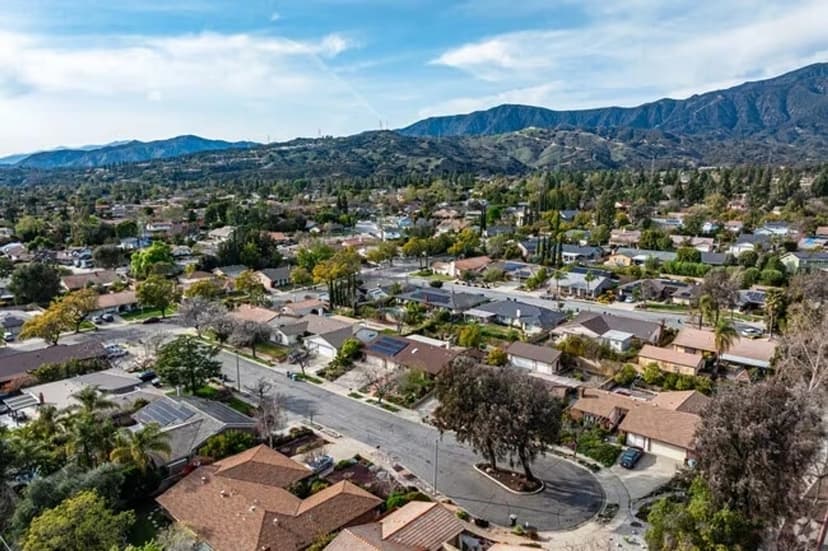
No. Most of Claremont's single-family streets have no homeowners association at all, and buyers arriving from newer master-planned communities are often surprised by that.
Claremont is an older, incrementally built city. Large stretches of it were platted and developed long before the governed-community model became standard in Southern California, so those neighborhoods simply never acquired an association. You buy the house, you pay the county, and nobody sends you a rulebook.
Associations do exist here, though, and where they exist they matter a great deal. Knowing which category a home falls into is a due-diligence step, not a detail.
Where associations are common
Three patterns account for most of them.
CONDOMINIUMS AND TOWNHOMES. Any attached-ownership property has a governing association by definition, because the building envelope, the roof, and the shared grounds have to belong to somebody. If you are shopping the attached market in Claremont, you are shopping associations, and the quality of the association is part of the quality of the purchase.
PLANNED DEVELOPMENTS. Some detached-home tracts were built as planned communities with shared amenities, private streets, or common landscaping, and those carry associations too. The presence of a gate, a shared pool, a private road, or a uniform streetscape is usually the tell.
HILLSIDE AND VIEW TRACTS. Where a development sits on slopes, there is often shared infrastructure to maintain: retaining structures, slope landscaping, drainage, access roads. An association is frequently the mechanism.
What you generally will not find is an association draped over an older grid neighborhood that never had one. Claremont's tree-lined interior streets are largely ungoverned in that sense.
Ungoverned does not mean unregulated
This is the correction I make most often, and it saves buyers real money.
The absence of an HOA does not mean you can do what you like with the property. The CITY still governs. Claremont takes its tree canopy, its architectural character, and its hillside development seriously, and city ordinances, permit requirements, and any applicable overlay or historic considerations apply whether or not an association exists. Removing a street tree, altering a facade, or adding square footage can all involve city process.
So the honest framing is: an HOA is a SECOND layer of rules on top of the city's, not the only layer. A buyer planning significant changes should confirm what the city requires for that specific property, at that specific address, before writing an offer that depends on the plan. Verify current requirements directly with the city rather than relying on what a neighbor did years ago, because rules change.
What to read when there is an association
If a home has an association, California requires the seller to deliver a package of association documents to you during the transaction. Read them, and read them early, because your window to object is finite.
Focus on five things.
THE DUES, and what they include. Some associations cover water, trash, or exterior insurance; some cover almost nothing. A lower number is not automatically better value.
THE RESERVES. An association is supposed to be setting aside money for the big future expenses, and the reserve study tells you whether it is. An underfunded association with an aging roof is a special assessment waiting to happen, and the buyer who did not read the study is the one who pays it.
THE MINUTES. Board meeting minutes are the least glamorous and most informative document in the stack. Disputes, deferred maintenance, insurance problems, and looming projects surface there before they surface anywhere else.
LITIGATION AND INSURANCE. Pending litigation and insurance difficulties can affect both your risk and, importantly, your lender's willingness to finance the unit. Attached properties can be harder to finance when the association has problems, and that is better to discover early.
THE RULES YOU WILL ACTUALLY BUMP INTO. Rental restrictions, pet limits, parking, and what you may do to the exterior. If any of those conflict with why you are buying, the conflict does not resolve itself later.
The obligations attached to a property, association or otherwise, are exactly the kind of thing that surfaces in the disclosure stage. What a California seller must reveal is covered in the seller disclosure guide.
If you own in an association and plan to sell
The association is part of your transaction timeline whether you like it or not. Ordering the required document package takes time, associations charge for it, and a delay there can push your escrow. Start it early rather than treating it as paperwork that will sort itself out.
It is also part of your carrying cost and part of your net. Dues, any transfer or document fees the association charges, and any assessment in progress all show up in the accounting. The full picture of what leaves a seller's proceeds in a local sale is set out in what it really costs to sell a house in Claremont.
How to find out for a specific home
Do not guess from the streetscape. A tidy uniform block can be entirely ungoverned, and an ordinary-looking cul-de-sac can sit inside a planned development.
Ask directly, in writing, before you tour seriously: is there an association, what are the current dues, what do they cover, and is any assessment pending or under discussion. Then verify the answer in the documents rather than in the conversation. For a home you are serious about, an attorney or a CPA is the right person to consult on the legal and tax implications of what you find. I can tell you what the documents say and what it means for the transaction; I do not give legal or tax advice.
Short version: HOAs are the exception in Claremont's detached housing and the rule in its attached housing, and in both cases the city's own rules apply regardless. More quick answers are on the Claremont FAQ hub, and the broader overview sits in the Claremont real estate FAQ.
Anthony Grynchal has been licensed in California since November 2009.
Frequently asked questions
Does every Claremont neighborhood have an HOA?
No. Most of Claremont's older single-family streets have no association at all. Associations are common in condominiums and townhomes, in planned developments with shared amenities or private streets, and in some hillside tracts with shared infrastructure.
If there is no HOA, can I do what I want with the house?
No. City ordinances, permit requirements, and Claremont's tree and hillside protections apply regardless of whether an association exists. An HOA is a second layer of rules on top of the city's, not the only layer.
What HOA documents should I read before buying?
The dues and what they include, the reserve study, recent board meeting minutes, any pending litigation or insurance issues, and the rules on rentals, pets, parking, and exterior changes. Read them early, because the window to object is finite.
Can an HOA affect my financing?
It can. Lenders scrutinize associations on attached properties, and problems such as underfunded reserves, pending litigation, or insurance difficulties can complicate approval. Discovering that early is far better than discovering it late.
Who should I ask about the legal side of HOA documents?
A real estate attorney for the legal questions and a CPA for the tax ones. An agent can explain what the documents say and how they affect the transaction, but legal and tax advice belongs with the appropriate professional.

Written by
Anthony Grynchal
Anthony Grynchal is a California real estate professional with eXp Realty, licensed since November 2009 (California DRE# 01873626), and the Designated Local Expert™ for Claremont — where he has lived for more than 33 years.
More about AnthonyPublished · Updated