Condominium and planned-development owners buy an individual policy and reasonably assume the association's master policy handles everything outside their own walls.
Mostly true. The gap is what happens when the association's coverage does not fully absorb a shared loss and the board turns to the membership to make up the difference.
That bill has a name. It is a SPECIAL ASSESSMENT, and there is a specific coverage designed to respond to it.
What loss assessment coverage actually is
Loss assessment is a coverage part on an individual unit-owner policy. It responds when an association levies an assessment against all owners because of a covered loss or a liability that the master policy did not fully cover.
The classic triggers are straightforward once you see the structure. The association suffers damage to common area. The master policy has a deductible, or a limit, or an exclusion. The shortfall lands on the membership. Every owner gets a bill, and loss assessment coverage is what can respond to that owner's share.
It also reaches into liability. If someone is injured in the common area and the association's liability coverage is exhausted, the resulting assessment sits in the same category.
The part almost nobody checks
Two things are true of loss assessment coverage on a typical unit-owner policy, and both surprise people.
FIRST, THE LIMIT IS OFTEN SMALL BY DEFAULT. Many forms include a modest amount automatically. That default was not chosen with your association's specific exposure in mind, because nobody at the carrier has read your governing documents.
SECOND, IT MAY BE SUBLIMITED FOR THE ASSOCIATION'S DEDUCTIBLE. Some forms cap the amount available when an assessment arises specifically from the master policy's deductible, and that is one of the most common reasons an assessment happens at all. A limit that looks adequate for one purpose can be far smaller for the purpose you are most likely to need.
Both facts are policy-specific and both are readable. Ask a licensed insurance professional to show you the coverage amount and any applicable sublimit in your actual form rather than in a brochure.
Read the association's documents, not just your policy
Loss assessment sits at the seam between two documents, and only one of them belongs to you.
THE MASTER POLICY. Its deductible, its limits, and whether it is written on a bare-walls, single-entity, or all-in basis all determine where the association's responsibility ends and yours begins. Ask the association for the certificate and the declarations page, not a summary.
THE CC&RS. The governing documents describe how assessments are levied and allocated. That is the machinery that produces the bill.
THE RESERVE STUDY AND RESERVE BALANCE. An association with thin reserves is more likely to reach for a special assessment when something goes wrong, and California associations are required to prepare and disclose reserve information to members. What that disclosure contains and how often it is required are set by current statute, so confirm the specifics rather than relying on a summary.
How an individual unit-owner policy divides responsibility with the master policy is the companion question, and it is worth reading alongside this one.
Claremont specifics worth knowing
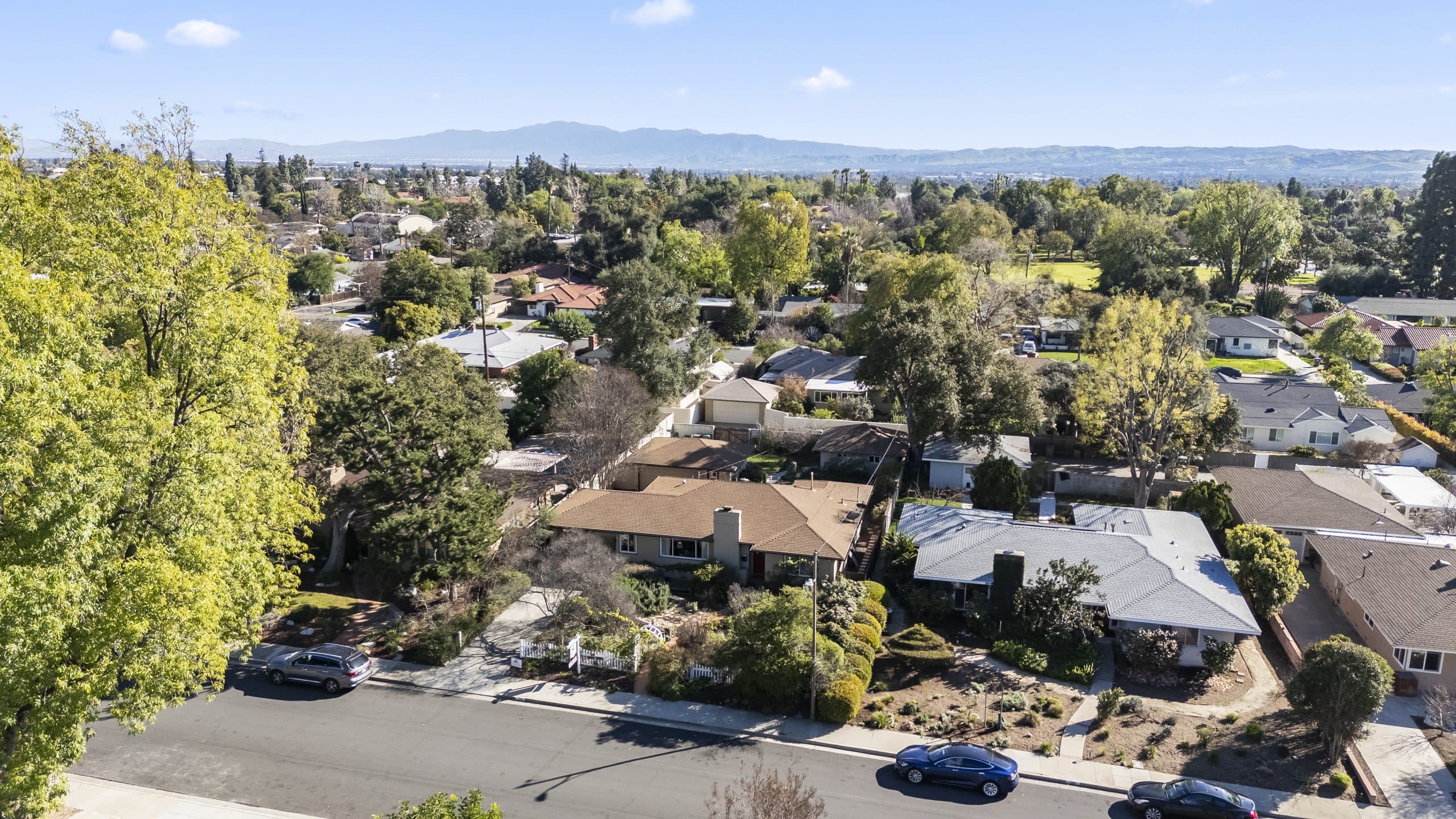
Claremont's attached housing is not one thing. There are mid-century condominium conversions, purpose-built townhome developments, small older complexes with a handful of units, and newer planned developments with substantial common area.
The smaller and older the association, the more this matters. A complex with few units spreads any shortfall across few owners, which makes each individual share larger. A complex with aging shared systems has more that can produce a claim in the first place.
Foothill exposure adds another layer. An association in an area where the master policy has become expensive or hard to place may carry a larger deductible than it once did, and that deductible is exactly what a special assessment is often covering. Owners in that situation should understand both the FAIR Plan and how associations complete coverage around it.
What a buyer should do during escrow
This is the one moment when all the documents arrive at once and someone is actually obligated to hand them over.
Read the master policy certificate and note the deductible. Read the reserve disclosure. Read the minutes for any discussion of a pending assessment or a recent claim. Then take those documents to a licensed insurance professional and ask what loss assessment limit makes sense for THIS association rather than in general.
Doing it during escrow costs an afternoon. Doing it after a bill arrives costs whatever the bill says.
The question boards get asked after a loss
When something significant happens to common area, owners want to know one thing: is this an association problem or my problem. The answer is rarely clean, because it depends on the master policy's form, its deductible, its limits, and on how the governing documents allocate responsibility.
Expect the answer to take time. Boards work with their own carrier, their own manager, and sometimes their own counsel before they know whether an assessment is coming. An owner who has already confirmed what their individual policy provides is simply better positioned to absorb whatever the answer turns out to be.
It is also worth knowing that an assessment can arrive long after the event that caused it. Repairs, adjustment, and board decisions all take months. Coverage should be reviewed on a normal renewal rhythm rather than in reaction to news.
Where a real estate agent stops
I am a real estate salesperson, not an insurance broker and not an adjuster. I cannot tell you what loss assessment limit to buy, cannot interpret an association's master policy for coverage purposes, and cannot predict whether an assessment will be levied. Those belong with a licensed insurance professional, and questions about how an association may levy an assessment belong with an attorney who reads the governing documents.
What I can do is get the documents into your hands early enough to matter, and make sure the review actually happens rather than getting initialed at the end of a stack.
Start at the home insurance hub for the wider picture, and read coverage, fire zones, and timing for how the rest of it fits together.
Anthony Grynchal has been licensed in California since November 2009.
Frequently asked questions
What is loss assessment coverage?
It is a coverage part on an individual unit-owner policy that can respond when an association levies a special assessment on all owners because of a covered loss or liability the master policy did not fully cover.
Is loss assessment coverage already on my policy?
Many unit-owner forms include some amount by default, but that default was not chosen with your specific association in mind, and some forms sublimit it for assessments arising from the master policy's deductible. Ask to see your actual form.
What documents should I read to size this coverage?
The association's master policy declarations and certificate, the CC&Rs describing how assessments are levied, and the reserve disclosure. Those three together show where the association's responsibility ends and what is likely to reach the membership.
When is the best time to review this as a buyer?
During escrow, when the association documents are delivered. That is the one point where everything arrives at once, and a licensed insurance professional can size the coverage to that specific association rather than to a general assumption.

Written by
Anthony Grynchal
Anthony Grynchal is a California real estate professional with eXp Realty, licensed since November 2009 (California DRE# 01873626), and the Designated Local Expert™ for Claremont — where he has lived for more than 33 years.
More about AnthonyPublished · Updated