Plenty of Claremont homes become rentals without anyone deciding to become a landlord. An inherited house that the family is not ready to sell. A move for work with an intention to come back. A second property that made more sense to hold than to list.
The mortgage keeps being paid, the insurance keeps auto-renewing, and nobody calls the carrier. That is the version that goes wrong.
What a homeowners policy assumes
A standard homeowners form is written around an owner-occupant. It assumes the named insured lives there, that the personal property inside belongs to them, and that the liability exposure is the ordinary domestic kind.
Rent the house out and all three assumptions break at once.
The occupant is now somebody else. The furniture belongs to somebody else, or there is none. And the liability picture now includes a tenant, their guests, and a relationship governed by a lease and by landlord-tenant law rather than by household norms.
Insurers deal with this by writing a different form for it, generally a landlord or dwelling policy. Which is not a punishment. It is a different product for a different arrangement.
What a landlord policy typically handles differently
Three things, in rough order of importance.
The structure. Still covered, but written around a building you own rather than a home you live in.
Contents. Generally narrowed to what belongs to you as owner, which is appliances, window coverings, and anything else you left. A tenant's belongings are not your coverage and never were, which is why leases commonly require renters insurance.
Liability and lost rent. Landlord liability is its own category, and many landlord forms contemplate loss of rental income when a covered loss makes the property uninhabitable. That second piece is the one owners are most surprised to learn is even available.
The non-disclosure problem
Here is the part worth taking seriously. Leaving a homeowners policy in place on a rented house is not merely leaving the wrong product in place. It can be a misrepresentation of how the property is used.
The consequence is not usually discovered at renewal. It is discovered at claim, which is the worst possible moment, and the outcome can range from a narrowed payment to a denial to a policy being voided.
Nobody is trying to catch anybody out. The fix is a phone call and a form change, and it is available at any time up until something happens.
To be clear about roles: Anthony Grynchal is a licensed real estate salesperson, not an insurance broker or an adjuster. None of this is a coverage opinion, and every decision here belongs with a licensed insurance professional reading your actual policy.
Short-term versus long-term is a real distinction
A twelve-month lease and a series of nightly bookings are not the same risk, and they are usually not covered by the same product.
Short-term rental activity is frequently excluded outright from both homeowners and standard landlord forms, and specialty coverage exists precisely because of that. It also intersects with local rules on what is permitted where, which is a city question rather than an insurance one.
If any part of the plan involves short stays, say so explicitly when you call. Describing it as renting the house out is not enough detail to get a reliable answer.
Renting out part of the property
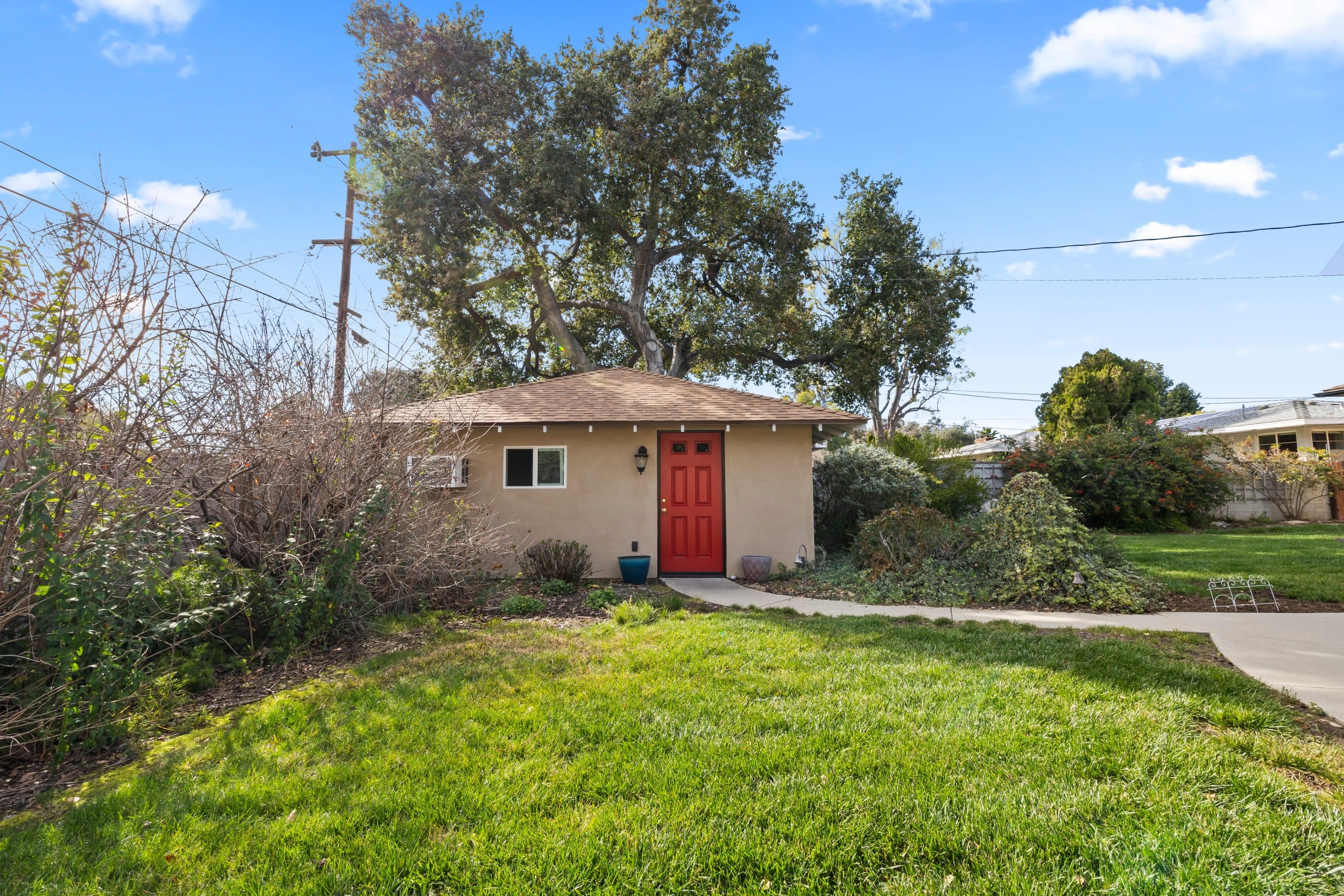
The partial-occupancy version is now common here, usually a converted garage, a casita, or a unit built under the state's accessory dwelling rules. It is genuinely its own coverage conversation, and it is covered separately in insuring an ADU on a Claremont property.
The short version is that you may still be an owner-occupant while also being a landlord, and the policy needs to reflect both facts rather than one of them.
The maintenance and claims dimension
Rental property carries a practical wrinkle around claims that owner-occupants do not face as sharply.
A tenant may not report a small leak the way an owner would. Something that would have been caught in a day can run for weeks, and that pushes a sudden failure toward the gradual side of the line described in how water damage exclusions work.
Which argues for two unglamorous habits. Make reporting easy and expected in the lease, and inspect the property on a schedule you actually keep. Both cost nothing and both protect the coverage you are paying for.
A short checklist before the tenant moves in
Call the carrier and describe the arrangement precisely, including the lease length. Ask whether the policy is changing to a landlord form and confirm the effective date in writing. Require renters insurance in the lease and ask to be listed as an interested party so you are notified if it lapses. Confirm whether loss of rental income is included and what triggers it. Photograph the condition of the property before the tenancy begins.
And ask your own agent about liability limits, because a landlord relationship is one of the situations where an umbrella layer is worth pricing.
The takeaway
Becoming a landlord is a change in what the property is, and insurance follows what the property is rather than what it used to be. The policy change is routine. The failure to make it is the expensive part.
For the broader map of coverage questions on a Claremont property, browse the home insurance resources. For the right form on a specific rental arrangement, that belongs to a licensed insurance professional, and for the lease and landlord-tenant obligations, to an attorney who practices in that area.
Anthony Grynchal has been licensed in California since November 2009.
Frequently asked questions
Can I keep my homeowners policy if I rent the house out?
Generally no. A homeowners form is written around an owner-occupant, and renting the property out changes occupancy, contents, and liability at once. Leaving the wrong form in place can be treated as a misrepresentation of how the property is used, which tends to surface at claim time rather than at renewal.
Does my policy cover my tenant's belongings?
No. A landlord policy is written around the structure and what belongs to you as owner, such as appliances and window coverings. A tenant's personal property is their own responsibility, which is why leases commonly require renters insurance and why it is worth asking to be listed as an interested party.
Is a short-term rental treated the same as a lease?
Usually not. Short-term rental activity is frequently excluded from both homeowners and standard landlord forms, and specialty coverage exists because of that. It also intersects with local rules about what is permitted, so describe the arrangement precisely to both your agent and the city rather than in general terms.
What is loss of rental income coverage?
Many landlord forms contemplate the rent you would have collected while a covered loss makes the property uninhabitable. What triggers it, how long it runs, and what it excludes vary by form, so confirm the specifics with a licensed insurance professional rather than assuming it is included.

Written by
Anthony Grynchal
Anthony Grynchal is a California real estate professional with eXp Realty, licensed since November 2009 (California DRE# 01873626), and the Designated Local Expert™ for Claremont — where he has lived for more than 33 years.
More about AnthonyPublished · Updated