
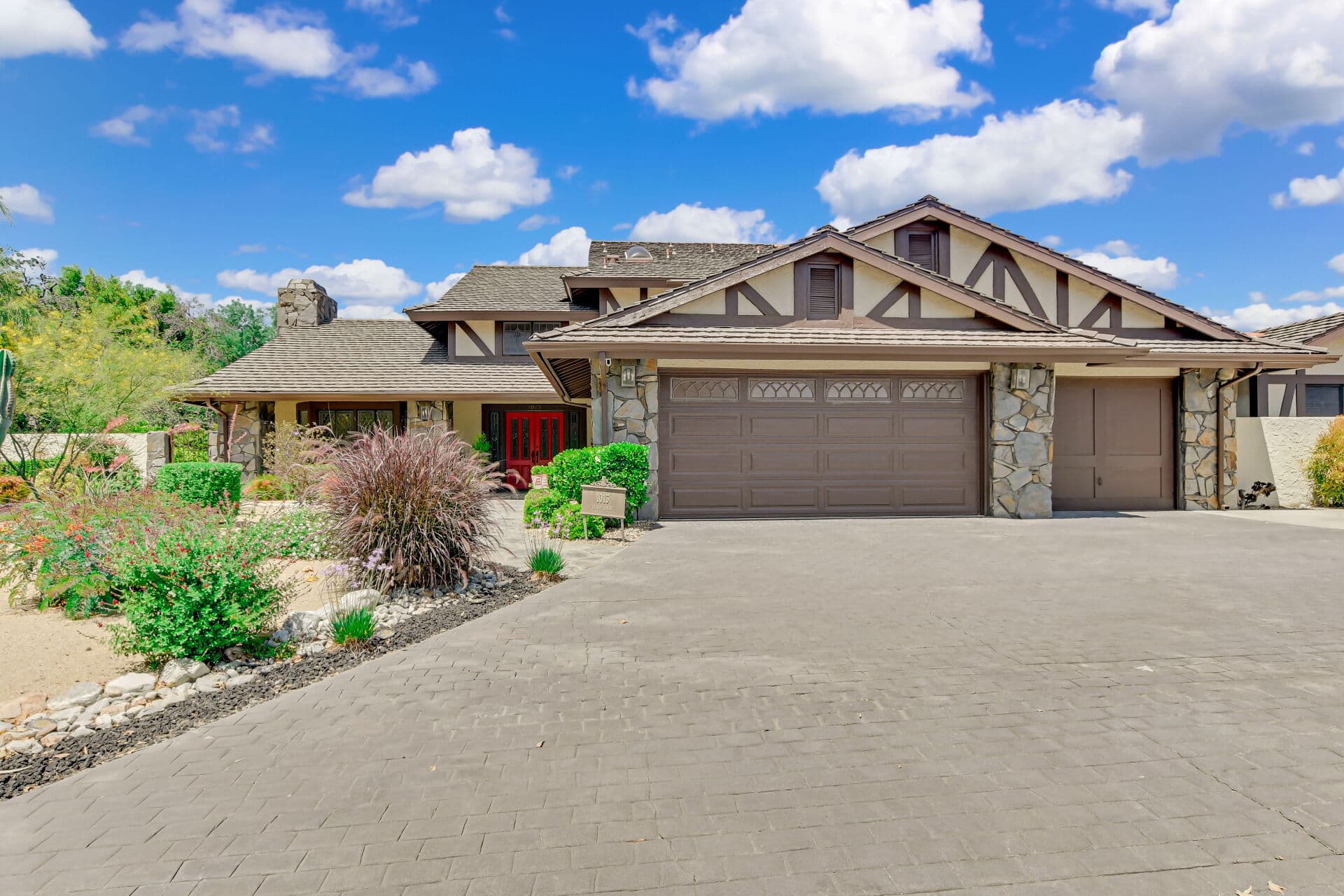
Drive the estate streets of this town and you will notice what is missing. There are very few tall front walls, almost no gated forecourts, and hardly any of the hard perimeter architecture that signals privacy in other markets. Yet these are among the most private residential streets in the region. Claremont achieves privacy through PLANTING, SETBACK, and GRADE rather than through masonry, and understanding how that works is genuinely useful whether you are buying, selling, or improving.
The town-wide map of where these streets are is in the Claremont luxury neighborhoods guide. This page is about the technique.
The four instruments
DISTANCE. The most effective privacy device on a Claremont estate parcel is the one that requires nothing at all: a deep front setback and generous side yards. When a house sits well back from the pavement, the geometry of sightlines does most of the work before a single shrub is planted. This is why the town's large-lot pockets feel private without appearing defended, a quality described on the Blaisdell Ranch page.
CANOPY. Mature trees screen in a way that hedging cannot, because they interrupt the upper sightlines, from a second story, from a neighboring rise, and they do it while keeping the ground plane open. Canopy is why an established street can feel enclosed and generous simultaneously.
LAYERED PLANTING. The technique that reads as designed rather than defensive is layering: a low foreground, a mid-height massing, and a taller backdrop, so the eye stops at several depths instead of hitting a single wall of green. A monolithic hedge announces that something is being hidden. A layered composition simply does not offer a way in.
GRADE. On sloping parcels, elevation change is itself a screen. A house set above the roadway is difficult to see into regardless of planting, and a house set below a berm disappears entirely. Hillside neighborhoods use this constantly, which is one reason a view enclave can feel private on relatively compact lots, a dynamic covered on the Claraboya page.
Where screening usually fails
Most privacy problems are not caused by too little planting. They are caused by planting placed without reference to the actual sightline.
THE WRONG PLANE. Owners frequently screen the front yard, which was never the exposure, while leaving a side window that looks directly across a driveway untreated. Before designing anything, stand in the rooms where privacy matters, at the time of day when it matters, and note what is visible. Screen those lines and ignore the rest.
THE SECOND STORY. Ground-level hedging does nothing about an upper-floor window on an adjacent parcel. Upper sightlines require height, which means trees, and trees require time and a long-term view of the space they will eventually occupy.
OVERPLANTING. A perimeter planted solid at maximum height solves the sightline and creates three new problems: a dark interior, a yard that feels smaller than it is, and a maintenance obligation that grows every year. It also reads, to a buyer, as a property with something to compensate for.
IGNORING THE CANOPY BUDGET. Mature screening is an asset with a cost attached. Significant trees need a pruning cycle, and their roots need to be understood relative to hardscape, foundations, and utility lines. A screening plan that no one is prepared to maintain becomes an overgrowth problem within a few seasons.
The constraints that govern
Screening is not unregulated. Height limits for fences, walls, and hedges, corner-visibility requirements at intersections and driveways, setback rules, and tree-protection provisions all apply, and specifics vary by circumstance. Some properties carry additional layers: an association's rules in a managed enclave, or a historic designation that governs what may be altered in a front yard. Confirm what applies to a specific parcel with the city, and with the association where one exists, before committing to a design. A screen that has to come down is worse than no screen at all.
Properties at the town's upper edge carry one more constraint that overrides aesthetics. At the wildland boundary, vegetation management and defensible-space requirements shape what can be planted and where, and those requirements are the governing input rather than a consideration to balance. The setting and its obligations are described on the trail-edge estates page.
What buyers should read on a tour
Treat existing screening as information about the property. Ask what it is hiding, because sometimes the answer is a neighbor's second story and sometimes it is a condition worth knowing about. Ask how old it is, since mature screening is an asset while young screening is a plan someone else started. Ask what it costs to maintain, particularly where large specimens are involved. And step into the rooms that matter and check whether the screening actually works from inside, which is a different question from whether it looks good from the driveway.
What sellers should do
The instinct to plant more before listing is usually wrong. Overgrown screening makes a property look smaller, darker, and more closed than it is, and buyers at this level are reading for space and light as much as for privacy. The better move is editing: lift the canopy so structure shows and light returns beneath it, thin mass that has closed a sightline the property should keep, and open the approach so the arrival reads as an arrival rather than as a tunnel. A property that demonstrates privacy while still feeling open is the version that presents best, and it is almost always achieved by removing rather than adding.
If you are weighing how a particular parcel screens, or how it could, walking it with someone who has seen the neighborhood's solutions repeatedly is worth an hour. Anthony Grynchal has been licensed in California since November 2009.
Frequently asked questions
How do Claremont estates achieve privacy without high walls?
Through four instruments working together: deep front setbacks and generous side yards, which do most of the work through geometry alone; mature canopy, which interrupts upper sightlines while keeping the ground plane open; layered planting that stops the eye at several depths rather than presenting one wall of green; and grade, since a house set above or below the roadway is difficult to see into regardless of planting.
Why does privacy landscaping often fail?
Usually because it was placed without reference to the actual sightline. Owners screen the front yard when the real exposure is a side window across a driveway. Ground-level hedging is used against an upper-floor window that only height can address. Or a perimeter is planted solid at maximum height, which darkens the interior, shrinks the yard visually, and creates a maintenance obligation that grows every year.
What rules govern screening on a Claremont property?
Height limits for fences, walls, and hedges, corner-visibility requirements at intersections and driveways, setback rules, and tree-protection provisions all apply, and the specifics vary by circumstance. Some parcels carry additional layers such as an association's rules or a historic designation governing front-yard alterations. Confirm what applies with the city, and with the association where one exists, before committing to a design.
Should a seller add screening before listing?
Usually the opposite. Overgrown screening makes a property read as smaller, darker, and more closed than it is, and buyers at this level are looking for space and light as well as privacy. The stronger move is editing: lifting the canopy so structure shows and light returns beneath it, thinning mass that has closed a sightline worth keeping, and opening the approach so arrival feels like arrival rather than a tunnel.

Written by
Anthony Grynchal
Anthony Grynchal is a California real estate professional with eXp Realty, licensed since November 2009 (California DRE# 01873626), and the Designated Local Expert™ for Claremont — where he has lived for more than 33 years.
More about AnthonyPublished · Updated