
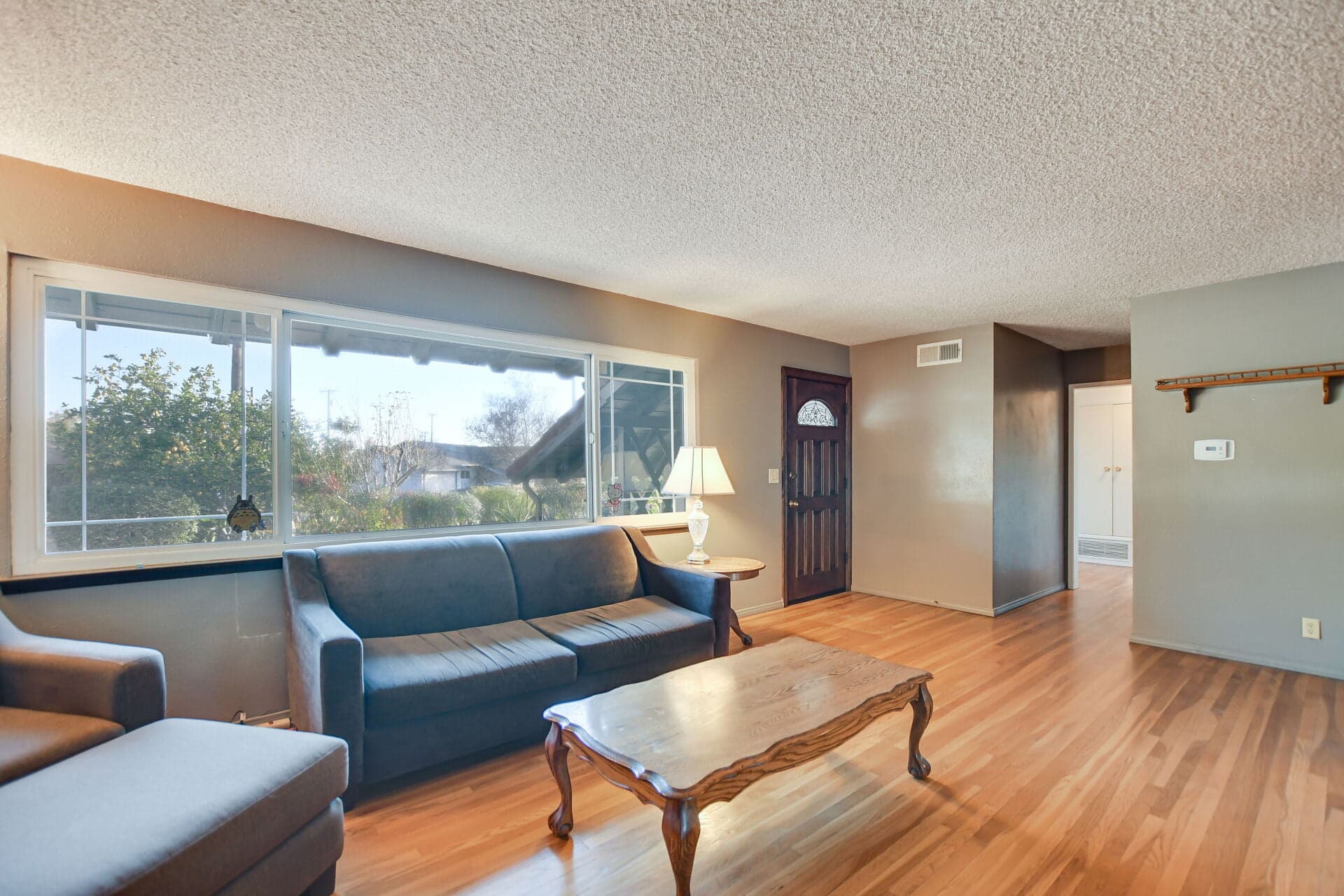
An empty house sounds like the easy version. No family to displace, no dog to rehome, no scramble to hide the laundry, no negotiating a Sunday around somebody's life. All true, and it hides a genuinely different set of problems — a vacant house is harder to keep secure, harder to make feel like a home, and harder to keep in showable condition week after week.
Vacant listings are common in Claremont: estates and inherited property, homes prepared for sale after a move, houses between tenants. This is the practical version of what changes. It extends the open house guide and assumes you have already decided the event is worth holding, per the seller-side guide.
Security first, because vacancy changes it
The security sweep for an occupied home is mostly about removing things. In a vacant home there is often nothing to remove, and the risk shifts to the BUILDING itself and to the periods between events.
The specifics that matter: copper and appliances are targets in empty properties, and an unmonitored vacant house is a known one. Utilities need to stay ON — water for testing taps, power for lighting and for the agent's own safety, and heating or cooling so the house is not experienced at whatever temperature the day supplies. Water off means a buyer cannot check flow and an agent cannot notice a leak.
Every window and slider needs checking at both ends of the event, because in an empty house a window left open on Sunday afternoon is a window open until somebody visits again. The same is true of the back gate and the side access.
Tell your insurer the property is vacant and being marketed. Vacancy affects coverage in ways owners routinely discover at the worst possible moment, and a standard policy may not behave the way you assume once nobody lives there. That is one phone call and it is genuinely the most important item on this page.
Tell the immediate neighbours too, and give them a number. A neighbour who knows Sunday is expected also knows that the van on Tuesday evening is not, and in vacant-property situations that has repeatedly been the thing that mattered.
Empty reads as small, and unfinished
The counter-intuitive part. Sellers assume an empty room shows its size honestly; buyers experience the opposite. Without furniture there is no reference for scale, so rooms read SMALLER, and every flaw in the flooring, the paint and the trim has nothing to compete with. An empty house also echoes, which visitors register as coldness without knowing why.
You do not necessarily need full staging. Even a light treatment — a rug and two chairs in the main living space, a bed frame and linens in the primary bedroom, something soft in the room that echoes worst — restores scale and gives the eye somewhere to land. The staging checklist applies with more force here, not less.
Lighting does disproportionate work in a vacant house. Every bulb working, every bulb the same colour temperature, every lamp and fixture on before the first visitor arrives, curtains and blinds open. A dim empty room is the worst version of a house that anyone will see.
And smell: an unoccupied house develops a closed-up, stale character within days. Air it out properly beforehand rather than covering it, because a masking scent in an empty house reads exactly as what it is, and gives the impression something is being hidden. Buyers are taught to notice that.
Condition drifts when nobody lives there
Occupied homes get maintained by the act of being lived in. Vacant ones quietly deteriorate in ways that show up in photographs and at events.
The recurring items: dust and cobwebs return within a week or two, dead insects collect on sills, drains develop a smell if the traps dry out (run every tap and flush every toilet before each event, which takes four minutes), the garden goes from tidy to neglected faster than anyone expects, and post and flyers pile up at the door in a way that broadcasts vacancy to everyone including people you would rather not broadcast it to.
Somebody needs to be responsible for a walkthrough before each event rather than assuming the state you left it in has persisted. If the owner is out of the area, that responsibility needs a name and a schedule, not an intention.
What vacancy is actually good for
Fair to say the advantages, because they are real. Access is easy and events can be scheduled without disrupting anyone. Visitors linger longer and look more thoroughly in an empty house, because nothing feels private and there is no sense of intruding. Nobody has to leave, which removes the whole seller-attendance question covered in the attendance guide. And a home needing work is easier to evaluate honestly when it is empty, which suits properties being sold as-is.
There is one thing to be careful about, though. Vacancy is information, and buyers read it as motivation — an empty house suggests carrying costs and a seller who has already moved on. That is not a reason to hide it, since it is usually obvious anyway, but it IS a reason to have the pricing and negotiation conversation with your agent in advance rather than in the middle of an offer.
The short version
Utilities on, insurer told, neighbours told, windows and gates checked at both ends, light treatment or full staging to restore scale, every light working, aired rather than scented, traps run and a walkthrough before every event by a named person.
Vacant is genuinely easier to show and genuinely harder to keep. Plan for the second half and the first half takes care of itself.
Anthony Grynchal has been licensed in California since November 2009 and has spent more Sundays than he would like turning on every light in an empty house before the first visitor arrives. This is general information; insurance and vacancy questions belong with your own insurer and counsel.
Frequently asked questions
Should utilities stay on for a vacant home's open house?
Yes. Power for lighting and agent safety, water so taps and drainage can be tested and any leak is noticed, and heating or cooling so the house is not experienced at whatever temperature the day supplies. Water off means a buyer cannot check flow, which reads as something to hide.
Does a vacant house need staging?
It benefits more than an occupied one, not less. Empty rooms read smaller because there is no reference for scale, every flaw in the paint and flooring has nothing to compete with, and echo registers as coldness. Even a light treatment in the main living space and the primary bedroom restores scale.
What are the security risks of holding a vacant home open?
The risk shifts from portable valuables to the building and to the gaps between events: copper and appliances are targets in empty properties, and a window or gate left open stays open until somebody next visits. Check everything at both ends, tell the neighbours, and tell your insurer the property is vacant and marketed.
Do buyers read anything into a vacant listing?
Usually yes — vacancy suggests carrying costs and a seller who has already moved on, which buyers factor into how they negotiate. It is rarely hideable and not worth hiding, but it is worth discussing pricing and negotiation strategy with your agent before offers arrive rather than during.

Written by
Anthony Grynchal
Anthony Grynchal is a California real estate professional with eXp Realty, licensed since November 2009 (California DRE# 01873626), and the Designated Local Expert™ for Claremont — where he has lived for more than 33 years.
More about AnthonyPublished · Updated