Walkability is usually discussed as a question of distance. In a hot-summer town it is at least as much a question of shade. A route that is pleasant in March and unusable in August is not a walkable route, and the difference between those two experiences is almost entirely canopy.
Claremont is unusually good at this, and the reason is not accidental. Mature street trees, deep parkways, arcaded campus paths and a century of planting produce blocks that stay usable when the temperature climbs. It also varies enormously street to street, which makes shade one of the few genuinely measurable things a buyer can check on foot. This guide sits in the parks and recreation cluster.
What shade actually does
Shade is not simply pleasant. Standing in it changes the physics of being outside. Direct sun loads a body with radiant heat on top of air temperature, and shade removes most of that load without changing the thermometer at all. Two people on the same street at the same moment can be having completely different afternoons.
Surfaces matter as much as sky. Asphalt and unshaded concrete absorb heat all day and release it into the evening, which is why an exposed street can still feel hot long after sunset while a canopied one has cooled. A shaded sidewalk over a shaded roadway is a fundamentally cooler microclimate, not a marginally nicer one.
The consequence is behavioral. In summer, people walk where it is shaded and drive where it is not, even for identical distances. Shade decides which errands stay on foot.
Reading a block
You can assess this in a few minutes, and the assessment is more reliable than any listing description.
Walk the route at the hottest part of the day rather than in the morning. Morning shade tells you about east-facing exposure and nothing about two in the afternoon, which is when the question actually arises.
Look for continuity. Intermittent shade is much less useful than continuous shade, because the exposed gaps are what a body registers. A block with four big trees and four empty parkway spaces is half a shaded street.
Look at both sides. Street orientation means one side of an east-west street can be usable while the other is not, and the useful side changes with the hour. Locals know this instinctively and cross the street without thinking about it.
Look at the age and health of the trees. A canopy is a long-term asset with a maintenance schedule and a lifespan. Young replacement plantings mean shade in a decade, not this summer. Stumps and empty wells mean the canopy is contracting. The cluster's guide to Claremont's urban forest covers the trees themselves in more depth.
Why it varies so much
Several forces set canopy street by street.
Age of development is the biggest. Older neighborhoods laid out with generous parkways have had time to grow large trees, and the space to let them get large. Newer development patterns often have narrower planting strips, and a narrow strip constrains species selection and eventual size.
Species choice compounds it. Some trees produce broad continuous canopy; others are upright, sparse or deciduous in a way that changes the seasonal picture. Deciduous canopy is precisely the right answer for a hot-summer, cool-winter climate: shade when you need it, sun when you want it.
Infrastructure conflicts subtract from it. Overhead lines, narrow sidewalks, driveway cuts and utility work all reduce where a large tree can go and how it can be pruned.
And maintenance sustains it. Canopy is not free. It requires water, pruning, replacement planting and a plan for succession, all of which are municipal budget items. That work is the subject of the cluster's guide to how a city keeps its parks working.
Where the shaded routes are
Rather than name particular streets, use the categories, which are more durable.
The old residential grid nearer the center generally has the best continuous canopy, because it is the oldest and the parkways are widest.
Campus edges are exceptional for walking in heat, combining mature specimen trees with buildings that throw useful shade and paths that were designed to be walked.
Park perimeters vary. Some parks are ringed with mature trees and are pleasant approaches; some open lawns are the hottest ground in the neighborhood at midday. The cluster's Memorial Park guide is a good example of a park where the tree cover is part of the appeal.
Multi-use paths are the weak point in a hot town, because a path in an open corridor may have very little cover. That is a timing problem rather than a route problem, and the answer is early or late rather than midday.
What buyers should take from it
Shade is a quality-of-life variable that hides in plain sight, and it is worth deliberately evaluating.
Walk the actual routes you would use, at the hour you would use them, in the season that tests them. The walk to a school, a park or the shops in August is the honest version of the walkability claim.
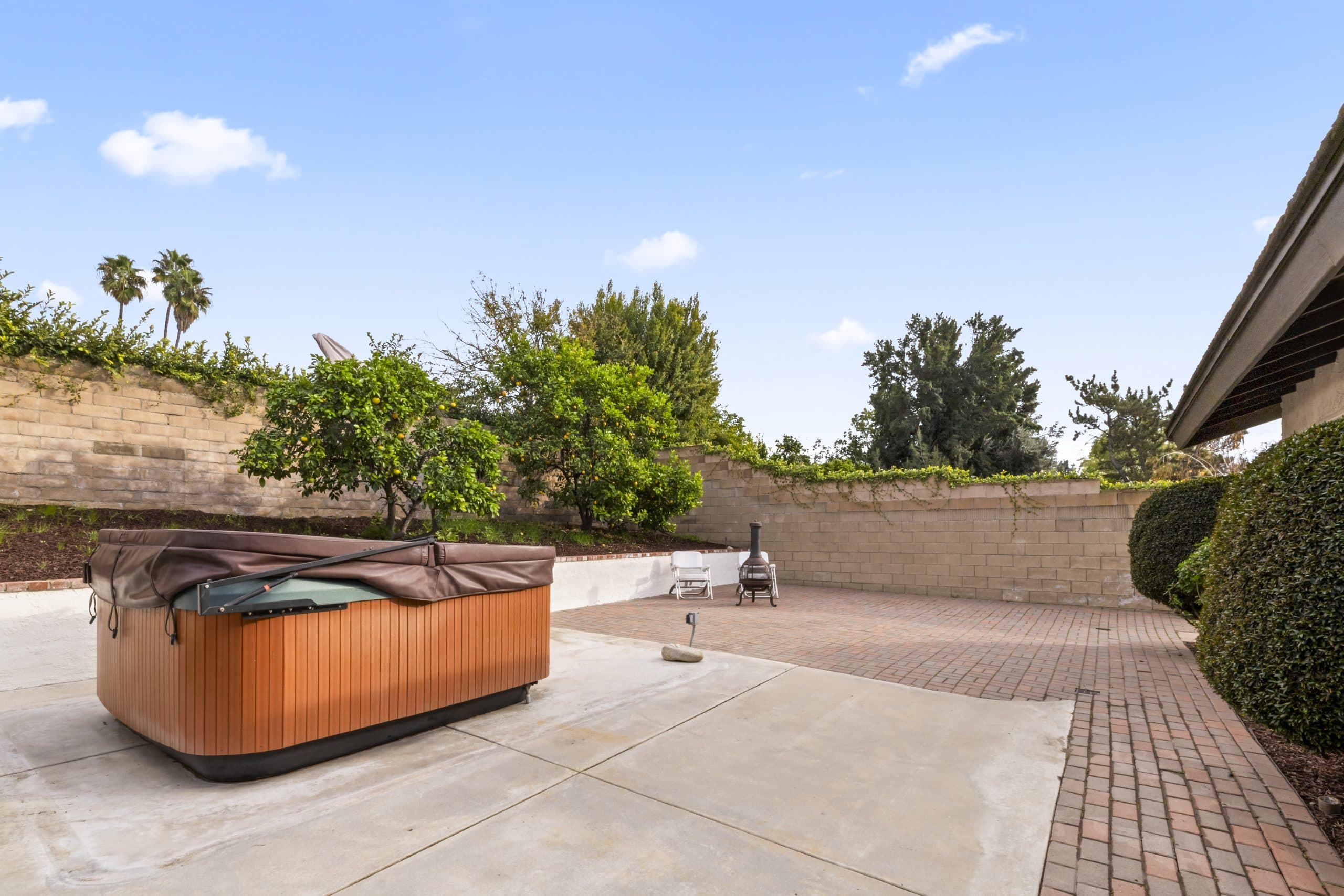
Look at your own lot as well as the street. West-facing glass with no shade in front of it is a materially hotter house in the afternoon, and a mature tree on the right side of a property is doing measurable work on cooling costs. Equally, large trees near a house raise ordinary ownership questions about roots, gutters, pruning and what the city permits on street trees versus what an owner controls on private property.
Then check the rules, because street trees are usually not the homeowner's to decide about. CONFIRM TREE REMOVAL, PRUNING AND REPLACEMENT REQUIREMENTS WITH THE CITY before assuming anything about a tree in a parkway or a protected species on a lot.
The summary
In this climate, canopy is the difference between a street people walk and a street people drive. It is visible, checkable and slow to change, which makes it one of the more reliable signals available about how a block will actually feel to live on.
Start from the parks and recreation guide for the rest of the series. Anthony Grynchal has been licensed in California since November 2009.
Frequently asked questions
Why does shade matter more than temperature for walking?
Because direct sun adds radiant heat on top of air temperature, and shade removes most of that load without changing the thermometer. Shaded pavement also absorbs and re-radiates far less heat, so a canopied street is a genuinely cooler microclimate rather than a marginally nicer one.
How do I judge a street's shade properly?
Walk it at the hottest part of the day rather than the morning, check both sides since orientation makes one side usable and the other not, look for continuous rather than intermittent cover, and note whether the trees are mature, young replacements or missing entirely.
Why is canopy so uneven across Claremont?
Older neighborhoods generally have wider parkways and decades of growth, which produces large continuous canopy. Newer layouts often have narrower planting strips that limit species and eventual size. Overhead lines, driveway cuts and utility work reduce planting space further, and maintenance budgets determine replacement.
Can a homeowner remove or prune a street tree?
Usually not at will. Street trees in a parkway are typically municipal, and some trees on private property may be protected. Confirm removal, pruning and replacement requirements with the city before planning any work.

Written by
Anthony Grynchal
Anthony Grynchal is a California real estate professional with eXp Realty, licensed since November 2009 (California DRE# 01873626), and the Designated Local Expert™ for Claremont — where he has lived for more than 33 years.
More about AnthonyPublished · Updated