
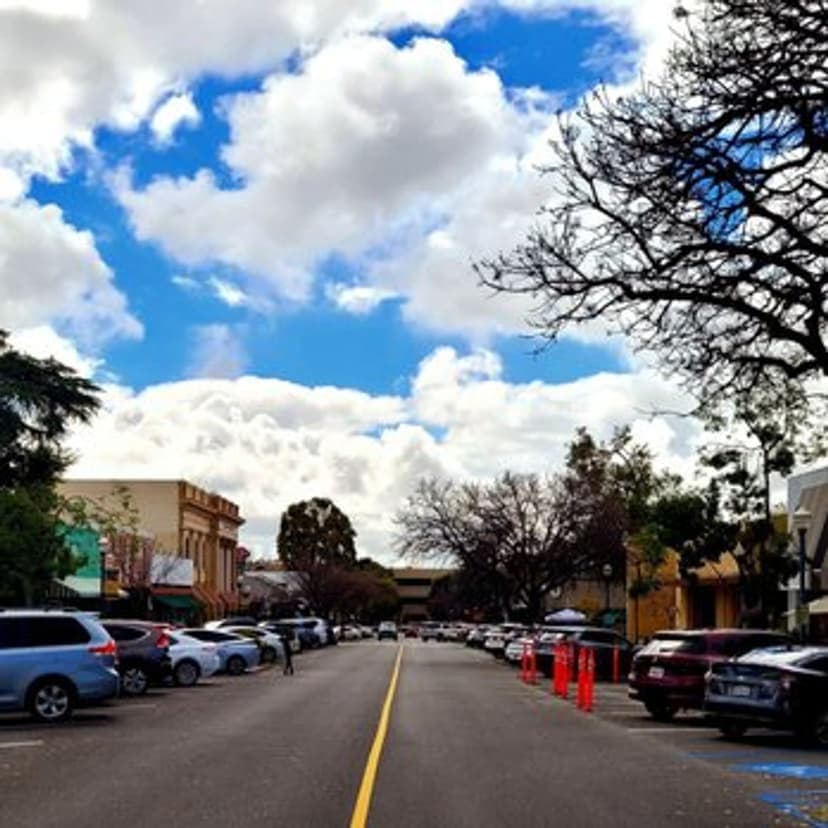
Walk the Claremont Village on an ordinary weekday and you see something increasingly rare in Southern California: block after block of independent businesses — not surviving in a chain-dominated landscape but defining the commercial identity of the town. That is not luck, and it is not nostalgia keeping marginal shops alive. Claremont's small-business ecosystem works for structural reasons — the physical fabric, the demand base, and the civic culture all pull the same direction — and understanding those reasons matters to more than merchants: they are load-bearing for property values, for what it feels like to live here, and for anyone weighing a business of their own in town. This article explains the structure; the operator's practical playbook — locations, leases, licenses — is the small-business guide's territory, and this piece is the why beneath its how.
The fabric: a downtown built before the car
The first structural advantage is physical. The Village is a pre-war street grid of small storefronts built to pedestrian scale — narrow frontages, continuous sidewalks, buildings meeting the street — and that geometry quietly rigs the game in independents' favor. Small floor plates suit small operators and fit chain formats poorly; continuous walkable frontage means every business feeds foot traffic to its neighbors, so the district compounds rather than competes; and the adjacent depot connects that fabric to regional transit. Compare the alternative most towns got — arterial strips of large-format pads with dedicated parking — which select for exactly the tenants that can fill them. Claremont's commercial DNA selects for the counter-scale business, and the town has protected that DNA through its planning culture rather than trading it for drive-through convenience. The architecture guide reads the same fabric from the design side; the point here is economic: the buildings themselves are a business model.
The demand: steady, local, and walking distance away
Fabric without customers is a museum, and Claremont's second advantage is the demand base surrounding the fabric. The Claremont Colleges put a large community of students, faculty, and staff within walking distance year-round — an economic engine the local-economy guide maps in channels-not-numbers form — and college demand has a quality merchants prize: it renews itself every autumn, in classes and cohorts, rather than depending on any single year's economy. Around that core sits the residential town itself: neighborhoods dense with people who chose Claremont in part FOR its independent character, which converts civic preference into buying behavior — the resident who could drive to a big-box store but walks to the Village instead is the ecosystem's daily vote. And the same tree-canopy walkability the lifestyle guide celebrates is commercial infrastructure: a town people enjoy walking through is a town where retail works on foot traffic rather than advertising spend. The real-estate loop closes here too — Village-proximate homes carry a premium precisely because of this ecosystem, and the ecosystem holds because those residents shop it. Healthy district, healthy values, each funding the other.
The culture: policy and identity pulling together
The third leg is deliberate. Claremont's civic identity — the college town, the tree city, the Village — is not just marketing language; it shapes decisions. The town's planning culture has historically favored the scale and character that keep the district coherent, and its calendar of public life keeps the commercial core the town's living room rather than a place people merely transact. That cultural layer does real economic work: it recruits the KIND of operator who wants a community storefront rather than a unit in a chain's expansion spreadsheet, and it gives new businesses a customer base predisposed to try the local option first. None of this makes the ecosystem effortless — small business is hard everywhere, rents and margins are real, and the district's health is maintained rather than guaranteed; the honest reading is that Claremont's structure gives an independent a fair fight it would not get in most Southern California retail. For anyone considering joining it, the operator's questions — where, on what lease, with what licenses — are the guide's practical chapters; and for residents and homeowners, the takeaway is simpler: the Village's health is not scenery, it is infrastructure, as load-bearing for this town's appeal as the tree canopy over its streets. What's open and current on any given block is a live question — the merchants' own channels and the city answer it better than any article can.
Anthony Grynchal has been licensed in California since November 2009 and makes the same point to every relocating buyer: towns with living downtowns hold their appeal in every market, and Claremont's is not an accident — it is architecture, demand, and intent agreeing with each other.
Frequently asked questions
Why does Claremont have so many independent businesses?
Structure, not luck: a pre-war Village fabric of small walkable storefronts that suits independents and fits chain formats poorly; a steady demand base from the Colleges and from residents who chose the town partly for its independent character; and a civic planning culture that has protected that scale rather than trading it for drive-through convenience.
How do the Claremont Colleges affect local business?
They put a large walking-distance community of students, faculty, and staff around the commercial core year-round — demand that renews itself every autumn in new cohorts rather than depending on any single year's economy. It is the ecosystem's steadying engine, alongside the residential town that shops its own Village.
Does the Village affect Claremont home values?
Yes, in a loop: Village-proximate homes carry a premium because of the walkable independent district, and the district stays healthy because those residents shop it. A living downtown is infrastructure for property values, as load-bearing for the town's appeal as its tree canopy.
Is Claremont a good place to start a small business?
The structure gives an independent a fair fight it would not get in most Southern California retail — small floor plates, compounding foot traffic, a predisposed customer base. It is not effortless: rents and margins are real, and the practical questions of location, lease, and licensing deserve the operator-level homework.

Written by
Anthony Grynchal
Anthony Grynchal is a California real estate professional with eXp Realty, licensed since November 2009 (California DRE# 01873626), and the Designated Local Expert™ for Claremont — where he has lived for more than 33 years.
More about AnthonyPublished · Updated