
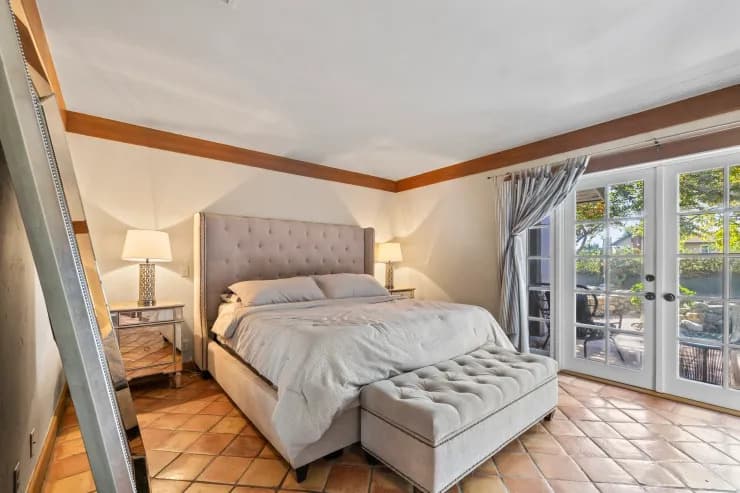
A large share of Claremont's housing stock predates not just the smart home but the three-prong outlet — and that turns out to matter less than the marketing suggests and more than the unboxing video admits. The mid-century ranches and postwar tracts that define whole neighborhoods here take modern technology beautifully, provided the owner respects three realities: the wiring is older, the walls are different, and the order of operations decides whether the project is a weekend or a war. This is the retrofit playbook. It deepens the smart-home guide; what buyers actually reward at resale is the buyer-preference guide's territory, and anything touching the electrical system routes to a licensed electrician — this article tells you what to ask, not how to wire.
Reality one: the wiring
Three wiring-era facts shape every device decision in an older Claremont home. THE NEUTRAL-WIRE QUESTION: many smart switches need a neutral conductor at the switch box, and mid-century switch loops often don't have one — before buying a houseful of switches, open one switch plate (breaker off) or have an electrician do it, and learn which situation you own; no-neutral switch designs and smart-bulb strategies exist for the other answer. PANEL CAPACITY AND ERA: the electrical panel's age and capacity is the gating question for any serious upgrade — some older panels are themselves the project, and an electrician's evaluation belongs before, not after, the smart ambitions. AND UNGROUNDED CIRCUITS: two-prong-era circuits constrain what can safely plug in where; the fixes are the electrician's menu, not a workaround gadget's. None of this blocks a smart retrofit — it sequences one. The homes that end up with clean installs are the ones that had the electrical conversation first.
Reality two: the walls
Claremont's older stock frequently means plaster and lath rather than drywall, and occasionally masonry — and both change the retrofit math. Wi-Fi attenuates harder through lath-and-plaster than through drywall, so the single-router-in-the-corner plan that works in newer construction produces dead bedrooms here; the answer is a mesh network sized to the real floor plan, placed by experiment rather than aesthetics. Fishing new wire through plaster is slower and messier than through drywall, which is exactly why the modern retrofit strategy leans WIRELESS-FIRST: battery and wireless sensors, wireless-protocol devices, and surface-mounted solutions that leave the plaster intact. Where wire genuinely must run — a hardwired doorbell transformer, a camera position — budget for the patching, and in any home with genuine period character, think like the preservation trades: reversible installs, existing penetrations, and restraint. A smart retrofit that scars original plaster has spent value to add convenience.
The order of operations
The sequence that works: FIRST the electrician's evaluation (panel, neutrals, grounding — the constraint map). SECOND the network (mesh coverage everywhere a device will live, because every later frustration is usually a connectivity problem wearing a costume). THIRD the reversible layer — thermostat, leak sensors (the cheapest insurance in the catalog), plug-in devices, battery sensors — which delivers most of the daily value at the least invasion. FOURTH the wired layer where justified: switches where neutrals allow, doorbell and locks (the lock guide covers the access side), and the detection layer that rides on code requirements anyway. And throughout, keep the receipts and manuals in the house file: a documented retrofit reads as maintenance to a future buyer, while a mystery of mixed-era devices reads as someone else's homework — the conveyance questions the pillar covers start being easy when the paperwork exists. This is general information; a licensed electrician and the current code govern anything behind a plate.
Anthony Grynchal has been licensed in California since November 2009 and has walked buyers through plenty of mid-century Claremont homes wearing new technology well — the tell is always the same: the electrical was evaluated first, and the plaster was left alone.
Frequently asked questions
Can a 1950s home really support smart-home technology?
Yes — Claremont's mid-century stock takes modern tech well if the project respects the constraints: older wiring (the neutral-wire question at switches, panel capacity, grounding), plaster walls that attenuate Wi-Fi and resist re-wiring, and a wireless-first strategy that leaves original surfaces intact. The electrical evaluation comes first, not after.
What is the neutral-wire problem with smart switches?
Many smart switches need a neutral conductor at the switch box to power themselves, and mid-century switch loops often lack one. Before buying switches, learn which situation the house has — a licensed electrician can check — and know that no-neutral switch designs and smart-bulb strategies exist for homes without them.
Why is Wi-Fi worse in older Claremont homes?
Lath-and-plaster walls attenuate wireless signal harder than drywall, so a single router leaves dead rooms that would be fine in newer construction. The fix is a mesh network sized to the real floor plan, with nodes placed by testing coverage rather than by where the shelf looks best.
What should a smart retrofit do first?
Sequence it: electrician's evaluation first (panel, neutrals, grounding), then the mesh network, then the reversible layer — thermostat, leak sensors, plug-in and battery devices — and only then wired upgrades where the wiring allows. Keep every receipt and manual; a documented retrofit reads as maintenance to a future buyer.

Written by
Anthony Grynchal
Anthony Grynchal is a California real estate professional with eXp Realty, licensed since November 2009 (California DRE# 01873626), and the Designated Local Expert™ for Claremont — where he has lived for more than 33 years.
More about AnthonyPublished · Updated