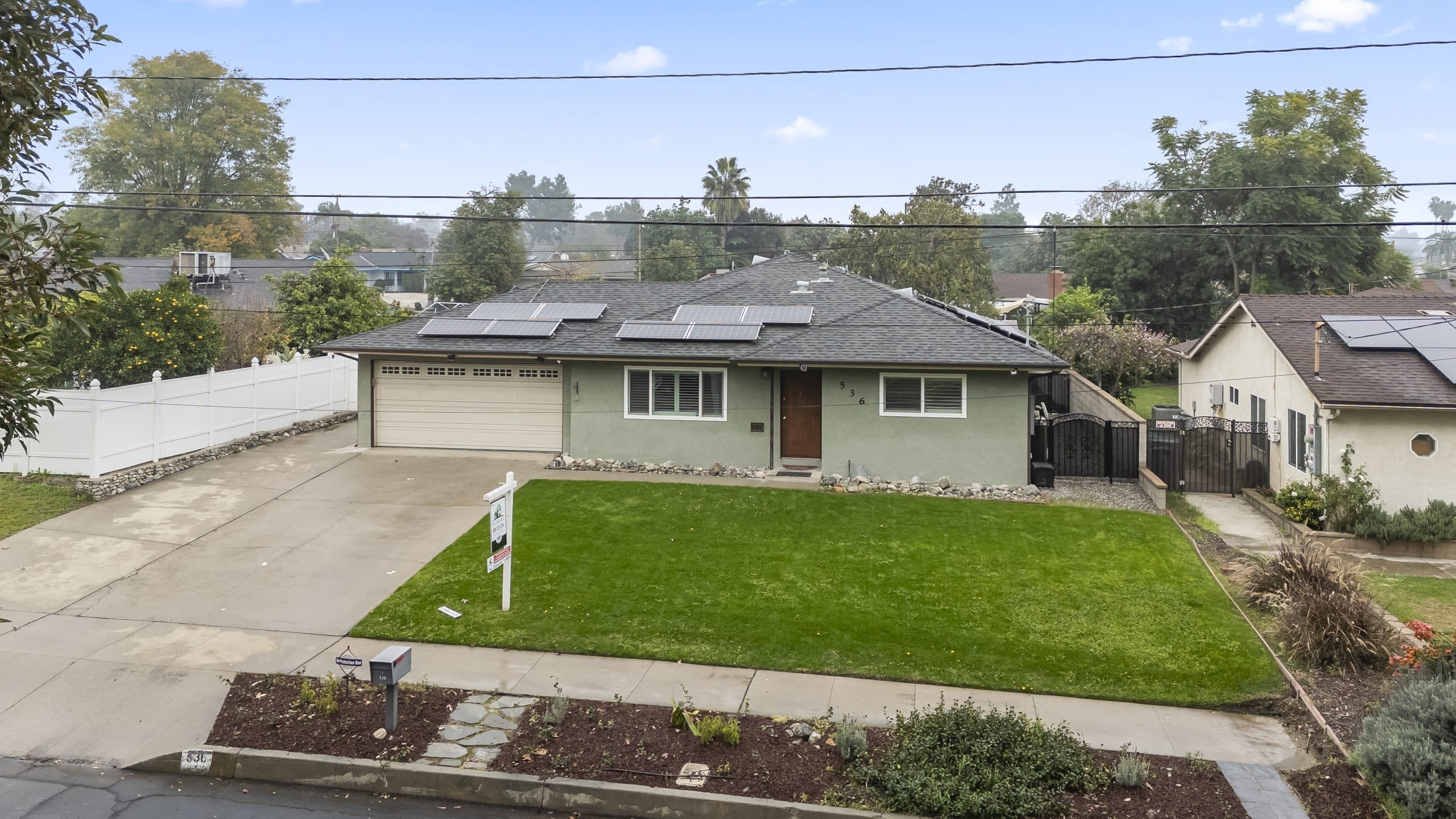
On a newer home the panels were there from day one. Nobody chose them, nobody negotiated them, and the first owner may never have thought of them as a separate decision at all.
That is exactly why they get skipped in diligence, and it is exactly why they should not be.
Solar that arrived with the house is not automatically OWNED with the house.
Why new construction has solar at all
Certain categories of new residential construction in California are subject to requirements involving on-site solar. The rules have changed over time, they contain exceptions, and how any particular home was addressed depends on when it was permitted and what path the builder chose.
That last point matters more than the rule itself. Compliance was frequently achievable by more than one route, and the routes have very different consequences for an owner.
Do not assume anything about a specific property from a general description of the requirements. Confirm the current standards and how they applied with the city building department and with the relevant state agency, because they change.
The three arrangements you will meet
OWNED WITH THE HOUSE. The system was part of the purchase, its cost sat inside the price, and the buyer owns the hardware. Clean, and the ordinary owned-system questions apply.
SUBJECT TO A THIRD-PARTY AGREEMENT. The builder arranged for a provider to install and retain ownership, and the homeowner signed an agreement at or around closing. Functionally this is the same animal as any other leased or service arrangement, with the same transfer mechanics described in the transfer guide.
SOMETHING SHARED OR COMMUNITY-SCALE. Some compliance approaches involve generation that is not simply an array on that one roof. Where that is the case, what the homeowner has is a contractual entitlement rather than equipment, and the document that matters is the entitlement.
The whole owned-versus-third-party split runs through the ownership guide, and it applies here identically. New construction does not exempt anybody from asking the question.
Why first sellers often do not know
Here is the practical problem, and it is a genuinely sympathetic one.
A buyer of a new home signs a large stack of documents in a compressed period, many of which concern things that will not matter for years. A solar agreement inside that stack does not stand out the way it would if it had been the subject of its own negotiation.
Several years later they list the house and are asked whether the solar is owned. They believe it is, because it came with the house, and the house is theirs.
They may be right. They may also be reporting an impression rather than a fact.
So the answer to check against is documentary, not conversational. Find the closing package. Look for an agreement with a provider. Look at the title report. Look at the utility interconnection record, which names parties, and which is discussed in the permission to operate guide.
The HOA layer
Newer subdivisions frequently come with an association, and associations have governing documents that can speak to roofs, exterior appearance, common area, and maintenance responsibility.
Where the array is on a structure the association has some role in maintaining, the boundary between association responsibility and homeowner responsibility needs to be found in the documents rather than assumed. The related problem on attached housing is covered in the shared roof guide.
This is a document question. Read the governing documents; do not rely on what a neighbour or a board member says the practice has been.
Warranties on a newer system
One genuine advantage: a newer array is more likely to have live coverage and a traceable installer.
But the builder, the installer and the equipment manufacturers may be three different parties, and a builder warranty on the home is not the same thing as a warranty on the solar equipment. Establish which promises exist, from whom, and whether they transfer, which is the subject of the warranty guide.
Collect the serial numbers while the documentation is still findable. On a young system that is easy. It gets harder every year.
Tariff vintage, without the numbers
A system's interconnection date determines which set of utility rules it came in under, and those rules have changed more than once.
What that means for a specific home is a question for the utility, and the terms in force are set by the utility and by state regulators rather than by anybody in the transaction. Do not accept a seller's or a builder's characterization of what a system is entitled to. Confirm it with the utility and the California Public Utilities Commission, and expect the answer to change over time.
Why the vintage attaches to the installation rather than to the owner is explained in the switch-on date guide.
The practical checklist
Ask the seller for the original closing package, not a summary of it.
Ask, in writing, whether any agreement with a solar provider exists, and get the answer in writing.
Read the preliminary title report for anything filed against the parcel.
Read the association documents for anything that touches roofs, exteriors or maintenance.
Get the interconnection record and the permit file, both of which name parties and dates.
Where any of it is ambiguous, take the documents to your own attorney rather than to the person selling you the house.
None of this is unique to new construction. What is unique is the assumption that new construction is simpler, which is the assumption that lets the questions go unasked.
Start at the solar homes hub and work through the first questions guide exactly as you would on an older house.
Anthony Grynchal has been licensed in California since November 2009.
Frequently asked questions
If solar came with a new home, does the homeowner own it?
Not necessarily. Builder-arranged solar can be owned with the house, subject to a third-party agreement signed at closing, or delivered through some shared arrangement. The answer is documentary and should come from the closing package and the title report, not from an impression.
Why do sellers of newer homes often get this wrong?
Because a solar agreement inside a large new-home closing stack does not stand out the way a separately negotiated contract would. Years later the seller reports what they believe rather than what the paperwork says, usually in complete good faith.
Does the association have a say in solar on a newer subdivision home?
It can, depending on the governing documents and on what structure the array sits on. Read the documents to find where association responsibility ends and homeowner responsibility begins rather than relying on what has been customary.
How do I find out which utility rules a builder-installed system came in under?
From the interconnection record and by asking the utility directly. Those terms are set by the utility and state regulators, they have changed more than once, and neither a builder nor a seller is the right source for what applies now.

Written by
Anthony Grynchal
Anthony Grynchal is a California real estate professional with eXp Realty, licensed since November 2009 (California DRE# 01873626), and the Designated Local Expert™ for Claremont — where he has lived for more than 33 years.
More about AnthonyPublished · Updated