
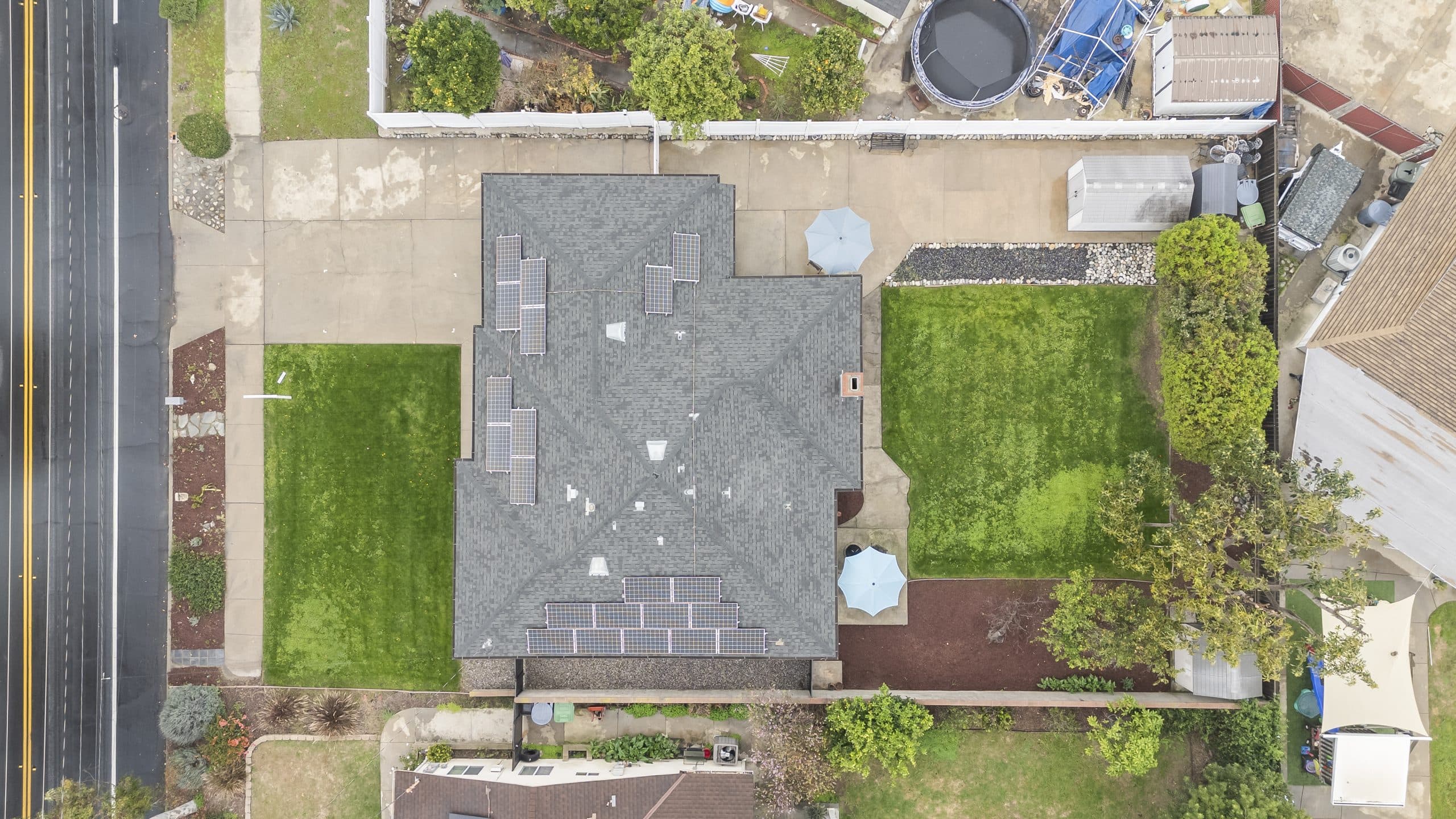
There is a category of Claremont solar home that confuses everyone at least once: the system is OWNED, and there is still money owed on it. The seller says the panels are theirs, which is true. The buyer hears 'owned' and expects nothing further to happen, which is not. Somewhere behind that owned system sits a financing arrangement, and it has to be resolved before the house changes hands. Which arrangement it is decides who pays what, and when. This article deepens the solar guide; the ownership categories behind it are laid out in the owned-versus-leased guide.
Owned-with-financing is its own category
A leased system is a contract the buyer may assume. A financed system is different in kind: the equipment already belongs to the homeowner, and what exists is a DEBT. Debts on a property being sold are ordinarily paid at closing out of proceeds, the way a mortgage or a second lien is, unless the parties have agreed to something else in writing. That is the default posture a seller should start from, and it is the posture a buyer should expect unless the contract says otherwise.
The complication is that solar financing comes in several legal shapes, and the shapes do not behave alike at closing. Three are common enough that anyone reading a Claremont title report should be able to tell them apart.
Shape one: an unsecured or equipment-secured solar loan
Many solar loans are consumer loans made to the homeowner. Some are unsecured. Some are secured by the equipment itself, and the lender records a UCC-1 FIXTURE FILING - a notice recorded against the property saying that the lender has an interest in specified equipment attached to it. The filing is the reason a buyer's title report shows an entry about solar equipment on a home the seller describes as owned outright.
The mechanics are ordinary once identified. The seller requests a written PAYOFF DEMAND from the lender with an expiration date on it, escrow pays the lender from proceeds at closing, and the lender releases the filing. What goes wrong is almost never the money. It is that nobody asked for the demand until the last week, or the demand expired and was never refreshed, or the release was assumed rather than arranged and the filing sat on title after closing. Escrow will handle all of it competently if escrow is told it exists.
Shape two: a PACE assessment
Property Assessed Clean Energy financing is a genuinely different creature and deserves its own paragraph. A PACE obligation is not a personal loan at all - it is repaid through an ASSESSMENT collected on the property tax bill, and it attaches to the property rather than to the borrower. That single structural fact drives everything else about it.
For a seller, the practical consequences are two. First, the assessment appears in the property tax picture and belongs in disclosure explicitly, in plain words, because a buyer who discovers it on a tax bill after closing has a grievance. Second, it may need to be paid off in connection with a sale rather than passed along, depending on the buyer's lender and on the terms of the specific program - some mortgage lenders will not lend behind an obligation with the priority a tax assessment can carry. Whether a particular PACE obligation must be retired, may be assumed, or is treated some other way is a question for the PACE administrator, the buyer's lender, and the escrow officer, and it should be asked in the first days of the transaction rather than discovered in loan conditions. It is also a fair question for an attorney where the amounts or the terms are consequential.
Shape three: a home equity loan or cash-out that funded the system
Sometimes there is no solar-specific instrument at all: the homeowner drew on the house to buy the panels. In that case the system is simply owned, and the financing is an ordinary mortgage lien that pays off with every other lien at closing. Nothing about the solar array changes the payoff mechanics, and no solar-specific filing appears. This is the cleanest version of the category, and it is worth confirming rather than assuming, because 'we financed it' means something different in each of these three shapes.
Who pays what, in practice
Absent an agreement to the contrary, the seller's debt is the seller's to clear, and it clears from proceeds at closing. That is the starting point, and it is a fair one: the buyer is purchasing a home with an owned solar system, and an owned system with a lien on it is not yet fully owned. Where parties depart from that default they should do so in the CONTRACT, in specific language, and with the escrow officer told about it in time to execute it.
Departures do happen and can be reasonable. A buyer may agree to assume a particular obligation where the program permits assumption and the buyer's lender allows it. Parties may adjust price against a payoff figure. A seller short on proceeds may negotiate a different structure. What none of that survives is vagueness: 'we will work out the solar' is not a term, and by the time it needs to be worked out the parties have usually stopped agreeing about it. The negotiating posture on all of this is the subject of the buyer tactics guide.
The seller's short list
Before listing, a seller with a financed system should be able to answer four questions from documents rather than memory. Which of the three shapes is this? Is anything recorded against the property, and does the preliminary title report show it? What is the current written payoff, and when does that figure expire? And what does the lender or program administrator require in order to release their interest at closing? Four answers, gathered before marketing, convert the most common cause of a late solar closing into paperwork that happens quietly in the background.
A buyer's version is shorter still: read the title report, ask escrow what each solar-related entry is, and confirm in writing who is clearing it. For the rest of the map, return to the solar guide, and for the leased-system counterpart of this problem see the escrow transfer guide. Payoff figures come from the lender or program administrator in writing, tax questions from the county, and questions about who is legally bound to pay what from an attorney. Anthony Grynchal has been licensed in California since November 2009.
Frequently asked questions
Does a solar loan transfer to the buyer?
Usually not. A solar loan is generally the seller's debt and is paid at closing from proceeds, like any other lien, unless the contract says otherwise and the lender permits an alternative. PACE assessments are a separate case with their own rules.
What is a UCC-1 fixture filing on my title report?
It is a recorded notice that a lender holds an interest in specified equipment attached to the property, commonly used for equipment-secured solar loans. It is cleared by paying the lender and obtaining a release. Ask escrow to confirm what the filing covers.
How is PACE financing different from a solar loan?
PACE is repaid through an assessment on the property tax bill and attaches to the property rather than to the borrower. Whether it must be paid off at sale depends on the program terms and on the buyer's lender, so ask the administrator and the lender early.
When should a seller request the payoff figure?
Before listing, and again close enough to closing that the figure has not expired. Written payoff demands carry expiration dates, and a stale figure is one of the more common reasons a solar closing slips.

Written by
Anthony Grynchal
Anthony Grynchal is a California real estate professional with eXp Realty, licensed since November 2009 (California DRE# 01873626), and the Designated Local Expert™ for Claremont — where he has lived for more than 33 years.
More about AnthonyPublished · Updated