Almost everything written about solar and real estate assumes the panels are already there. Most Claremont houses do not have them, and a fair number of buyers are looking at a bare roof while quietly thinking about a later installation.
That intention is worth about ten minutes of attention during the inspection period, because a handful of the things that decide whether a future installation is straightforward or expensive are easiest to check while a buyer still has an inspector on site and a contingency in place.
This is not an argument for or against installing. It is a checklist for keeping the option open with your eyes open.
The roof, first and always
An array installed on a roof with limited life remaining is a scheduling problem waiting to happen, because the panels have to come off and go back on when the roof is replaced. The whole sequencing argument is set out in the roof timing guide, and a buyer contemplating a future installation gets to make that sequencing decision at the best possible moment: before anything is on the roof at all.
So ask the inspector for three things specifically. The roof covering and its apparent condition. An estimate of remaining service life, understanding that it is an estimate. And whether there is any evidence of prior repair, layering or structural concern.
Material matters too. Different roof coverings involve different mounting approaches and different labor, and a fragile or complex covering makes any future work costlier. That is a fact to know, not a reason to walk.
The planes you actually have
A roof is not one surface. It is a set of planes with different orientations, pitches and sizes, interrupted by vents, chimneys, skylights and equipment.
Stand back and look at how the roof breaks up. A large uninterrupted plane facing a productive direction is a very different proposition from four small fragments split by obstructions, even if the total area is similar.
Note where the existing penetrations are. Note whether a plumbing vent or a flue sits in the middle of the best surface. Note the pitch, because a very steep or very shallow roof changes both production and the practicality of working on it.
None of this requires expertise. It requires looking, and then handing what you noticed to somebody qualified to assess it.
Shade, present and future
Claremont has a mature tree canopy and it is one of the best things about the city. It is also, for an array, the principal adversary.
Look at the lot's own trees and at what the neighbors have. Then look again and ask what those trees will be in ten years, because trees do not hold still and an array is a long-lived installation.
Shade from a structure is at least predictable. Shade from vegetation is a moving target, and a buyer who plans to install should have some sense of whether keeping the roof clear will mean routine trimming, a difficult conversation with a neighbor, or removing something they would rather keep.
Time of day matters as much as amount. A roof shaded at dawn and clear from mid-morning is in a different position from one shaded through the productive middle of the day.
The electrical service, which nobody looks at
Here is the item that most often turns a straightforward installation into an expensive one, and it has nothing to do with the roof.
A solar system connects to the home's electrical service, and the existing service has a capacity. Older homes in particular may have a service that was adequate for the way the house was used in its own era and is tight for a modern household, let alone one adding generation, storage or a car charger.
Where the existing service cannot accommodate what is proposed, an upgrade enters the project. That is a permit, a utility coordination, a licensed electrician, and in some cases work on the service entrance itself. It can be a substantial share of a project's cost and it is invisible from the driveway.
So during the inspection period, ask specifically about the main service panel: its rating, its apparent age, its condition, whether it shows signs of being at capacity, and where it is located relative to the roof. Where the meter and panel sit determines how far conductors have to run and through what.
An inspector can describe what is there. A licensed electrician is the right person to say what it would take to change it, and that is a call worth making before removing contingencies if the plan genuinely matters to the purchase.
Alternatives to the roof
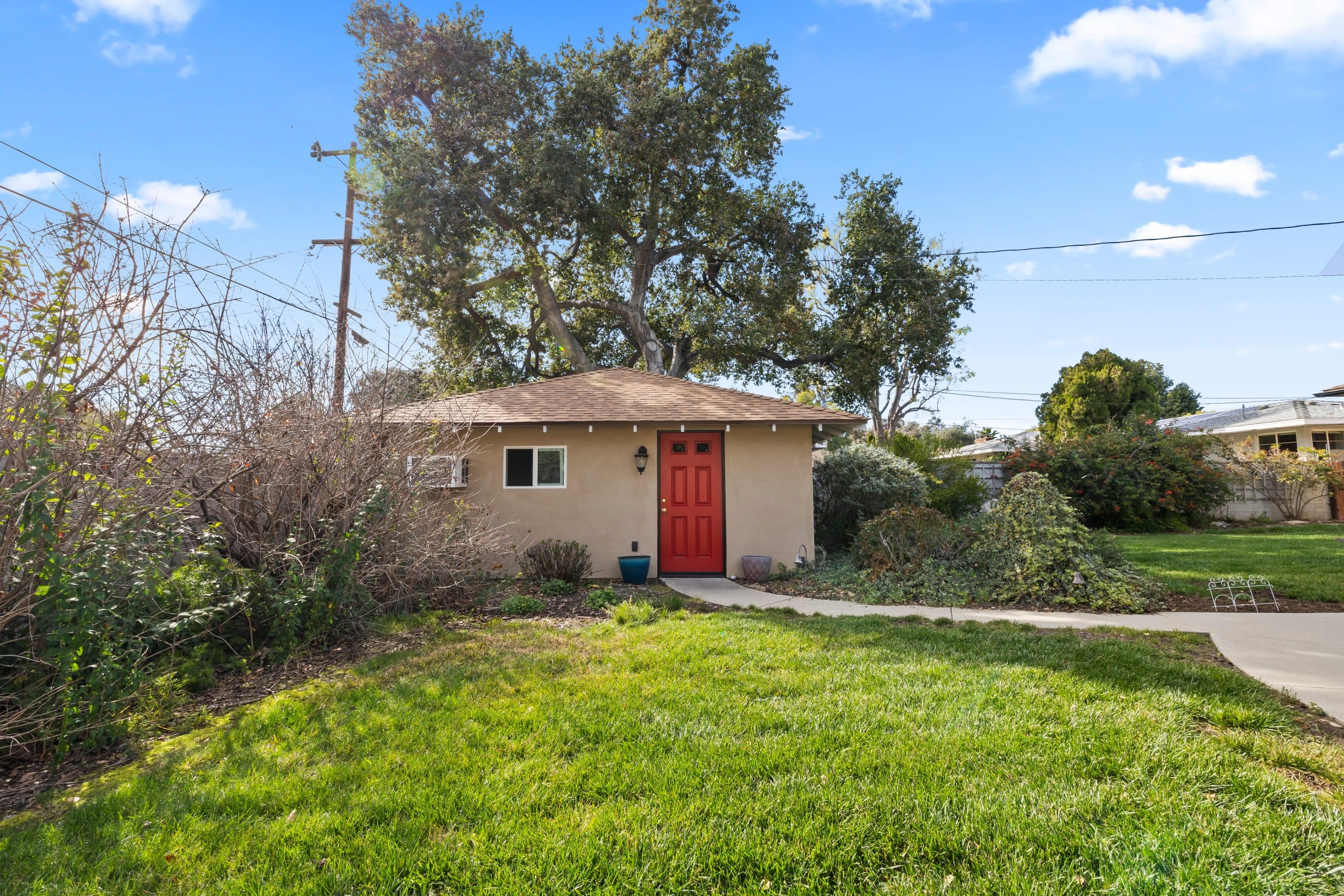
If the roof is poor, shaded or complicated, the lot may still have options: a ground-mounted array where there is space, or a structure such as a carport or shade structure that carries equipment.
Those bring their own considerations, including setbacks, structural requirements, permitting and how the resulting equipment is treated for insurance purposes, since detached structures are frequently covered under a separate limit. That specific point is covered in the insurance guide.
The point at the buying stage is narrower: notice whether the lot has usable space at all, because it widens the options if the roof is unpromising.
Rules that apply before anything else
Where the property is in an association, or carries a historic designation or an overlay, there is a review process to understand before a plan is made. Those processes are their own subject and the right sources are the association and the city, not a general assumption about what is allowed.
The buyer's task during escrow is simply to establish WHETHER such a process applies to this property, which is a question answerable from the governing documents and the city record. Discovering it later does not usually prevent an installation, but it certainly changes the timeline.
Do not pay for a phrase
Marketing language occasionally describes a home as solar ready. Sometimes that means conduit was run and a panel position was reserved during construction, which is genuinely useful. Sometimes it means the roof faces a direction somebody liked.
Ask what specifically was done, and ask for documentation of it. A conduit run that exists is worth something. A phrase in a listing is worth nothing, and the general rule about unverified claims in the disclosure guide applies to this one as much as to any other.
Decide the arrangement later, deliberately
Whether an eventual system is owned outright, financed, leased or supplied under a service agreement is the decision that shapes everything afterwards, including how easily the home sells later. That split is the subject of the owned versus leased guide, and it deserves its own considered decision rather than being settled by whoever knocks on the door first.
For the wider map, return to the solar guide. Service capacity and structural questions belong with licensed contractors; interconnection feasibility belongs with the utility; approval processes belong with the city or the association. Anthony Grynchal has been licensed in California since November 2009.
Frequently asked questions
What should I check about the roof if I might add solar later?
Covering and condition, an estimate of remaining service life, prior repairs, and how the roof breaks into usable planes. Installing over a roof near the end of its life means paying to remove and reinstall the array when the roof is replaced.
Why does the electrical service matter?
A solar system connects to the home's service, and an older or fully loaded service may need upgrading before anything can be added. That upgrade can be a significant part of a project's cost and it is not visible from the outside, so ask about the main panel during the inspection period.
How much does shade matter?
A great deal, and the timing of the shade matters as much as the amount. Look at the lot's trees and the neighbors' trees, and think about what they will be in ten years, since an array is a long-lived installation and vegetation is not static.
Is a listing that says solar ready worth anything?
Only if something was actually done, such as conduit run or a panel position reserved during construction. Ask what specifically was installed and ask for documentation. Treat the phrase itself as a claim to verify.
Who should I ask about feasibility during escrow?
The home inspector for the roof and the existing service panel, a licensed electrician for what a service change would involve, the utility for interconnection feasibility, and the city or the association for any review process that applies to the property.

Written by
Anthony Grynchal
Anthony Grynchal is a California real estate professional with eXp Realty, licensed since November 2009 (California DRE# 01873626), and the Designated Local Expert™ for Claremont — where he has lived for more than 33 years.
More about AnthonyPublished · Updated