
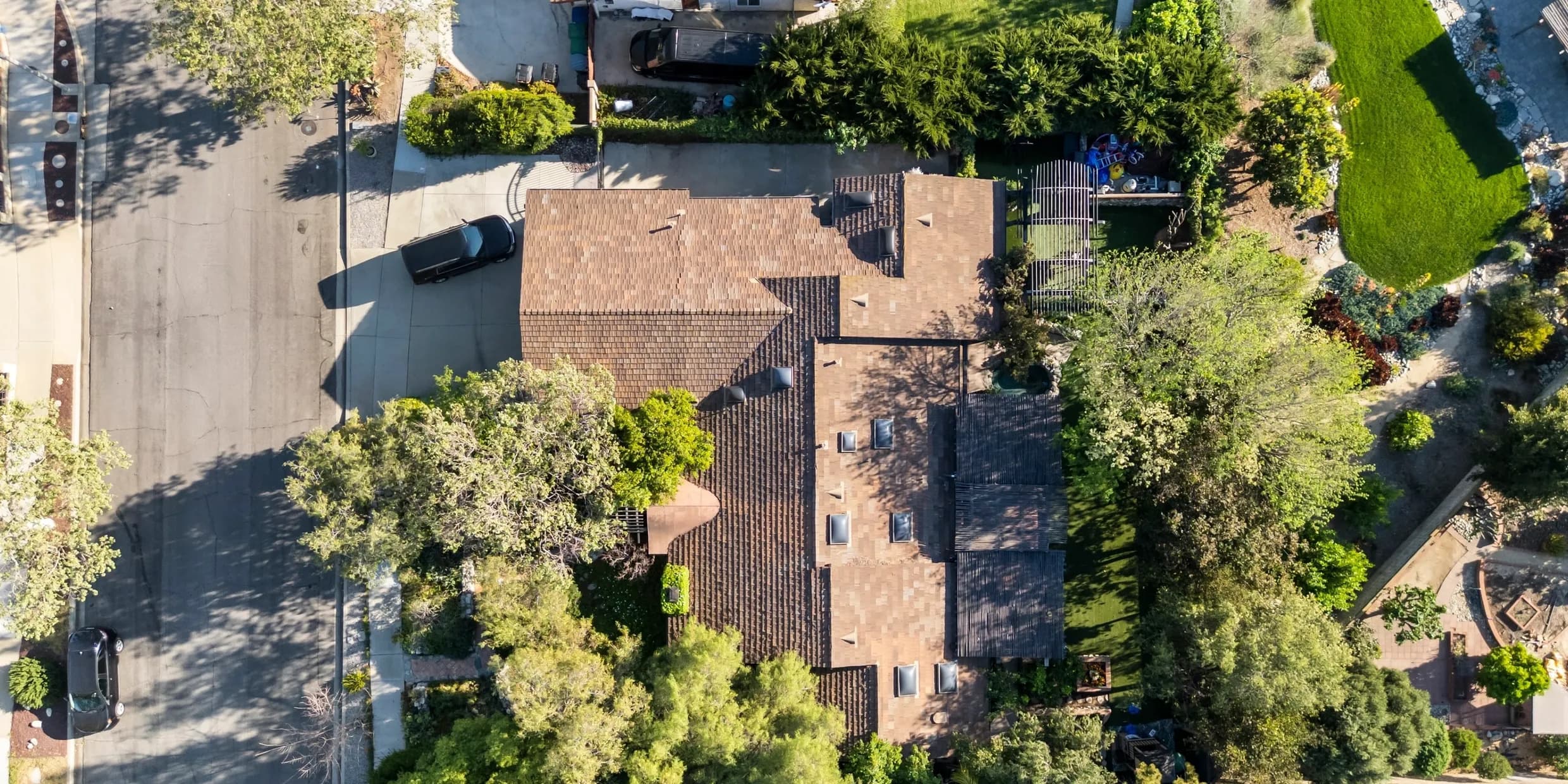
On an older Claremont street, the fence is rarely where anyone assumes it is. Lots here were laid out long ago, fences were replaced by neighbors on a handshake, garages and sheds were built to the back of a yard rather than to a surveyed line, and trees that were saplings when the boundary was set are now substantial structures in their own right. When something physical crosses a property line — a fence, a wall, a roof overhang, a driveway, a hedge, a retaining wall — that is an ENCROACHMENT, and it is one of the few title-adjacent problems that lives on the ground rather than in the record. This article covers what an encroachment is, why this town produces so many of them, and how they actually get resolved. It deepens the title and closing guide; the recorded cousins of this problem are the easement guide's subject. Standing frame: boundary disputes are legal matters with fact-specific answers, so this is general information rather than advice. A licensed land surveyor and a real estate attorney govern.
Encroachment, easement, and why the difference matters
An EASEMENT is a legal right to use someone else's land for a defined purpose — a utility corridor, a shared driveway, a right of access — and it is generally recorded, discoverable in a title search, and binding on whoever owns the property next. An ENCROACHMENT is a physical intrusion with no right behind it: a structure or planting that simply sits where it should not. The distinction matters because the remedies are completely different. An easement is read and complied with; an encroachment is negotiated, removed, or converted into an agreement giving it the legal standing it never had. Encroachments also come in degrees. A fence set a short distance inside one owner's property is a nuisance that mostly affects usable yard. A garage foundation, an addition, or a retaining wall crossing a line is a structural problem with real cost attached to any solution. And the passage of time introduces its own layer: California recognizes doctrines under which long, uninterrupted use can ripen into legal rights, and long-established boundary lines both owners have treated as the line can in some circumstances be given effect. Those doctrines have specific elements, they are litigated regularly, and no owner should assume either that a long-standing fence is safely theirs or that it is safely removable. That question — genuinely, every time — belongs to an attorney, because the answer turns on facts about use, duration and conduct rather than on the deed alone.
Where Claremont produces them
Start with the lots. Much of the older housing stock sits on DEEP PARCELS with long side yards and generous rear yards, which puts a great deal of fence line between neighbors and a great deal of distance between that fence and anyone who might question it. Fences on those lines have often been replaced several times by different owners, each rebuilding roughly where the last one stood rather than where a survey says it should. Then the trees, which are the town's signature and its most common boundary complication: a trunk that has thickened across a line, roots lifting a neighbor's paving, canopy extending well over a fence, and a body of law about trees on or near boundaries that surprises most owners. Rear-lot outbuildings are another reliable source — garages, workshops and sheds placed close to a back line before anyone was thinking about it, now being converted to living space in the current wave of projects the garage conversion guide describes, which turns a tolerated shed into a permitted structure that has to be located correctly. North Claremont's slope adds retaining walls and drainage structures, where the wall may sit on one property while the soil it holds belongs to the other. And shared or overlapping driveways appear throughout the older neighborhoods, sometimes with a recorded easement behind them and sometimes with nothing but generations of habit. The reassuring part is that most of these coexist peacefully for decades. The problem is that they surface at exactly the wrong moment: when someone sells, builds, or replaces a fence.
How they surface, and how they get resolved
A standard title search will not find an encroachment, because nothing about it was recorded — a point the preliminary title report guide makes about the boundary category generally, and the reason ordinary policies commonly except survey matters from coverage. What finds them is a SURVEY by a licensed land surveyor, and the practical question for a Claremont buyer is when one is worth commissioning: where a fence line and a legal description obviously disagree, where a structure sits close to a line, where an addition or accessory unit is planned, where a lot has been divided historically, or where the seller's disclosures raise a boundary question. Resolution then runs along a short list of paths, all worth knowing before the emotional stage begins. A BOUNDARY LINE AGREEMENT between neighbors, recorded, fixes an agreed line going forward. An ENCROACHMENT OR LICENSE AGREEMENT permits the existing intrusion to remain on stated terms, often terminating when the structure is replaced. An EASEMENT can be granted to legitimize a use permanently. A QUITCLAIM DEED can transfer the disputed sliver outright. Removal is always available and is sometimes the only clean answer. Litigation, including a quiet title action, exists as the last resort and is the most expensive path by a wide margin. Two seller obligations sit alongside all of this: known boundary disputes and encroachments are the kind of material fact California's disclosure regime is built around, and concealing one converts a neighbor problem into a liability problem. The as-is guide makes the general point that selling as-is does not relieve a seller of disclosure. Raise it, document it, and let counsel structure the fix. This is general information, not legal advice.
Anthony Grynchal has been licensed in California since November 2009 and has seen more Claremont deals complicated by a fence than by a lender. The neighbors are almost always reasonable; it is the discovery timing that causes the damage, which is why the survey question belongs early.
Frequently asked questions
What is the difference between an encroachment and an easement?
An easement is a recorded legal right to use someone else's land for a defined purpose, discoverable in a title search and binding on future owners. An encroachment is a physical intrusion with no right behind it. The remedies differ completely: an easement is complied with, an encroachment is negotiated, removed, or given legal standing.
Will a title search find an encroachment on my Claremont property?
No, because nothing about it was recorded. That is why ordinary policies commonly except survey matters from coverage. What finds an encroachment is a survey by a licensed land surveyor — worth commissioning where a fence and the legal description disagree, where a structure sits close to a line, or where an addition is planned.
If a fence has been there for decades, is that land mine now?
Do not assume it either way. California recognizes doctrines under which long, uninterrupted use can ripen into legal rights, and long-established boundary lines both owners treated as the line can sometimes be given effect. Those doctrines have specific elements and are litigated regularly, so the answer turns on facts and belongs to an attorney.
How do neighbors resolve an encroachment without going to court?
A recorded boundary line agreement fixing an agreed line, an encroachment or license agreement letting the intrusion remain on stated terms, a granted easement, a quitclaim deed transferring the disputed sliver, or removal. Litigation including quiet title is the last resort and by a wide margin the most expensive path.

Written by
Anthony Grynchal
Anthony Grynchal is a California real estate professional with eXp Realty, licensed since November 2009 (California DRE# 01873626), and the Designated Local Expert™ for Claremont — where he has lived for more than 33 years.
More about AnthonyPublished · Updated