
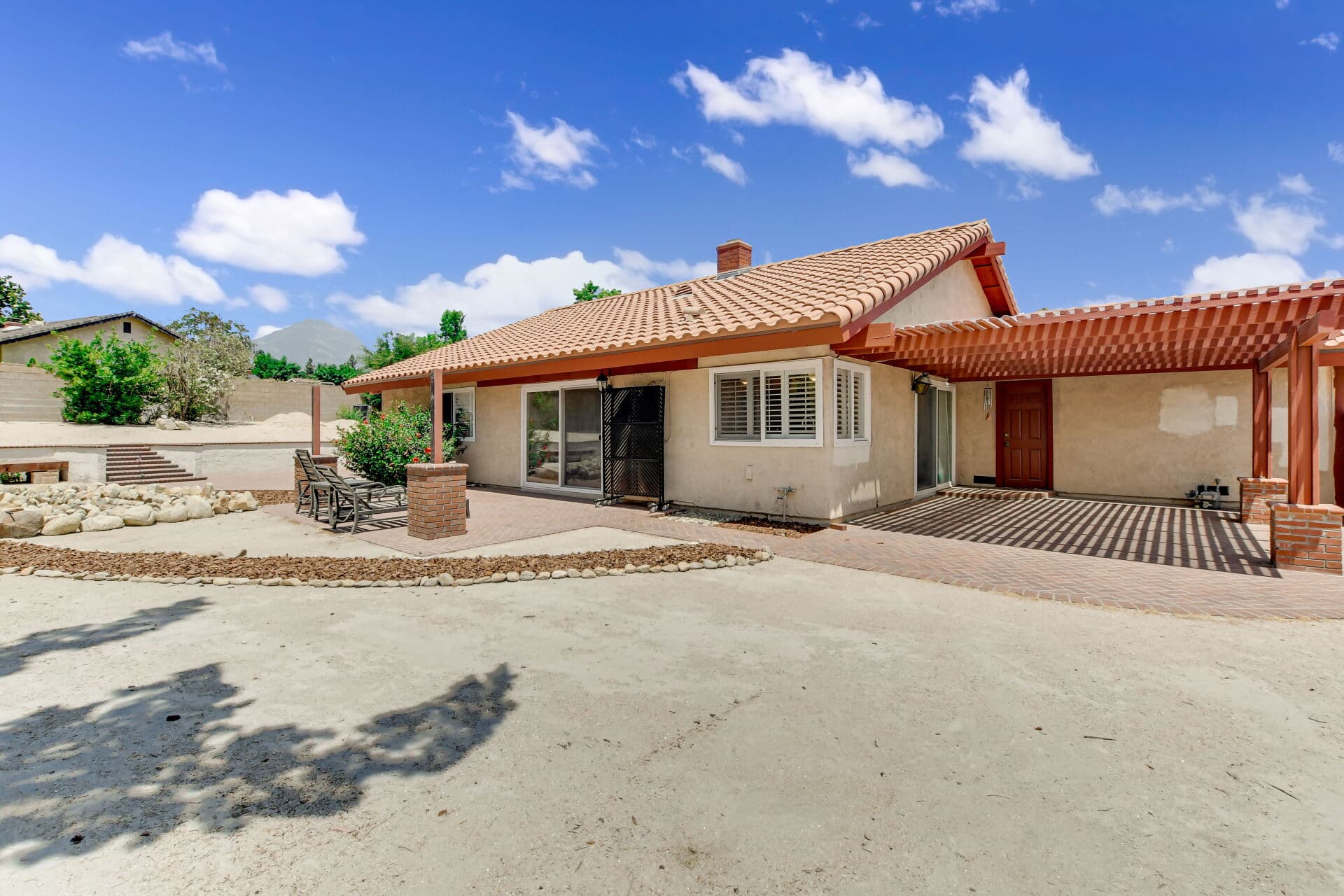
You tour a Claremont house, and behind it sits a converted garage with a kitchenette, a full bathroom and its own door. The listing calls it a bonus room, a studio, or flex space. The seller mentions, almost in passing, that it was done years ago. What you are looking at may be an unpermitted second dwelling, and it is one of the more consequential things a buyer can misread.
This is not automatically a reason to walk away. It is a reason to slow down and price the situation accurately, which is what this article is for. It extends the cluster ADU overview from the buyer's side.
What unpermitted actually means
Unpermitted work is construction the city did not permit and did not inspect. It carries three separate problems, and buyers often notice only the first.
Legal status. The space does not officially exist as a dwelling. It cannot be counted as a legal unit, and the city retains authority over unpermitted construction. What that authority means in practice depends on current code enforcement policy and on state law, both of which have moved substantially in recent years toward encouraging legalization rather than demolition. Verify the current posture with the City of Claremont planning and building divisions rather than assuming either the worst or the best.
Construction quality. Nobody inspected it. That is the real risk. Framing, electrical, plumbing, gas, egress, fire separation between dwellings, ventilation and drainage were all done to whatever standard the person doing the work chose to apply. Some unpermitted work is competent. Some is dangerous. You cannot tell from the finishes.
Financial treatment. Lenders, appraisers and insurers all handle unpermitted living space differently from permitted space, and generally less favorably.
Financing is the constraint that usually decides it
Take this to your loan officer before you write an offer, not after. Lenders vary in how they treat unpermitted structures, and their programs change. Some will lend with the space discounted or excluded from value. Some require it removed or restored. Some decline the property. Underwriting also decides whether any rental income from the space can count toward your qualifying, and unpermitted units are the least likely to be counted.
An appraiser will typically not give value to living area that lacks permits, which means the number that comes back may be lower than the price you agreed. Know the lender's position before your deposit is at risk. The financing landscape for accessory units generally is covered in financing an ADU in Claremont.
Insurance is the item buyers forget
Insurers ask what is on the property and how it is used. A second dwelling, particularly a tenant-occupied one, is a different risk than a single-family home, and a structure the city never inspected is a different risk again. A claim arising from the unpermitted space can be complicated by the fact that the carrier was never told the space existed, or was told something inaccurate.
Call an insurance agent during your contingency period, describe the property honestly, and get the answer in writing. The broader picture is set out in ADU insurance and liability for Claremont owners.
Do not assume you can rent it
Buyers frequently underwrite a purchase on the assumption that the back unit will be rented out. Renting an unpermitted dwelling raises legal exposure that goes well beyond the city: habitability obligations, tenant rights, and the awkward position of collecting rent on a space with no legal existence. Any plan that depends on that income should be treated as unproven until you have confirmed both the legal position and the lender's treatment of it.
Inspect harder than usual
A standard home inspection is a general-condition survey. Unpermitted living space warrants more. Consider adding specialists to look at the electrical system, plumbing and gas connections, structural work, and any roof or foundation modifications. Ask specifically about egress, smoke and carbon monoxide detection, fire separation between dwellings, and how the space is heated.
Pull the permit history for the parcel yourself. Comparing what is recorded with what is standing tells you exactly which work was never reviewed, and that comparison is often more informative than any single inspection report.
Price the three paths
Once you know what you are buying, there are three realistic futures, and each carries a different cost you can estimate with professional help.
Legalize it. Bring the unit into compliance through the city's process. What this requires depends entirely on current standards and on what the existing construction can be brought up to. Some conversions legalize cleanly; some cannot be legalized at all in their existing configuration. The path is described in legalizing an existing structure, and the planning counter is where you learn what your specific structure would need.
Restore it. Return the space to its permitted use, typically a garage or storage. This is often the cheapest resolution and the one lenders like most.
Use it as it stands. Live with it, do not rent it, disclose it when you eventually sell, and accept that a future buyer will discount it exactly as you should be discounting it now.
Negotiating position
Sellers are sometimes surprised that unpermitted space is a discount rather than a premium. It is a discount, because the buyer inherits the cost, the uncertainty and the disclosure obligation. Handle it in writing: get the seller's knowledge disclosed, use your investigation contingency to actually investigate, and if a legalization path exists, price it into the offer rather than hoping it turns out cheap.
None of this makes the house a bad purchase. Plenty of good Claremont homes carry an unpermitted structure out back, and buyers who go in with clear eyes do fine. The failure mode is paying a permitted-unit price for an unpermitted unit. Start with the ADU hub for the wider picture, and read selling a Claremont home with an ADU to understand how the same facts will look when you are the one selling. Anthony Grynchal has been licensed in California since November 2009.
Frequently asked questions
Can I get a loan on a house with an unpermitted ADU?
Often yes, but treatment varies by lender and program, and it changes. Some lend with the space excluded from value, some require restoration, some decline. Confirm your specific lender's position before writing an offer rather than after.
Will the city make me tear it down?
Not necessarily. State law and local policy have moved toward encouraging legalization rather than removal, but outcomes depend on the structure and on current code enforcement practice. Ask the City of Claremont planning and building divisions about your specific property.
Can I rent out an unpermitted unit after I buy it?
Treat that plan as unproven. Renting a dwelling with no legal existence raises habitability, tenant-law and liability exposure well beyond city permitting. Get legal advice before underwriting a purchase on that income.
How do I find out what was permitted?
Request the permit history for the parcel from the city building division and compare it against what is physically standing. The gap between the record and the structure tells you exactly which work was never reviewed.
Should I pay less for a home with an unpermitted unit?
Generally yes. You inherit the cost of resolving it, the uncertainty about whether it can be legalized, and the disclosure obligation when you later sell. Price the realistic resolution path rather than assuming the cheapest one.

Written by
Anthony Grynchal
Anthony Grynchal is a California real estate professional with eXp Realty, licensed since November 2009 (California DRE# 01873626), and the Designated Local Expert™ for Claremont — where he has lived for more than 33 years.
More about AnthonyPublished · Updated