The Claremont ADU Guide: From Idea to Occupancy

ADUs in Claremont: what state law allows, how the city process works, garage conversions, rentals, value and taxes, explained without the hype.

An accessory dwelling unit, an ADU, is a second, self-contained home on a lot zoned for one: a backyard cottage, a converted garage, an attached suite with its own kitchen and entrance, or a junior unit carved out of the main house. California has spent recent years systematically dismantling the obstacles cities once used to prevent them, and Claremont is unusually good territory for what the law now allows: the north side of town is full of large mid-century lots, the Claremont Colleges generate steady demand for small rentals, and multigenerational households are a fixture of this community. An ADU here is a serious project, a six-figure construction decision for most owners, and it deserves better guidance than hype in either direction. This page is the complete picture: the types, the rules, the lots, the process, the rental question, and what an ADU does to value and taxes.

I am Anthony Grynchal, Mr. Claremont, licensed in California since November 2009. I am not a contractor or a city planner; what I bring is the real estate view, which lots work, what buyers later pay for, and where owners get hurt, and a standing rule you will see repeated: verify every current requirement with the City of Claremont planning division before you spend money on design.

The four kinds of ADU

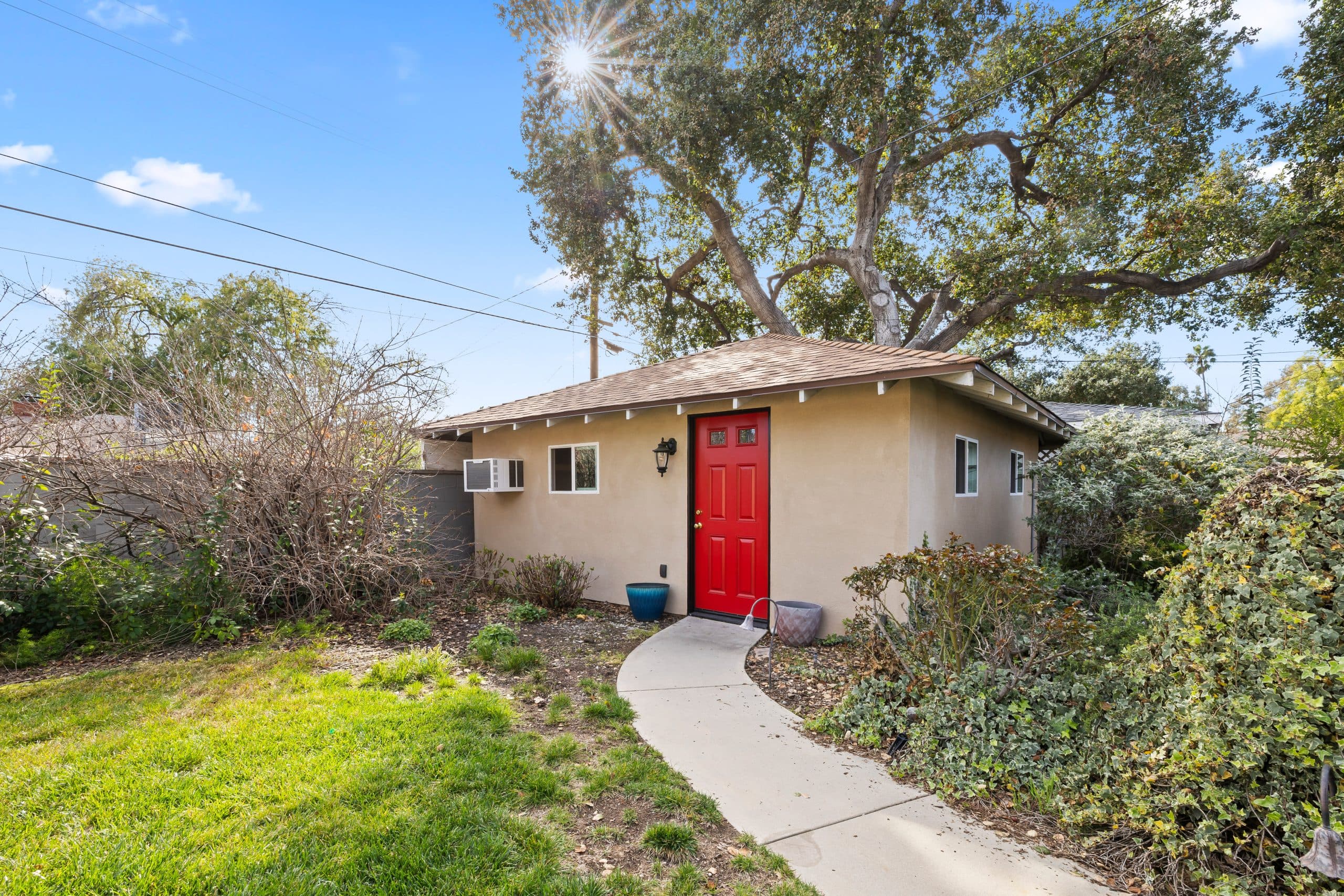
  • Detached ADUs are the backyard cottage: a standalone new structure, the most flexible and most expensive path, and the natural fit for Claremont's deeper lots.
  • Attached ADUs share a wall with the main house, an addition with its own entrance and full facilities, useful where yard space or budget will not carry a standalone build.
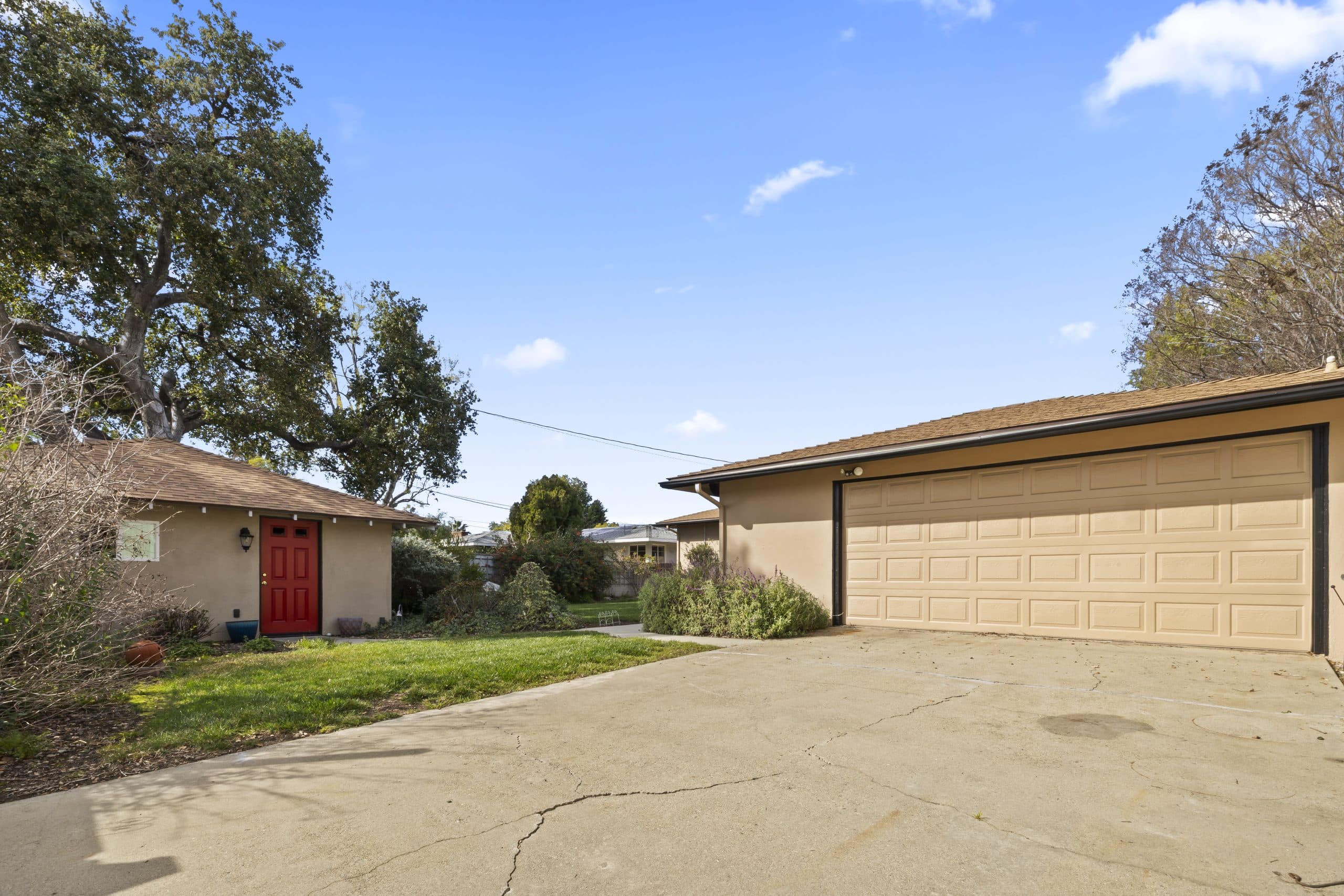
  • Garage conversions transform existing enclosed space, usually the fastest and least expensive route because the shell, slab, and often the utilities already exist. Claremont's mid-century tracts, with their detached rear garages, are full of candidates.
  • Junior ADUs (JADUs) are small units created within the walls of the existing home, with efficiency facilities, the lightest-touch option and sometimes the only one a smaller lot supports.

The garage-versus-detached decision is the one most Claremont owners actually face, and the honest cost, rules, and rental trade-offs between them are worked through in garage conversion vs detached ADU in Claremont.

State law sets the floor; Claremont sets the details

The single most important thing to understand about ADU rules is the two-layer structure. California state law establishes a floor of rights that every city must honor: qualifying ADUs must be allowed on single-family lots, review is ministerial, meaning a code-compliant application is checked against objective standards rather than argued at a discretionary public hearing, the review runs on a state-imposed clock, and state law strictly limits what cities can demand on matters like setbacks and parking, with parking requirements relaxed further near transit, which matters for lots near the Village and its Metrolink depot.

On top of that floor, Claremont applies its own objective standards, height, placement, size tiers, and design details, and those local rules are where a project actually gets shaped. This is a fast-moving area of law: the state legislature has amended the ADU statutes repeatedly, and city standards evolve in response. So treat every specific figure you read anywhere, this page included, as a prompt to verify rather than a fact to build on: before you pay for design work, take your actual plan to the City of Claremont planning division and have the current requirements confirmed for your lot. That single conversation is the cheapest insurance in the entire process.

Which Claremont lots work best

ADU feasibility in this town is a lot-by-lot question, and the pattern is consistent. The large mid-century lots of north Claremont, in tracts like Towne Ranch and Blaisdell Ranch, are the sweet spot: deep rear yards with room for a detached unit that respects setbacks without crowding the main house. The postwar tracts across the city carry detached rear garages that convert well. Closer to the Village, lots get smaller and older, which pushes projects toward garage conversions and JADUs, while proximity to transit eases the parking math. Hillside lots in Claraboya are their own conversation, where slope, access, and construction cost dominate everything.

One local observation that surprises nearly every owner: in Claremont, the tree is a design constraint. This is a city that takes its canopy seriously, and the mature tree you love is part of the siting puzzle, shading, roots, protection during construction, in a way newcomers to the process rarely anticipate. Feasibility here means the lot, the utilities, the trees, and the budget considered together, before any drawing is paid for.

The process, from idea to occupancy

  1. Feasibility. Confirm what your lot supports: setbacks, size tiers, utility routing, tree constraints, and a realistic budget conversation. This is where the planning division visit belongs.
  2. Design. Plans drawn to the city's objective standards, by a designer or architect who has permitted ADUs in Claremont before, experience with this specific city's checklist is worth paying for.
  3. Plan check and permits. The ministerial review: your application is checked against the standards, corrections cycle back and forth, and the state clock governs the timeline.
  4. Construction. The build itself, with inspections at the standard milestones. Utility work deserves early attention, whether the unit shares the main house's services or takes separate metering, because trenching and panel upgrades are where budgets quietly grow.
  5. Certificate of occupancy. The finish line that makes the unit legal to occupy, and the document that matters enormously when you eventually sell or refinance.

On cost, honesty beats precision: a detached ADU is a genuine construction project priced like one, garage conversions generally cost meaningfully less because the shell exists, and every number depends on scope, site, and the market for labor and materials at the moment you build. Get real bids, not internet averages. Financing follows the same logic as any major improvement, home equity lines, cash-out refinancing, renovation loans, and the trade-offs are the standard ones, best confirmed with a lender against current terms.

The rental question, honestly

Claremont's rental demand is the quiet advantage of building here. The Colleges generate a steady stream of graduate students, visiting faculty, and staff who want small, quality housing near campus and the Village, a tenant pool most suburbs simply do not have, and the furnished academic-year rental is a genuine local niche. Multigenerational use is the other half of the story: an ADU that houses aging parents or a returning adult child solves a problem no spreadsheet captures, and in my experience that is the majority use case in this town, with rental income as the second act.

The honesty part: being a landlord is a job, even at the bottom of your own garden. Screening, maintenance, and the legal obligations of a California rental all apply, rules for rent and tenancies evolve, and income depends on the unit's quality and the year's market, so run the decision on conservative assumptions and verify the current rental rules before you commit to the plan. Build quality worth renting, because the college-adjacent tenant pool here rewards it.

Value, taxes, insurance, and selling later

A permitted, well-built ADU adds real value to a Claremont property, more house, more flexibility, income potential, but the appraisal of that value is genuinely imperfect, because homes with ADUs sell rarely enough here that comparable evidence is thin. The block-by-block logic of what this market pays for is the territory of the Claremont home values hub. On property taxes, the mechanics are friendlier than owners fear: the new construction is assessed and added to your bill, but your existing home's assessed value is not reopened, so the ADU adds its own increment rather than triggering a reassessment of everything. Update your insurance when the unit exists, and again when it is tenanted, because coverage written for a single-family home does not automatically stretch.

Two ends of the legitimacy spectrum deserve their own guides. If you are buying or selling a home where work was done without permits, common in a town with this much old housing stock, the path to making it legal is covered in legalizing an unpermitted structure in Claremont. And when a documented, permitted ADU goes to market, it is an asset that deserves deliberate positioning, part of the wider arc in the Claremont selling guide.

The mistakes, and the short version

The expensive mistakes repeat: designing before checking feasibility, skipping the planning division conversation, underestimating utility work, building without permits, and planning the whole project around an optimistic rent number. The sequence that works is the boring one: verify the current rules with the city, confirm feasibility on your actual lot, design to the standards, permit everything, budget conservatively, and decide the rental question with your eyes open. If you want the real estate half of that thinking, whether your lot is a candidate, what the investment does to your home's value, and how it positions you for an eventual sale, call me at (909) 731-5374 for an ADU feasibility conversation. I will tell you honestly if your lot is a poor candidate, which is a cheaper thing to hear from me than from a contractor's final invoice.

Frequently asked questions

Can I build an ADU on my Claremont lot?

Very likely yes in some form, because California law requires cities to allow qualifying ADUs on single-family lots through objective, ministerial review. What your specific lot supports, detached cottage, garage conversion, or junior unit, depends on setbacks, size standards, utilities, and site constraints like Claremont's protected mature trees. Confirm the current requirements with the City of Claremont planning division before paying for any design work.

Do I need a public hearing to build a Claremont ADU?

No. State law makes ADU review ministerial: a code-compliant application is checked against objective standards rather than debated at a discretionary hearing, and the review runs on a state-imposed timeline. Neighbors do not get a veto. The practical work is meeting the standards precisely, which is why a designer who has already permitted ADUs in Claremont earns their fee.

Will an ADU raise the property taxes on my whole Claremont home?

No, and this fear stops more projects than it should. The new construction is assessed and added as its own increment to your bill, but your existing home's assessed value is not reopened, so the base protected under California's tax rules stays intact. The county handles the ADU assessment after completion; budget for the increment, not for a full reassessment.

Can I rent my Claremont ADU to college students?

Yes, and the Claremont Colleges are precisely why ADU rental demand here is stronger than in most suburbs: graduate students, visiting faculty, and staff consistently want small, quality housing near campus and the Village, and furnished academic-year rentals are a real local niche. California rental law applies in full, and rental rules evolve, so verify current requirements and run the numbers conservatively before building around the income.