
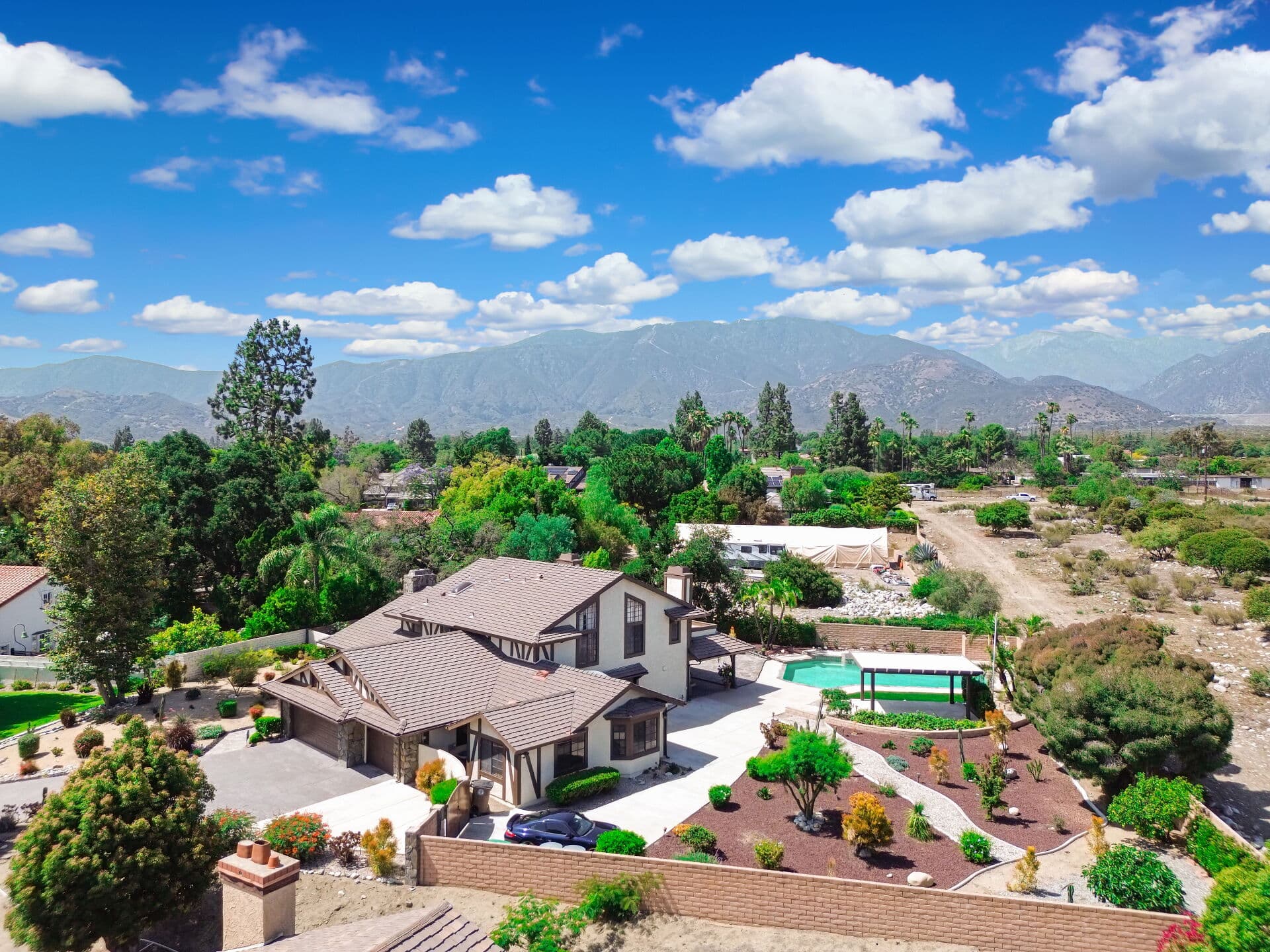
Claremont takes in buyers who cannot get here to look. Faculty and staff arriving for the Colleges, families relocating from out of state with a start date already fixed, adult children buying near ageing parents, owners transferred in on short notice. Buying a home you have never stood in is not reckless — a great many sound purchases happen exactly this way — but it is only safe when a deliberate protocol replaces the information a walkthrough would have given you. The failure mode is rarely a hidden defect. It is a buyer who substituted photographs for process. This article sets out that protocol: how to run the tour you cannot attend, how to buy the things a camera cannot capture, and how to protect the exit. It deepens the buying guide; the week-by-week machinery this all rides inside belongs to the escrow timeline guide.
Run the tour you cannot attend
A recorded video sent along with the listing is marketing. What you need is a LIVE, UNEDITED, UNCUT walkthrough with someone who represents YOU — your own agent, working as your fiduciary — on a call where you direct the camera. Make it slow and make it boring. Pan every wall rather than cutting between rooms. Hold on ceilings and corners, where staining shows. Open every window and every closet, run every tap, flush every toilet, listen to the water pressure, open the electrical panel, find the water heater and read the label on it, look at the attic access, and walk the entire perimeter of the lot with the camera pointed down at the ground, where drainage, grade and hardscape live. Then do it again at a different hour on a different day, because a west-facing Claremont living room at four in the afternoon and the same room at nine in the morning are two different rooms. Ask your agent for the things video flatters: how level the floors feel underfoot, whether the doors close square, what the place smells like, how loud the street is with the front door open. And insist on independence. A remote buyer touring through the listing agent has nobody inside the building whose duty runs to them, which is the single easiest thing to get wrong in a sight-unseen purchase and the hardest to repair afterwards.
Buy what the camera cannot capture
Some of what makes a Claremont address right or wrong for you simply does not travel down a video call: the volume of a street at school pick-up, how a foothill lot behaves in real rain, what the tree canopy does to light and to gutters, whether the walk to the Village is genuinely a walk, how close the arterials and the rail corridor actually feel from the back patio. Two substitutions do most of the work. FIRST, PAY FOR EYES: order the general inspection plus the specialists Claremont's older stock earns — a sewer lateral camera where mature trees and clay pipe meet, a roof inspection, a foundation or drainage opinion on a sloping lot, a pest report — and read them as your walkthrough rather than as a formality, which is what the inspection guide exists to help you do. SECOND, READ THE PAPER: the seller's disclosures, the natural hazard report, the permit history on file with the city, and the preliminary title report together describe the property in a way no tour ever does. Then buy the neighborhood separately from the house. Ask your agent to drive the street at three different hours and describe it plainly, ask what is behind and beside the lot rather than only what faces it, and if your schedule allows anything at all, spend a night nearby before your contingencies expire.
Protect the exit
A remote buyer is the last person who should be stripping contingencies. Keep the investigation period and, where you can, make it LONGER rather than shorter, since all of your diligence has to be executed by other people on your behalf and each handoff costs a day. Where possible, negotiate an explicit right to inspect the property yourself — a buyer's own visit written in as a condition is a normal thing to ask for, and a reasonable seller will often grant it. Treat the FINAL WALKTHROUGH as a real event with a real plan: decide in advance who attends if you still cannot, exactly what they are checking, and what happens if it disappoints, because a walkthrough with no plan behind it is a formality performed in your name. Handle the logistics early — remote notarization and signing arrangements, identification, and how documents will physically reach you — so that closing week is not the first time anyone thinks about it. And treat WIRE INSTRUCTIONS as the highest-risk moment of the entire transaction: verify every instruction by telephone using a number you looked up independently, never one supplied in the email itself, and never act on a change of instructions without making that call first. Finally, keep the honest alternative on the table. Renting in town for a few months and buying with your own eyes costs a moving bill and buys certainty, and for some households that is simply the better trade.
Anthony Grynchal has been licensed in California since November 2009 and has represented buyers who bought Claremont homes without ever standing in them; the ones who were happy afterwards had the same thing in common — they spent money on reports and time on the street, and they never let the exit close before the information arrived.
Frequently asked questions
Is it safe to buy a house sight unseen?
It can be, with a protocol replacing what a walkthrough would have told you: a live unedited tour directed by you, an agent whose duty runs to you rather than the seller, specialist inspections read carefully, the full document package, and contingencies kept intact. The danger is substituting photographs for process.
Who should tour the house for me?
Your own agent, acting as your fiduciary — not the listing agent, whose duty runs to the seller. A remote buyer needs somebody inside the building working for them. A trusted local friend or family member can add a second opinion, but they cannot replace representation.
What should I ask to see on a video walkthrough?
Slow pans of every wall, ceilings and corners where staining shows, every closet and window opened, taps run and toilets flushed, the electrical panel, the water heater label, attic access, and a full perimeter walk with the camera pointed at the ground. Then repeat it at a different hour on a different day.
Which inspections matter most when buying remotely?
The general inspection plus the specialists Claremont's older stock earns: a sewer lateral camera where mature trees meet clay pipe, a roof inspection, a foundation or drainage opinion on a sloping lot, and a pest report. Read the reports as your walkthrough, not as paperwork to sign.
How do I avoid wire fraud in a remote purchase?
Verify every wiring instruction by telephone, using a number you looked up independently rather than one printed in the email. Never act on a change of instructions without that call. Remote buyers are targeted precisely because so much of the transaction already happens by email.

Written by
Anthony Grynchal
Anthony Grynchal is a California real estate professional with eXp Realty, licensed since November 2009 (California DRE# 01873626), and the Designated Local Expert™ for Claremont — where he has lived for more than 33 years.
More about AnthonyPublished · Updated