
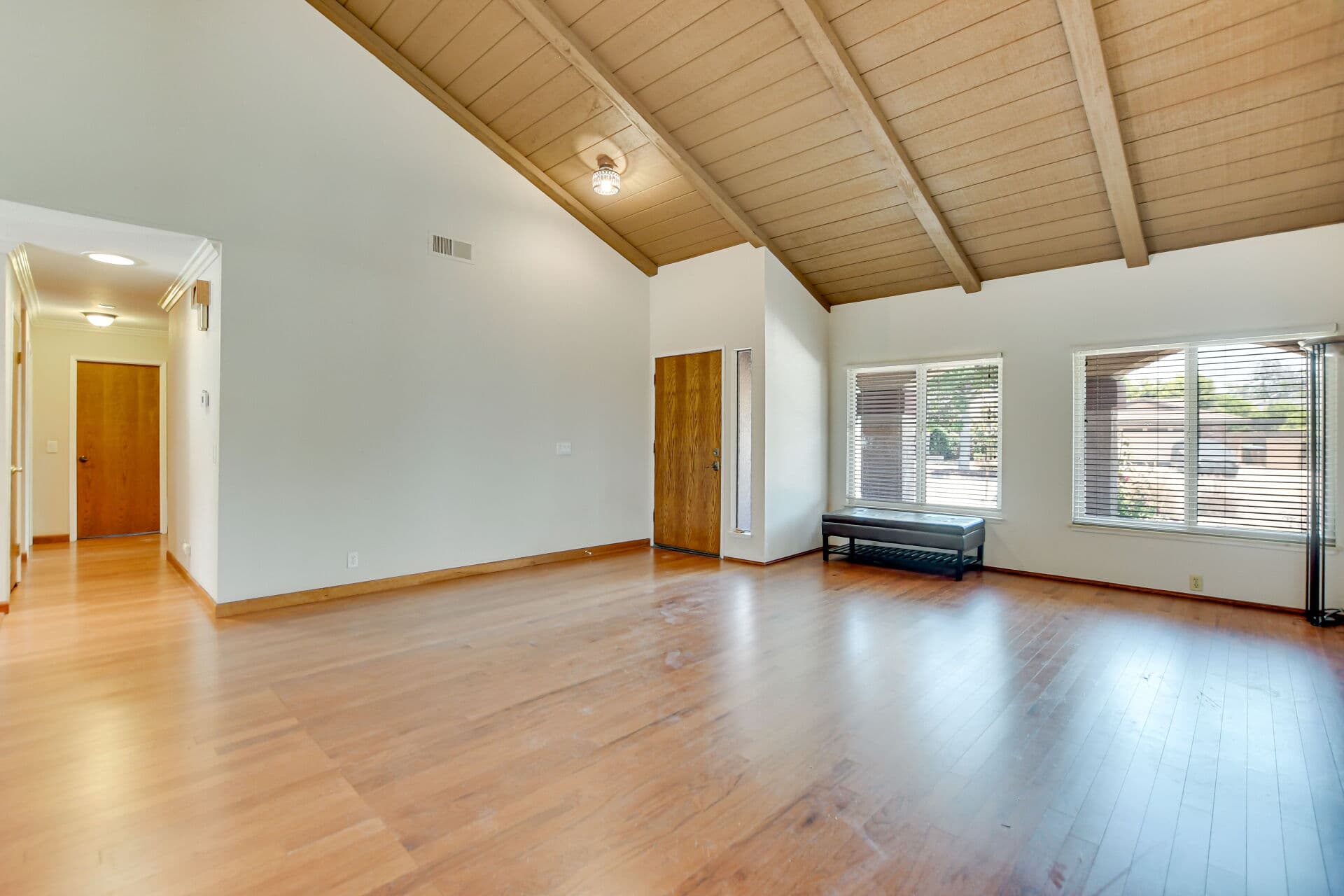
The final walkthrough is the last time you stand in the house before it becomes yours, and most buyers spend it feeling sentimental instead of paying attention. It is not a celebration and it is not a second inspection. It is a VERIFICATION: that the property is in the condition the contract says it should be in, that agreed repairs were actually done, and that nothing broke, leaked, or left the building since you last saw it. This extends the buying guide and picks up where the escrow timeline puts you in the final stretch.
What the walkthrough is for
Three questions, and only three.
Is the property in substantially the same condition as when you agreed to buy it? Were the repairs the seller agreed to actually completed? Is everything that was supposed to stay with the house still here, and everything that was supposed to leave actually gone?
It is not the moment to renegotiate price, to raise a defect you already knew about, or to discover something you should have investigated during your inspection period. Those doors have closed. What is still open is the gap between the condition you contracted for and the condition in front of you.
Timing, and why empty is better
The walkthrough is typically scheduled close to closing, and your agent coordinates it with the listing side. Two timing points are worth insisting on.
Ask for it AFTER the seller has moved out. A house full of furniture hides floors, walls, and the corner where the water heater has been weeping. An empty house tells you the truth, and the truth is the whole reason you are there.
Ask for enough of a gap before signing that a problem can be dealt with rather than swallowed. A walkthrough scheduled an hour before your signing appointment is a formality; one with a working day in front of it is leverage. Contract periods and closing dates are negotiated terms, so if this matters to you, say so when the timeline is being set rather than at the end.
What to bring
- Your inspection report and the repair addendum, so you are checking against the actual list rather than memory.
- The seller's disclosures.
- Photos from your first visits, which settle arguments about what was there.
- A phone charger, a small plug-in tester if you have one, and something to write with.
- Your agent. Do not do this alone.
The systems pass
Work the utilities first, because those are the failures that cost real money and the ones a moved-out house hides best.
Turn on every faucet, hot and cold, and let them run. Flush every toilet. Fill a sink and drain it while you watch for slow drainage. Run the dishwasher through part of a cycle. Look under every sink with a flashlight, since a slow leak announces itself as a stain long before it announces itself as a puddle.
Run the heat, then run the air conditioning, and let each one actually produce conditioned air rather than just clicking on. In Claremont's older housing stock the heater has often sat unused through summer; the walkthrough is where you learn whether it wakes up.
Test the water heater by running hot water somewhere far from the tank and waiting. Flip every light switch and note the ones that do nothing. Open and close every window and exterior door, and lock them, because sticking hardware is a common late surprise. Test the garage door from both the wall button and the remote, including the safety reverse.
The condition pass
Now walk it slowly, room by room, in the order you would move in.
Look at floors and walls where furniture stood, since that is where damage was and where it now is not hidden. Look at ceilings, especially under bathrooms and around any roof penetration, for the fresh brown ring that says something happened after your inspection. Look for holes where things were mounted and for paint that does not match.
Check that fixtures match what you contracted for. Light fixtures, appliances, the mirror in the entry, the washer and dryer if they were included: if the contract says it stays, it should be here. Swapping a nice fixture for a builder-grade one on the way out is a real and recurring thing.
Go outside. Look at landscaping, irrigation, gates, and fences. Check that debris and personal property are gone rather than stacked in the side yard, and open the attic hatch and any crawlspace access to confirm the same. Anything left behind becomes your disposal problem the day after closing.
Verifying agreed repairs
This is where a walkthrough earns its keep. For every item the seller agreed to fix, look at the actual work and ask for the paperwork: invoices, receipts, and permits where permits were required. A repair described as done and a repair with an invoice from a licensed contractor are different things.
Photograph each completed item. If work was done under permit, confirm the permit was finalized rather than merely pulled. If a repair was performed by the seller personally on something that should have been permitted, raise it now, because it becomes your unpermitted work at closing.
When something is wrong
Do not sign first and discuss it later. Once you close, your practical leverage is largely gone and your remedy becomes a claim rather than a conversation.
Tell your agent immediately, while you are still standing in the house. Photograph and video everything, with something in frame that establishes the date. Then work the options: the seller repairs it before closing, a holdback is placed in escrow to cover the work, a credit is negotiated, or closing moves. Which of those is available depends on the contract and on how much time is left, which is exactly why the timing above matters.
If the problem is severe enough to change the deal, that is a different conversation, and the walk-away guide covers how to think about it clearly.
Do the boring version
Most walkthroughs turn up nothing, and the ones that do turn up something usually turn up something small: a switch that stopped working, junk in the garage, a repair invoice nobody produced. Small is fine. Small found before closing is a conversation; small found after closing is your problem and your invoice.
Take the hour. Bring the list. The buying guide has the rest of the map, and the inspection guide covers the earlier, deeper look this one is verifying. Anthony Grynchal has been licensed in California since November 2009.
Frequently asked questions
Is the final walkthrough a second inspection?
No. It verifies that the property is in the condition your contract calls for, that agreed repairs were completed, and that included items are still present. New investigation of defects belongs to your inspection period, not to the walkthrough.
Should the house be empty for the walkthrough?
Ideally yes. A moved-out house lets you see floors, walls, and the areas furniture was covering. Ask your agent to schedule it after the seller has vacated, and to leave enough time before signing that a problem can be addressed rather than absorbed.
What if I find a problem during the walkthrough?
Raise it immediately, before you sign anything. Photograph and video it, and have your agent contact the listing side. Depending on your contract and the time remaining, options can include a repair before closing, an escrow holdback, a credit, or moving the closing date.
Can I bring my inspector to the final walkthrough?
Often yes, subject to access being arranged through the listing side. If significant repairs were performed since your inspection, having the original inspector confirm the work is a reasonable request and worth making early rather than the day before.

Written by
Anthony Grynchal
Anthony Grynchal is a California real estate professional with eXp Realty, licensed since November 2009 (California DRE# 01873626), and the Designated Local Expert™ for Claremont — where he has lived for more than 33 years.
More about AnthonyPublished · Updated