
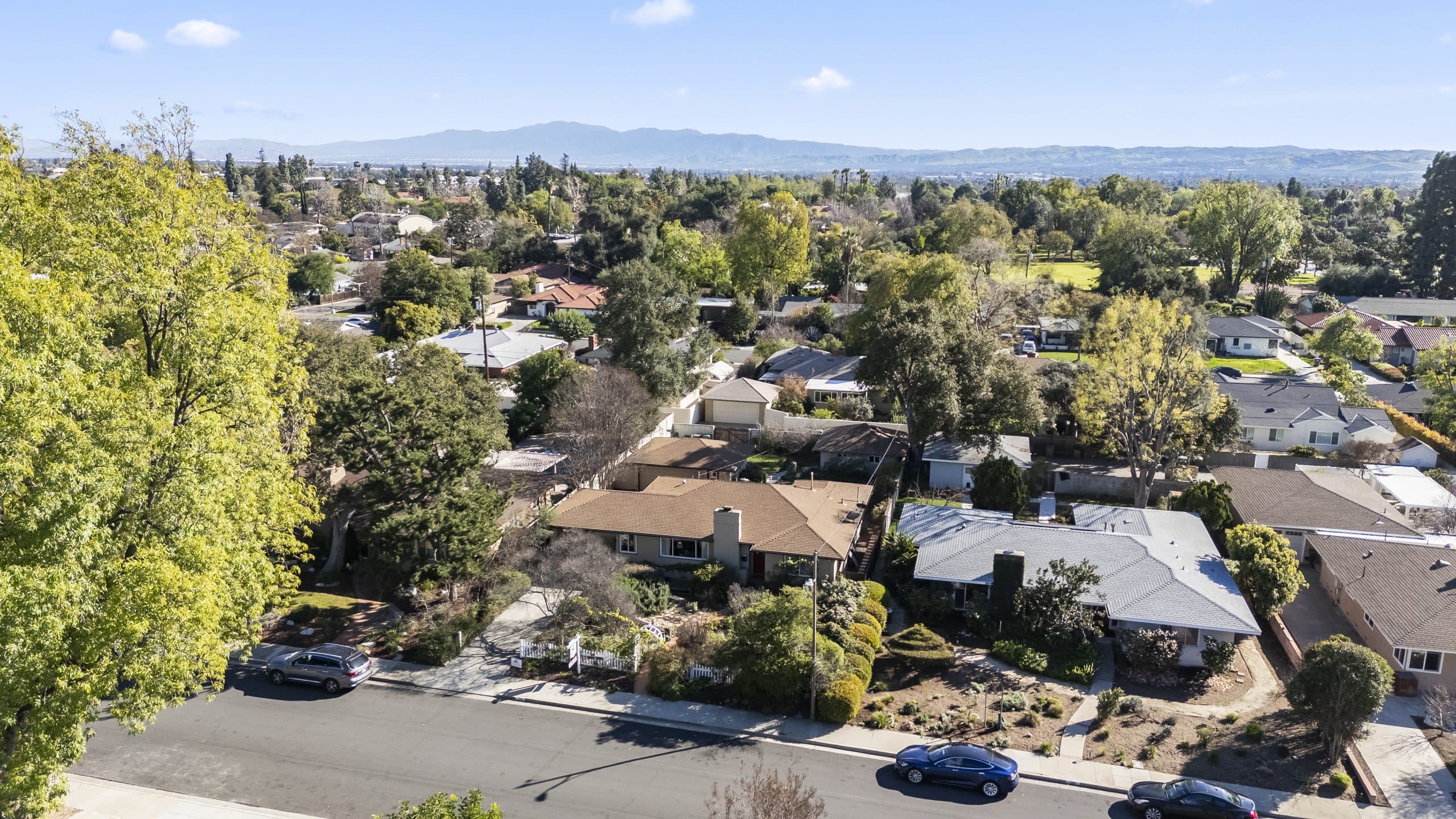
Some towns grow by adding streets. Claremont finished its street map a generation ago: hemmed in by its neighbors on three sides and by the mountains and the Wilderness Park on the fourth, the town long ago ran out of empty land to become. That does not mean nothing changes here — it means change happens differently, and reading it takes a different skill. Development in a built-out town is not subdivision maps at the edge of the fields; it is reuse, infill, gentle density, and the slow reinvention of corridors that have already lived several lives. This page is the durable version of that story: how Claremont actually evolves, who decides, and how a resident or homeowner follows it honestly. It deliberately makes no claims about any specific current project, proposal, or timeline — those change by the month, and the city's own agendas and general plan documents are the only live source worth trusting for them. What holds still is the machinery, and the machinery is what this guide teaches.
Why does a real estate site cover city planning at all? Because development news moves markets and emotions in the same breath. Few local topics are followed as intensely — a proposed project near your street lands differently than one across town — and few are served as poorly by rumor. The useful skill is not tracking every headline; it is understanding how the town's growth machinery works, so that when a headline arrives you can place it: what stage it is at, who decides next, and what it plausibly means for the blocks you care about.
A town that finished its map
Claremont's outward growth story ended where the geography did. The town spent its first century expanding from the railroad-era grid at the depot northward across the alluvial slope, era by era, until the neighborhoods met the foothills — and there the line held, by choice as much as by terrain. Hillside protections and the Wilderness Park boundary turned the town's northern edge into a hard stop, a decision residents effectively renew every time they defend it. The consequence is the defining fact of Claremont development: there is no next subdivision. A built-out town with protected edges and an intact core does not compete for growth; it negotiates with change. Land that cannot be added can only be reused, and that single constraint explains most of what the town debates.
Where change actually happens
Strip away the specifics of any given year and Claremont's change concentrates in a few durable channels:
- Infill. Underused parcels — a leftover lot, an aging commercial pad, a site that outlived its first use — are the town's main reservoir of buildable land. Infill projects are smaller and slower than greenfield growth, and they arrive one negotiation at a time. The new construction guide covers what newly built homes look like in a town that builds this way.
- Gentle density. The ADU era has quietly become the most widespread form of Claremont development: statewide law made backyard homes broadly feasible, and they add housing one lot at a time without changing a street's silhouette. The ADU guide treats the owner's side of that story in depth.
- Corridor evolution. The historic Route 66 alignment along Foothill Boulevard and the north–south spine of Indian Hill Boulevard have each lived several commercial lives, and their aging centers and generous parcels are where larger-scale conversations tend to return, decade after decade.
- The core's edges. Long-range planning in a depot town perennially circles the blocks around the transit core — the walkable center is the town's most valuable pattern, and how its edges should evolve is a recurring theme of general-plan thinking in every cycle.
Notice what the list does not include: sprawl. Claremont's development questions are almost never whether to grow outward — they are how much change the existing fabric should absorb, where, and in exchange for what.
The general plan is the resident's lever
Every town has a constitution for its land, and Claremont's is the general plan — the long-range document that says what the town intends to be, updated across years of public process. Beneath it sits the housing element, the state-required chapter in which every California city must plan for its share of housing; beneath that, the zoning code that translates intention into what any given parcel may actually hold. Individual projects then move through review — staff analysis, commissions, hearings, environmental study — in a process that is deliberate by design and public at nearly every step. For residents this matters in a specific way: the general plan process is the point of maximum leverage. By the time a single project reaches a hearing, the big choices that shaped it were made years earlier in plan and code. People who want a voice in how Claremont evolves get it by showing up early — reading the current general plan and housing element, following the planning commission's agendas, and speaking during the windows when the town is deciding its rules rather than applying them.
The Claremont pattern: deliberate by tradition
Towns develop personalities about development, and Claremont's is well established: slow, careful, preservation-minded, and argued in public. This is the town that protected its Village scale while the region around it reorganized for the automobile, planted and defended an urban forest, and drew a hard line at its own foothills — the record the history of those choices traces in full. The same tradition shapes how new proposals are received: questions of scale, trees, traffic, and character are asked seriously here, and projects tend to be negotiated rather than waved through. Layered over that local tradition is a statewide reality — California housing law has grown steadily more assertive about requiring towns to plan for and permit housing, and the tension between state requirements and local discretion is now a durable feature of every California town's civic life, Claremont included. This page takes no side in that tension, because its readers span every side of it. The honest summary is that both impulses are real: the town's character is the product of its caution, and the pressure to house more people is not going away. How any particular year balances them is exactly the kind of specific this permanent page leaves to the live record.
What development means for a homeowner
The property-value question deserves a careful answer, because the honest one is conditional. Change near a home cuts in more than one direction: reinvestment can lift a tired corridor and everything around it; construction is a temporary burden on its neighbors however good the outcome; added housing changes traffic and parking arithmetic block by block; and a walkable amenity that arrives within strolling distance is a durable gain. Which effects dominate depends entirely on the specifics — what is built, how it is designed, and what it replaces — which is why slogans on either side, that development always hurts or that growth always helps, are equally useless to an owner. The practical counsel is to trade slogans for specifics: read the actual proposal, walk the actual site, and think in terms of the block, not the town. For the broader context of how Claremont values move, the home values guide and the market reports hub carry the frameworks; for what it means to own next to a project while it builds, the city's notice and construction rules govern, and its current ordinances are the source to consult.
Following it honestly
A short, durable toolkit for staying genuinely informed:
- Read the agendas. The planning commission and city council publish agendas and minutes; they are the town's actual to-do list, as opposed to its rumored one.
- Know the current general plan and housing element. Skim them once and you will place every future headline faster.
- Walk the corridors. The sites most likely to change announce themselves — age, vacancy, parcel size. Your own eyes are a respectable planning tool.
- Attend one hearing. Nothing demystifies development like watching the process work once, whatever the item.
- Treat social-media certainty as rumor. If it is not in an agenda, a plan document, or a staff report, it is not yet real.
Anthony Grynchal has been licensed in California since November 2009, long enough to have watched Claremont debate its future in public through several full cycles of it. If a project or a policy has you wondering what it means for your own home — buying near change, selling ahead of it, or simply reading it right — bring the question. The answer is usually in the specifics, and the specifics are learnable.
Frequently asked questions
Is Claremont still growing?
Not outward — the town is essentially built out, with its edges fixed by neighboring cities, the foothills, and the protected Wilderness Park boundary. Claremont grows by changing in place: infill on underused parcels, backyard homes in the ADU era, and the slow reinvention of its commercial corridors, all steered through the city's general plan and public process.
How do I find out what is being built in Claremont right now?
Go to the live sources: the city's planning commission and council agendas, staff reports, and the current general plan and housing element documents. Projects and timelines change too quickly for any permanent page to track honestly, which is why this guide explains the machinery of Claremont development rather than the status of any specific proposal.
Does new development near me help or hurt my home's value?
It depends on the specifics, and honest answers stay conditional. Reinvestment can lift a tired corridor, walkable amenities within strolling distance are durable gains, construction is a temporary burden, and traffic and parking change block by block. Read the actual proposal, walk the site, and reason at the level of your block rather than from slogans on either side.
Can residents influence development decisions in Claremont?
Yes — the process is public at nearly every step, and the point of maximum leverage comes early. The general plan and housing element set the rules that later shape individual projects, so residents who read the current documents, follow planning commission agendas, and speak during plan updates have far more influence than those who first engage at a single project's final hearing.

Written by
Anthony Grynchal
Anthony Grynchal is a California real estate professional with eXp Realty, licensed since November 2009 (California DRE# 01873626), and the Designated Local Expert™ for Claremont — where he has lived for more than 33 years.
More about AnthonyPublished · Updated