The hardest listings are not the difficult properties. They are the easy properties with fifty years of a family inside them.
Claremont produces a lot of these. It is a town people move to and then do not leave — the colleges, the trees, the walkability, and a housing stock that ages well. Homes here regularly change hands after two or three generations, and when they do, the sale is a records problem, an emotional problem and a market problem simultaneously.
Here is a practical order of operations.
1. Separate the three jobs
They interfere with each other when handled together.
- The history job: what should be preserved, documented or donated.
- The property job: what needs disclosure, repair, permits, or verification.
- The market job: pricing, presentation and timing.
Do the history job first, because it is the only one that becomes impossible later. Once a house is cleared for staging, the paperwork in the garage is gone.
2. Find the documents before anything is thrown away
In a long-held Claremont house, the following turn up regularly and every one of them has value:
- Original plans, blueprints and specifications.
- Old permits, receipts and contractor invoices — these prove work was done and often establish dates.
- Title documents, abstracts and old policies.
- Photographs of the house and the street across decades.
- Correspondence with the city, water company or a homeowners association.
- Grove-era material: irrigation records, water share certificates, agricultural paperwork.
The permits and plans have direct transactional value. A buyer asking whether the addition was permitted is far better answered with a document than with a shrug. Anything you find should go to your agent and, where relevant, into the disclosure package.
3. Decide what should be preserved publicly
Claremont Heritage and the Claremont Colleges' library collections accept materials of local historical significance. Photographs of a street before the trees came down, records of a working grove, or documentation of a designed house are genuinely useful to a community archive and are frequently thrown out instead.
Ask before you assume something is not worth keeping. It costs a phone call. The town's preservation infrastructure exists precisely for this, and it is covered in Claremont Heritage and the rise of preservation.
Also consider recording an oral history while the person who lived it is available. Once it is gone, no archive can recover it.
4. Verify the house's own story before you market it
Family lore about a house is often partly right, and "partly right" is a liability in a listing. Common examples: a build year that does not match records, an architect attribution with no documentation, an addition everyone remembers as permitted.
Check the checkable things: permit history with the city, the assessor's record, any historic survey entry, and a current measurement of square footage against the public record. Where a claim cannot be documented, either leave it out of the marketing or state it as family recollection rather than fact. Guidance on verifying attributions is in landmark homes of Claremont.
5. Understand what a long-held house typically needs
Decades of single-family ownership produce a predictable pattern. Not defects, exactly — accumulations.
- Original systems past service life. Electrical capacity, galvanized supply lines, sewer laterals and older HVAC.
- Undocumented improvements. Garage conversions, enclosed patios and additions completed in an era with looser enforcement.
- Deferred exterior work. Roofs, paint, wood windows, drainage at the foundation.
- Mature landscape that has outgrown the lot. Roots at hardscape, trees over the roof, irrigation nobody has traced in years. Note that Claremont protects certain trees — check the ordinance before any removal. See the trees of Claremont.
- Personal property mixed with fixtures. The built-ins, the light fixture the family wants to keep. Decide early and write it into the listing terms.
Getting an inspection before listing is unusually valuable on this kind of property, because it converts unknowns into a plan.
6. Price the house, not the memory
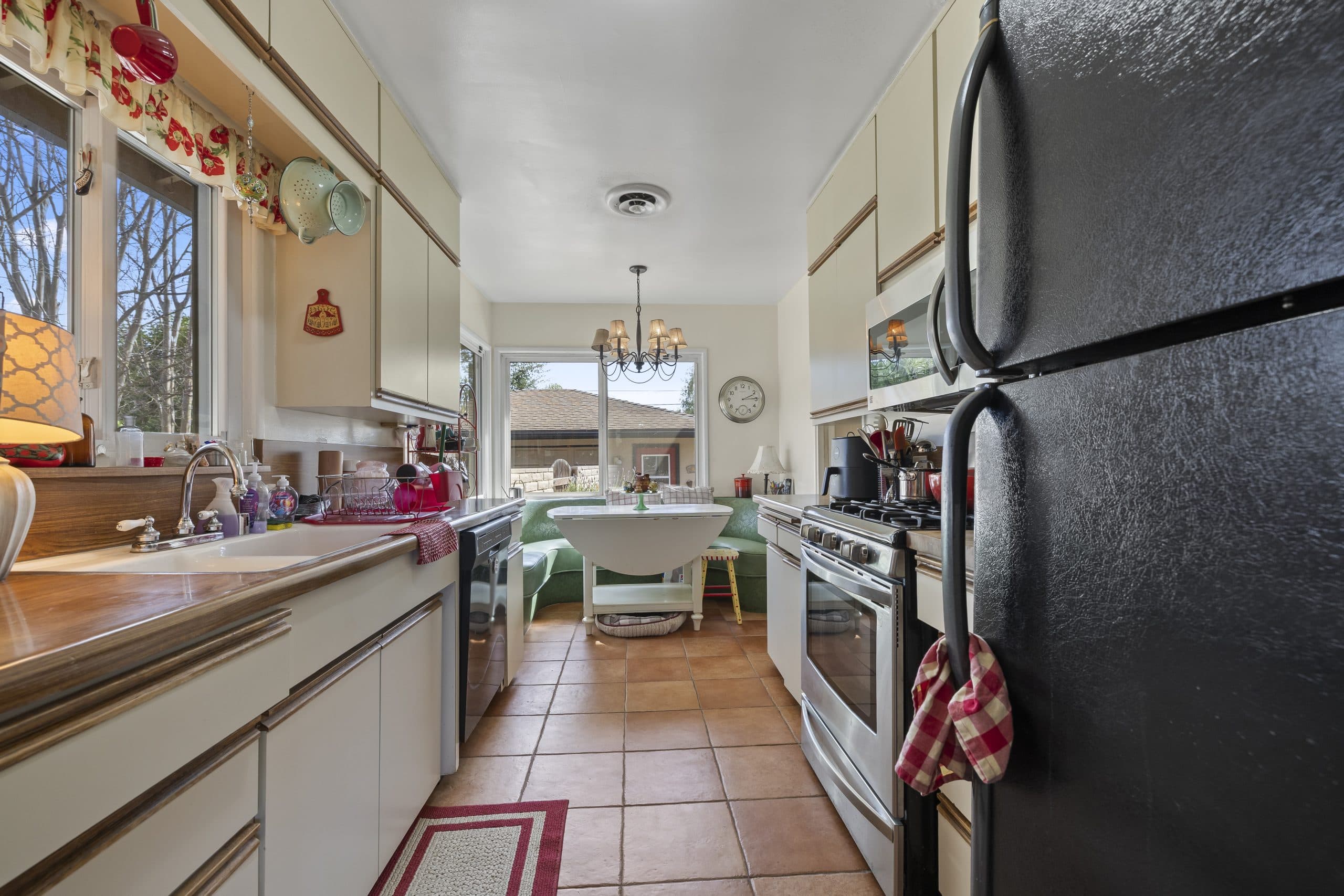
This is the conversation that matters most and it is the one families dread. A home that held a family for fifty years has a value to that family that no buyer will pay for.
The market prices location, condition, size, and comparable sales. It does not price the kitchen where everyone gathered. Setting expectations honestly and early prevents the pattern where a property sits, goes stale, and eventually sells for less than a realistic initial price would have brought.
Separately, there are tax and title considerations for inherited and long-held California property — basis, exclusions and reassessment rules among them — and they can materially change the outcome. Those are questions for a CPA and, where a trust or estate is involved, an attorney. Get that advice before you list, not after you are in escrow.
7. Hand something to the next owner
A small thing that costs nothing and matters more than people expect: leave the new owner a folder. Plans, permits, a photograph of the house when it was new, the name of the person who planted the tree in front.
Houses in Claremont tend to be kept rather than replaced, and the next family will steward it for a while too. Giving them the record is how the town's history keeps surviving one transaction at a time.
For the wider story of the town those houses sit in, start at the Claremont history hub.
Anthony Grynchal has been licensed in California since November 2009.
Frequently asked questions
What documents should I look for before clearing out a family home?
Original plans and blueprints, old permits and contractor receipts, title documents, photographs of the house and street over time, correspondence with the city or water company, and any grove-era agricultural or water share paperwork. Permits and plans have direct value in the sale.
Can I donate family papers about a Claremont house?
Claremont Heritage and the Claremont Colleges' library collections accept materials of local historical significance, including photographs, records of working groves and documentation of notable houses. Ask before discarding anything, because a great deal of useful local history is thrown out.
Should I get an inspection before listing a long-held home?
It is unusually valuable on a property held for decades, because it converts unknown accumulations — original systems, undocumented improvements, deferred exterior work — into a plan you control rather than surprises during escrow.
Are there tax issues when selling an inherited Claremont home?
There can be significant ones, involving cost basis, available exclusions and California reassessment rules. Those depend on individual circumstances, so speak with a CPA, and with an attorney where a trust or estate is involved, before listing.

Written by
Anthony Grynchal
Anthony Grynchal is a California real estate professional with eXp Realty, licensed since November 2009 (California DRE# 01873626), and the Designated Local Expert™ for Claremont — where he has lived for more than 33 years.
More about AnthonyPublished · Updated