Drive north until the grid gives up. The streets start to bend, the lots get bigger, the pavement narrows, and eventually you are on a road that follows the land instead of a survey line. Somewhere up there sits a white stucco building with a tile roof that has been hosting audiences, in one form or another, since the 1930s.
The Padua Hills Theatre is the reason a whole section of Claremont is named what it is named, and it explains the shape of the neighborhood around it.
What it was built to be
The complex was developed in the foothills in the early 1930s as an arts colony and theater — a deliberate attempt to create a cultural destination in the hills above town, in the Spanish revival idiom then fashionable across Southern California.
It became best known for something more specific: decades of performances by a resident company presenting Mexican folk music, dance and drama to largely Anglo audiences from across the region. The productions ran for a very long time and drew visitors from well beyond Claremont.
The part that is often left out
That legacy is genuinely complicated, and any honest local history has to say so.
The performers were Mexican and Mexican American, many of them from this region. The programming presented their culture through a romanticized frame designed for an outside audience, in an era when the same audience's communities frequently practiced housing discrimination and school segregation against Mexican Americans. Performers built careers and community there; they also worked inside a structure they did not control, presenting a version of themselves shaped for someone else's expectations.
Scholars and community historians have written seriously about this, and the surviving performers and their descendants have their own accounts. If you want the real story, that is where to go: the Claremont Colleges' collections, published scholarship on the Padua Hills productions, Claremont Heritage, and oral history projects. Do not settle for the brochure version in either direction — neither pure charm nor pure indictment.
What the theatre did to the surrounding real estate
Cultural institutions shape land use, and this one shaped the foothills.
It put a destination above the town. Before the theatre, the ground north of the developed grid was groves, chaparral and canyon. A regionally known venue gave the foothills an identity and a road worth improving.
It set the architectural expectation. The Spanish revival vocabulary of the complex — white stucco, tile, courtyards, wrought iron — became the reference point for a great deal of building in the hills around it. Buyers who describe north Claremont as feeling different from the rest of town are usually reacting to that.
It anchored a neighborhood name. Padua Hills as a place identity is inseparable from the venue. That naming carries real market weight, and it also means the boundaries people use informally may not match anything official. Confirm exactly which streets a listing means when it says Padua Hills.
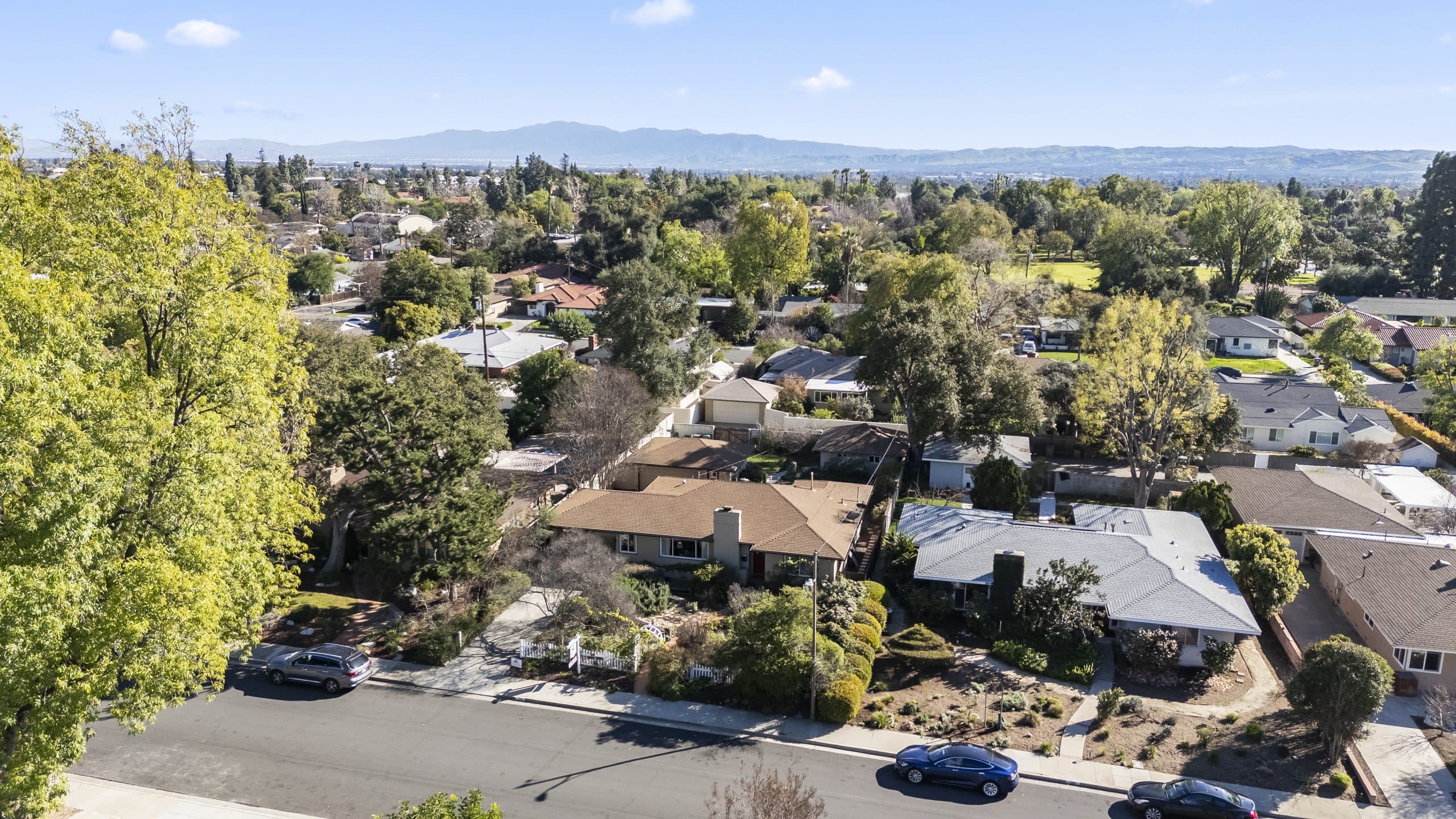
It normalized large-lot foothill living. The pattern up there — irregular parcels, winding roads, generous lots, houses sited to the terrain rather than the street — began as a colony-and-canyon pattern and stayed that way through the town's later northward growth. That growth is traced in how Claremont annexed its way north.
Buying in the foothills: what the terrain actually asks of you
The romance of the hills comes with a specific set of practical questions, and every one of them is checkable.
- Fire. Foothill and canyon-adjacent property in Southern California sits in mapped fire hazard severity zones with defensible space requirements, and insurance availability and cost differ meaningfully from the flats. Get an insurance quote before you remove your contingencies, not after.
- Slope and drainage. Hillside lots carry grading, retaining and runoff considerations that flat lots do not. Ask for any geotechnical or grading documentation that exists.
- Access. Narrow, winding roads affect emergency response, deliveries, construction logistics and daily life. Drive it in the dark and in the rain.
- Trees and vegetation. Native oaks are protected under the city's ordinance and defensible space rules interact with that protection. Ask the city how both apply to a specific parcel before planning clearance. Background in the trees of Claremont.
- Event traffic. The venue still operates. Proximity to a working event site has an audible dimension on weekends.
How the hills filled in around it
For a long stretch the theatre had very little around it. The road up was modest, the parcels were large, and the ground between the venue and the developed town was groves, chaparral and canyon.
Development came in waves rather than as a single tract, which is why the foothill neighborhoods do not read as one subdivision. Houses from several decades sit on the same winding street, sized and styled to their moment, on lots whose boundaries follow terrain more often than a survey grid.
For a buyer that produces an unusual comparable-sales problem. Two houses a block apart in the foothills can differ by decades in construction, thousands of square feet in lot size, and a meaningful margin in slope, access and fire exposure. Foothill valuation depends on the specific parcel far more than it does in the flat, uniformly platted parts of town, and any pricing conversation up there should start with the parcel rather than the neighborhood name.
Why the building still matters
Claremont keeps producing the same pattern: an institution is built for one era's purpose, that purpose ends, and the building gets a second life instead of a demolition permit. The boom hotel became a college. The packing house became a commercial district. The arts colony theatre became an event venue whose grounds anchor a neighborhood.
The town's habit of keeping things is a large part of why its neighborhoods read as distinct places rather than interchangeable subdivisions — and distinctness is the thing buyers pay a premium for, whether or not they can name it.
For the full sequence, start at the Claremont history hub, and for how the preservation instinct became formal policy, read Claremont Heritage and the rise of preservation.
Anthony Grynchal has been licensed in California since November 2009.
Frequently asked questions
What is the Padua Hills Theatre?
A Spanish revival theater and arts complex developed in Claremont's foothills in the early 1930s, best known for decades of performances by a resident company presenting Mexican folk music, dance and drama. It operates today primarily as an event venue.
Is the Padua Hills Theatre's history controversial?
Its legacy is genuinely complicated. Mexican and Mexican American performers built careers and community there, while the productions presented their culture through a romanticized frame for largely Anglo audiences during an era of housing and school discrimination against Mexican Americans. Scholarship, oral histories and the Claremont Colleges' collections cover this seriously.
Where is the Padua Hills neighborhood in Claremont?
It refers broadly to the foothill area around the theatre, north of the regular street grid, characterized by winding roads and larger irregular lots. Informal boundaries vary, so confirm exactly which streets a listing means.
What should I check before buying a Claremont foothill home?
Fire hazard zone designation and defensible space requirements, insurance availability and cost, slope and drainage documentation, road access in bad weather, and how the city's protected tree rules interact with vegetation clearance on that specific parcel.

Written by
Anthony Grynchal
Anthony Grynchal is a California real estate professional with eXp Realty, licensed since November 2009 (California DRE# 01873626), and the Designated Local Expert™ for Claremont — where he has lived for more than 33 years.
More about AnthonyPublished · Updated