Staging advice written for houses translates badly to attached homes. A house is sold on rooms, land and curb appeal. A unit is sold on how well a compact plan works, how much light it gets, how much storage it holds, and whether the shared context around it feels cared for. Different product, different tactics.
This article covers what actually moves the needle when presenting a condo or townhome. It deepens the condo and townhome guide.
The governing principle: show the plan, not the furniture
Buyers of attached homes are asking one question above all others - does this work for how I live. They are mentally placing a bed, a desk, a table and their belongings. Anything that obstructs that mental exercise costs you.
So the goal is not a magazine interior. It is legibility. Every room should read instantly as what it is, at the size it is, with a clear path through it. That single principle drives most of what follows.
Editing beats decorating
In a compact home, removal outperforms addition almost every time.
REDUCE FURNITURE COUNT AND SCALE. Oversized pieces are the most common defect in small-space listings. A sofa two sizes too large makes a room read small in every photograph and in person. Fewer, smaller, correctly-placed pieces make the same room read generous.
CLEAR THE FLOOR AND KEEP PATHS OPEN. A visible, walkable route through each room is what makes a plan feel workable. Nothing should be sidestepped.
EMPTY THE STORAGE BY HALF. Buyers open closets in units - always - because storage is the acknowledged constraint of attached living. A closet packed to capacity says there is not enough. The same closet half full says there is room to spare. This is the highest-return hour of work available to you.
CLEAR HORIZONTAL SURFACES ALMOST ENTIRELY. Counters, sills, tables. In a small home, visible surface area reads as space.
REMOVE WHAT IS PERSONAL. Not because taste is wrong, but because a buyer imagining themselves in a compact home needs the space to be neutral enough to receive them.
Light is the biggest lever
Attached units often have windows on fewer sides than a house, so what light exists has to work harder.
Open every covering fully. Clean the glass inside and out where you can. Replace heavy window treatments with something light or remove them for showings. Turn on every fixture for every showing including daytime ones, and add lamps in any corner the fixtures miss.
Match colour temperature across the home. Mixed warm and cool bulbs make interiors read patchy and slightly cheap in photographs, and it is a free fix.
Use mirrors deliberately - one well-placed mirror opposite or adjacent to a window genuinely changes how a room reads. Several scattered mirrors do not.
If the unit is dark by orientation, say so honestly and compensate rather than photographing it deceptively. Buyers who feel misled at the door do not make offers.
Show the specific advantages of the form
Do not stage a condo as a small house. Stage it as what it is.
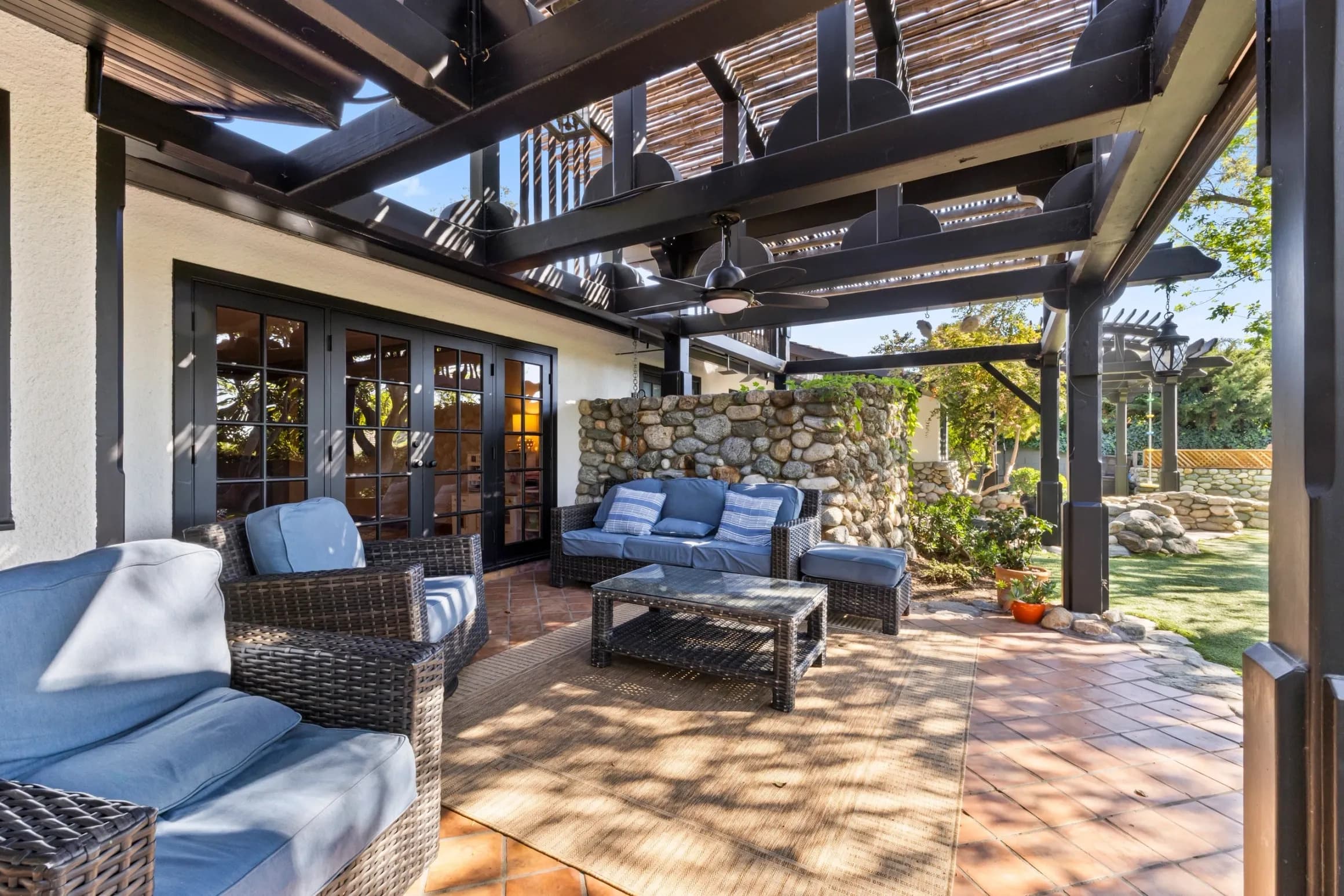
MAKE THE OUTDOOR SPACE A ROOM. A balcony or patio with two chairs and a small table reads as additional living space. The same space holding a bicycle, a barbecue and storage bins reads as a utility area. This conversion is cheap and consistently effective.
DEMONSTRATE STORAGE SOLUTIONS. Show a working entry drop point, a functioning closet system, a place where a vacuum lives. Buyers worried about storage want to see the problem solved rather than hidden.
GIVE EVERY AMBIGUOUS SPACE A PURPOSE. A den, a loft, a wide landing or an alcove should be staged as something specific - a desk, a reading corner, a compact dining space. Undefined space in a compact home reads as wasted; defined space reads as a feature.
SHOW THE FEATURE THAT MAKES THE UNIT UNUSUAL. A wall of windows, a courtyard entry, a fireplace, a high ceiling, an end-unit exposure. Whatever distinguishes the unit from its neighbours should be the thing furniture points at rather than blocks. If the unit's position is the advantage, the end units and perimeter positions guide is a reminder to say so explicitly.
The approach and the shared context
This is the part sellers of units most often neglect, and buyers notice it first because they experience it first.
Sweep and wash your entry, walkway and any shared steps you legitimately can. Clean the front door and its hardware. Replace a tired doormat. Remove anything stored outside your door.
Consider one healthy plant at the entry if the rules allow it - and check, because exterior placement is usually governed.
If a common area near your unit is in poor condition, do not attempt to fix association property yourself. Report it in advance and time your showings sensibly instead.
Where the community has genuine amenities, direct buyers to them. Many buyers tour a unit and never see the pool, the greenbelt or the clubhouse they are partly buying.
Sound, smell and the small things
Sound is a live concern in attached housing and buyers are listening for it. Show at reasonably quiet times where you can. Do not run music to mask anything - it reads exactly as what it is.
Neutralise odours completely rather than covering them. Cooking, pets and closed-up rooms are the usual sources, and in a compact home there is nowhere for a smell to dissipate. Air the unit thoroughly before every showing.
Fix the visible small defects: sticking doors, loose hardware, a running toilet, burnt-out bulbs, marked walls at the entry. In a small home each of these represents a larger share of what a buyer sees.
Have the paperwork ready too
The other half of selling an attached home is documentary. Buyers and their lenders will want the association's documents, and having the package assembled at first inquiry keeps momentum. Presentation gets the offer; documents keep it.
Read the condo and townhome guide for what that package contains, and the selling during repairs guide if the community has work under way. Anthony Grynchal has been licensed in California since November 2009. This is general information; the governing documents control what you may place in common areas.
Frequently asked questions
How do I make a small condo look bigger?
Remove furniture rather than add it, reduce piece scale, keep walkable paths clear, empty storage by roughly half, and clear horizontal surfaces almost entirely. Then maximise light: open every covering, clean the glass, match bulb colour temperature and turn on all fixtures for every showing.
Should I stage a condo balcony or patio?
Yes - it is one of the cheapest and most effective moves available. Two chairs and a small table convert the space from a utility area into an additional room in the buyer's mind. Check the rules first, since exterior placement is usually governed by the association.
Do buyers really open condo closets?
Almost always, because storage is the acknowledged constraint of attached living. A closet packed to capacity reads as insufficient storage; the same closet half full reads as room to spare. Emptying storage is typically the highest-return hour of preparation available.
What should I do about shared areas near my unit?
Clean your own entry, walkway and door thoroughly, and remove anything stored outside. Do not perform work on association property yourself - report poor conditions in advance, time showings sensibly, and point buyers toward amenities they might otherwise never see.

Written by
Anthony Grynchal
Anthony Grynchal is a California real estate professional with eXp Realty, licensed since November 2009 (California DRE# 01873626), and the Designated Local Expert™ for Claremont — where he has lived for more than 33 years.
More about AnthonyPublished · Updated