
By the time most couples ask me about this, the hardest decision is already behind them: the house will be sold. What they need next is not another round of whether — it is a clear picture of how, because a divorce sale runs on rails an ordinary sale never needs, and knowing where those rails sit is what keeps a painful season from becoming a chaotic one. This article walks the sale itself, start to finish: the legal clearances that come before anything else, the agent decision, pricing, showings in a home someone still lives in, the two-signature rhythm of every decision, and the disbursement that ends it. The caution belongs at the top, because nothing on this page works without it: this is general information, not legal advice. A divorce is a legal proceeding, the house sits inside that proceeding, and every step described here happens with your family-law attorney's guidance, never around it. The wider map — the three options every divorcing couple actually has, how California's community-property framework shapes them, how privacy is kept in a town this size — lives in the Claremont divorce guide. This page assumes the selling road has been chosen, and walks it properly.
Before the sign goes up: the clearances
A divorce sale begins in the attorneys' offices, not at the curb. Once a case is filed, standard family-law restraining orders limit what either spouse may do with marital property — selling it, refinancing it, borrowing against it — without the other's consent or a court's order. So the first step of the sale is legal rather than cosmetic: the decision to sell is documented, the authority to sell is confirmed, and where agreement is thin, a court's order stands in for it. Who must consent connects to a question many couples have not fully answered yet — what the marriage actually owns — and that concept has its own article in Who Gets the House? California Community Property in Claremont. One more piece of machinery belongs in this stage: agree, in writing, how sale decisions will be approved — who signs off on a price adjustment, how offers will be reviewed, what happens when the two of you disagree. The worst possible time to design that process is the night an offer expires.
One agent, hired by both of you
In an ordinary sale, chemistry picks the agent. In a divorce sale, neutrality is the qualification, and it is not a soft skill — it is the operating system of the entire transaction. An agent who arrives as one spouse's agent has failed the assignment before the sign goes up, because every later decision will be read through that lens by the other side. The working standard is simple and strict: both spouses interview the agent, both sign the listing agreement, and both receive every piece of information at the same time, in writing, never relayed through one spouse to the other. That last practice sounds small and is not. Parallel written communication is the single simplest habit that keeps a divorce sale fair — it removes the version-of-events problem entirely, and it protects both spouses and the agent alike when the season is over and memories differ.
A price both sides can live with
Pricing a divorce listing carries a burden ordinary pricing does not: the number must be defensible to two people whose interests have diverged, and often to their attorneys as well. The only way through is evidence — comparable sales, the home's honest condition, and the market's actual temperature, assembled the same way whether the audience is one seller or two. Aspirational pricing is expensive in any sale; in a divorce sale it is corrosive, because every extra month on market is another month of shared carrying costs on a house neither of you intends to keep, and another month of a legal season everyone wants finished. The logic of what actually drives value block by block in this town — and why two honest opinions can differ here more than in a tract city — is laid out in the Claremont home values guide; a divorce listing simply needs that logic written down and shared with both spouses identically.
Showings when one of you still lives there
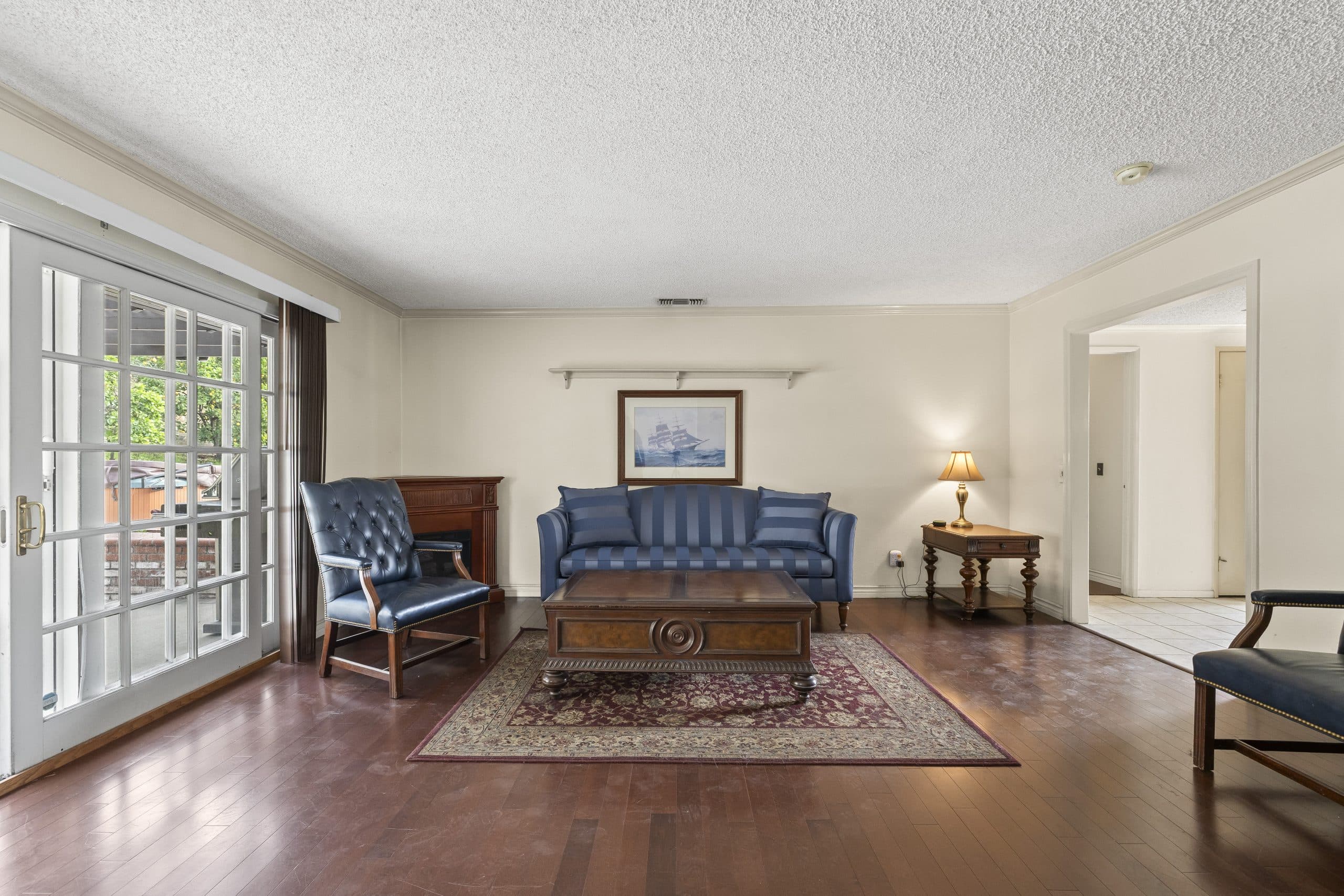
In most divorce sales, one spouse still lives in the house, and the mechanics have to respect that without advertising it. The workable pattern is planned rather than improvised: showing windows scheduled in advance, real notice every time, and a home prepared so that it shows well without exposing anyone's private circumstances — which mostly means the same depersonalizing any good listing gets, done with a little extra care about what the closets and calendars reveal. Just as important is what the marketing says, which is nothing: no listing remark, no conversation at an open house, no signal anywhere that this is a divorce. That discretion is courtesy, and it is also money — buyers who sense a seller under pressure price that pressure into their offers. A listing that reads like every other well-prepared Claremont home keeps the negotiation about the house.
Two signatures, one calendar
Every consequential document in a divorce sale carries two signatures: the listing agreement, price changes, counteroffers, escrow instructions. That is the legal reality, and it has a practical consequence couples should see coming — the sale's calendar must respect two schedules, and sometimes two attorneys' schedules layered on top. Offers arrive with expiration dates. A counteroffer that needs two signatures, one of which belongs to someone traveling for work, is how good buyers get away. This is why the decision machinery agreed in the first stage matters so much: when the approval path is designed in advance — how fast each of you commits to responding, how the attorneys are looped in, what standing instructions exist for small decisions — the two-signature requirement becomes a rhythm instead of a bottleneck.
Offers, and the discipline of the middle
When offers come, the agent's job is symmetrical presentation: both spouses see every offer at the same time, in the same form, with the same analysis. Where the two of you disagree about accepting — and it happens, because an offer's timing can serve one spouse's plans better than the other's — the disagreement gets resolved inside the settlement framework, with the attorneys where needed, and never in front of the buyer. A united, unhurried front is not theater; it is leverage. Buyers negotiate very differently against a seller they perceive as divided, and the discipline of keeping the middle of the transaction calm is worth real money at the closing table. When neither spouse can manage repairs or showings, my cash-offer brand, Mr. Cali Offers, produces one documented net both spouses can read at the same time, next to the listing estimate.
Escrow, the settlement, and the handoff that never happens
The escrow itself runs the arc every Claremont escrow runs — deposit, disclosures, contingencies, closing — mapped in the escrow guide. The divorce difference arrives at the very end, and it is one of the process's quiet mercies: the proceeds are disbursed by the escrow company according to the signed settlement agreement or the court's order, directly to each spouse. There is no check handed from one of you to the other, no final negotiation at the finish line, no last fraught transaction between two people who are finished transacting. The money follows the paperwork, and the paperwork was settled with counsel long before closing day.
The calendar, honestly
Couples always ask how long this takes, and the honest answer has two layers. The sale mechanics — preparation, marketing, escrow — run on ordinary market timelines, and the craft is the same craft any Claremont sale needs, covered start to finish in the Claremont selling guide. What adds time is the decision layer around the mechanics: consents, court dates where they are needed, two schedules, two attorneys. The way to keep the housing timeline from waiting on the legal one is to start the clearances early and run the tracks in parallel — and to make sure the selling decision itself is actually settled, because a sale launched while one spouse is still privately weighing a buyout tends to stall at the first hard decision. If that is where you are, read Buyout vs. Sale: Splitting a Claremont Home in Divorce first; the sale goes better when it begins decided.
I am Anthony Grynchal, Mr. Claremont — licensed in California since November 2009 — and the divorce listings I take run to one standard: both spouses treated identically, everything in writing, nothing in the street. If you are at the beginning of this road, call me at (909) 731-5374 for a confidential conversation — and bring your family-law attorney into it from the first step, because that is where a divorce sale done properly begins.
Frequently asked questions
Do both spouses have to agree before the house can be listed?
Generally, yes — when both spouses are on title, both sign the listing agreement and every consequential document after it, and once a divorce case is filed, standard family-law restraining orders limit either spouse's ability to sell marital property without the other's consent or a court order. Courts can and do order sales in some circumstances. The starting point is always your family-law attorney, who can confirm what consents or orders your specific sale needs.
Should we sell during the divorce or wait until it is final?
It depends on finances, the settlement strategy, and the market season, and it is a decision to make with your family-law attorney rather than by default. Selling mid-case is common and workable — with the proper consents or orders in place — and it can relieve carrying costs neither spouse wants. Waiting can serve other goals, like letting children finish a school year. The mistake is drifting into either path instead of choosing it.
How are the proceeds divided when the house sells?
Through escrow, not between the spouses. At closing, the escrow company disburses the proceeds according to the signed settlement agreement or the court's order, paying each spouse directly. That removes the final handoff from the couple entirely — the money follows paperwork that was settled with the attorneys well before closing day.
How do showings work when one spouse still lives in the house?
With planning instead of improvisation: showing windows scheduled in advance, genuine notice every time, and a home prepared to show well without revealing anyone's private circumstances. Nothing in the marketing or the conversations around the listing should signal a divorce — discretion protects the resident spouse's privacy and the couple's negotiating position at the same time.

Written by
Anthony Grynchal
Anthony Grynchal is a California real estate professional with eXp Realty, licensed since November 2009 (California DRE# 01873626), and the Designated Local Expert™ for Claremont — where he has lived for more than 33 years.
More about AnthonyPublished · Updated