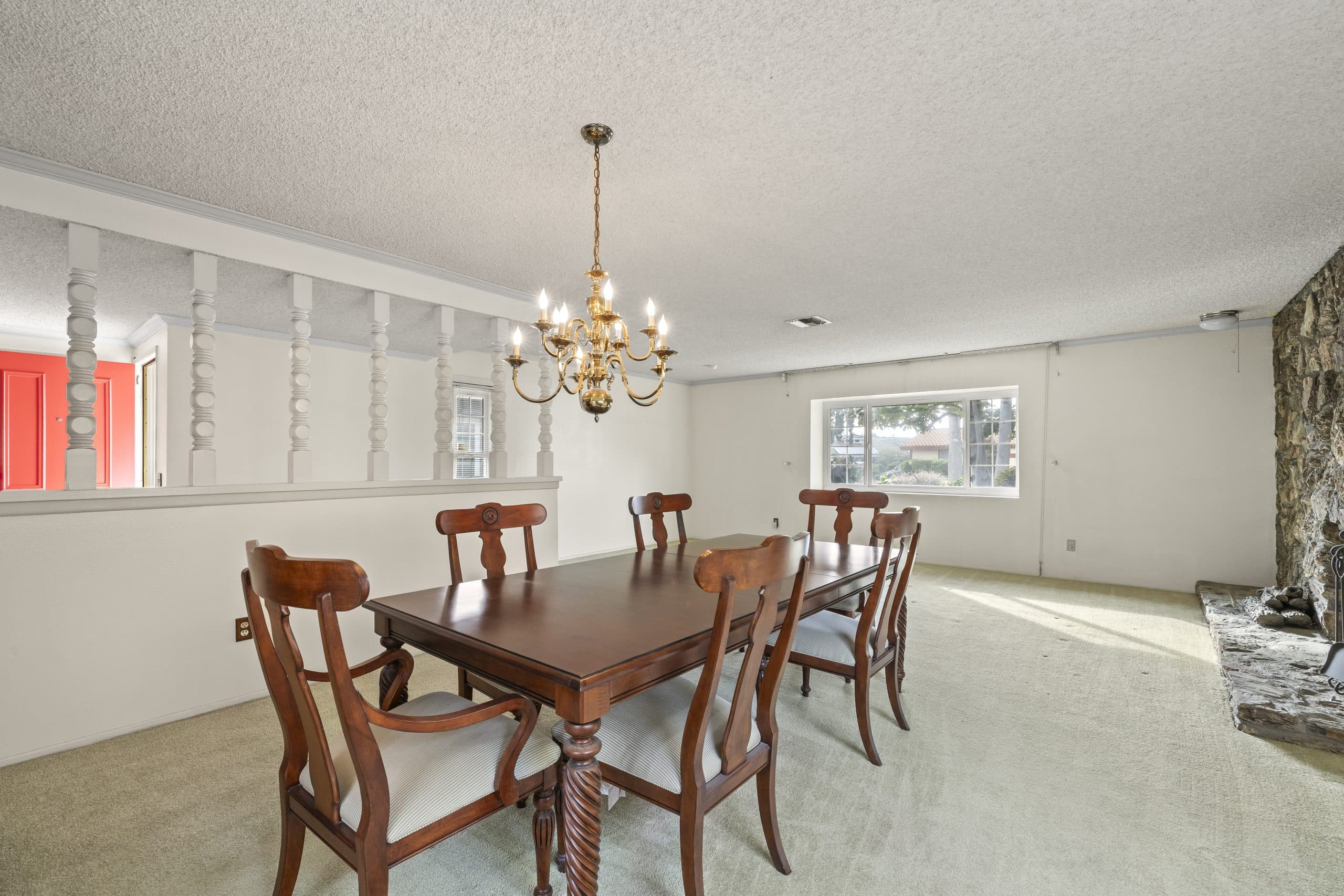
The dining table is rarely about the dining table.
When a long-held family home gets emptied, the disagreements that surface are almost never about market value. They are about who was there, who helped, who moved away, who was closest to the person the object belonged to, and who has been carrying a quiet ledger for thirty years.
Which means the object cannot settle it. Only a process can.
Decide the process before you decide the objects
The single most useful move is to agree on HOW things will be divided before anyone names a single item they want. Once someone says the words "I always assumed I would get the piano," every rule proposed afterward sounds like it was written to beat them.
So the first family conversation is only about method. Nothing gets claimed at that meeting. People go away knowing the rules and come back knowing what they want.
It feels bureaucratic. It is enormously easier than the alternative.
Three methods that hold up
ROUNDS. Everyone takes turns picking one item, and the order rotates. Simple, transparent, and it works well when the group is small and the items are roughly comparable in meaning.
LISTS FIRST. Everyone independently writes down the things they would want, without seeing anyone else's list. Then the lists get compared. Most families discover that the great majority of items are wanted by exactly one person, or by nobody, and the real negotiation is over a handful.
REASONS, NOT CLAIMS. For that contested handful, each person writes down why. Not what it is worth. Why it matters to them. Reasons change outcomes in a way claims do not, because a sibling who learns the clock stood in a grandparent's room during a particular summer will often step back on their own.
None of these is the right one. Pick the one that fits the family you actually have.
Separate the sentimental from the valuable early
Some items carry real financial value, and those belong in a different category with different rules. If anything in the house might be genuinely valuable, get a qualified opinion on it before it is divided or sold, and keep it out of the informal process until you know what you are dealing with.
Anything with a legal dimension is likewise not a family-meeting matter. If an estate is being administered, or a trust governs the property, or there is a will with specific bequests, the document controls, and an attorney is who reads it. A family agreement that contradicts the document is not an agreement, it is a future problem.
The most common trap: keeping it all for later
When a decision is hard, the default is a storage unit. Everything contested goes in, the family agrees to sort it out after the move, and the unit quietly becomes permanent.
What actually happens is that nobody wants to be the one to raise it again. The rent goes on. Years later the disagreement has aged rather than healed, and someone is paying every month to store an argument.
Storage is a genuinely useful tool for a defined bridge with a date on it. It is a poor substitute for a decision.
Give people a way to say no
Half the tension in these conversations comes from people who do not want something and feel they cannot say so.
An adult child with a small home does not want the bedroom set. A nephew has no use for the tools. Nobody wants the dishes. Saying that out loud feels like rejecting the person, so instead everyone accepts things they will quietly part with in a year.
Name it at the start. Make it explicit that declining an item is allowed and carries no meaning. The relief in the room when someone says that is usually visible.
Photographs solve more than people expect
Not every attachment requires possession. A surprising number of items are wanted because of a memory attached to them, and a good photograph of the object, in the room, with a written note about what it was and who used it, carries most of that.
Some families make a small book of the house before it is emptied. Rooms, objects, the garden, the things nobody photographed because they were always there. It costs an afternoon and it defuses an astonishing amount.
The person moving gets the final say
Worth saying plainly, because it gets lost: if the homeowner is alive and making this move, the belongings are theirs. Adult children can advise, help, and hope. They do not decide.
Downsizing conversations sometimes tip into pressure, especially when children are anxious and a parent is not ready. That deserves its own care rather than being folded into a discussion about furniture, and it is worth remembering that staying put remains a perfectly good outcome.
Set a date, then hold it
Give the process a deadline comfortably before the move, not the week of it. Items unclaimed by that date go to the sale, donation, or disposal plan agreed in advance.
Knowing the deadline exists is what makes people choose. Without one, the decisions migrate to the last three days, when everyone is tired and nobody is generous.
Emptying the house is a long job on its own terms, and it runs alongside preparing the home for sale. Our walkthrough of sell, donate, keep covers the mechanics, and the emotional side of leaving a longtime home covers why it takes longer than the box count suggests.
If the question of whether and when to move is still open, that is fine too. The Claremont downsizing hub starts from the beginning.
Anthony Grynchal has been licensed in California since November 2009.
Frequently asked questions
What is the fairest way to divide family heirlooms?
Agree on the method before anyone names an item. Rotating rounds, independent wish lists, or written reasons for contested pieces all work. What fails is deciding the rules after someone has already staked a claim.
What if two people want the same thing?
Have each write down why it matters to them rather than what it is worth. Reasons resolve far more of these than claims do, and most families find only a handful of items are genuinely contested.
Should we put contested items in storage until later?
Rarely. Storage without a decision date tends to become permanent, and the disagreement ages rather than resolving. Storage works as a defined bridge, not as a substitute for choosing.
Who decides if the parent is still living in the home?
The homeowner does. Adult children can help and advise, but the belongings and the move belong to the person whose home it is, and staying put is a legitimate choice.

Written by
Anthony Grynchal
Anthony Grynchal is a California real estate professional with eXp Realty, licensed since November 2009 (California DRE# 01873626), and the Designated Local Expert™ for Claremont — where he has lived for more than 33 years.
More about AnthonyPublished · Updated