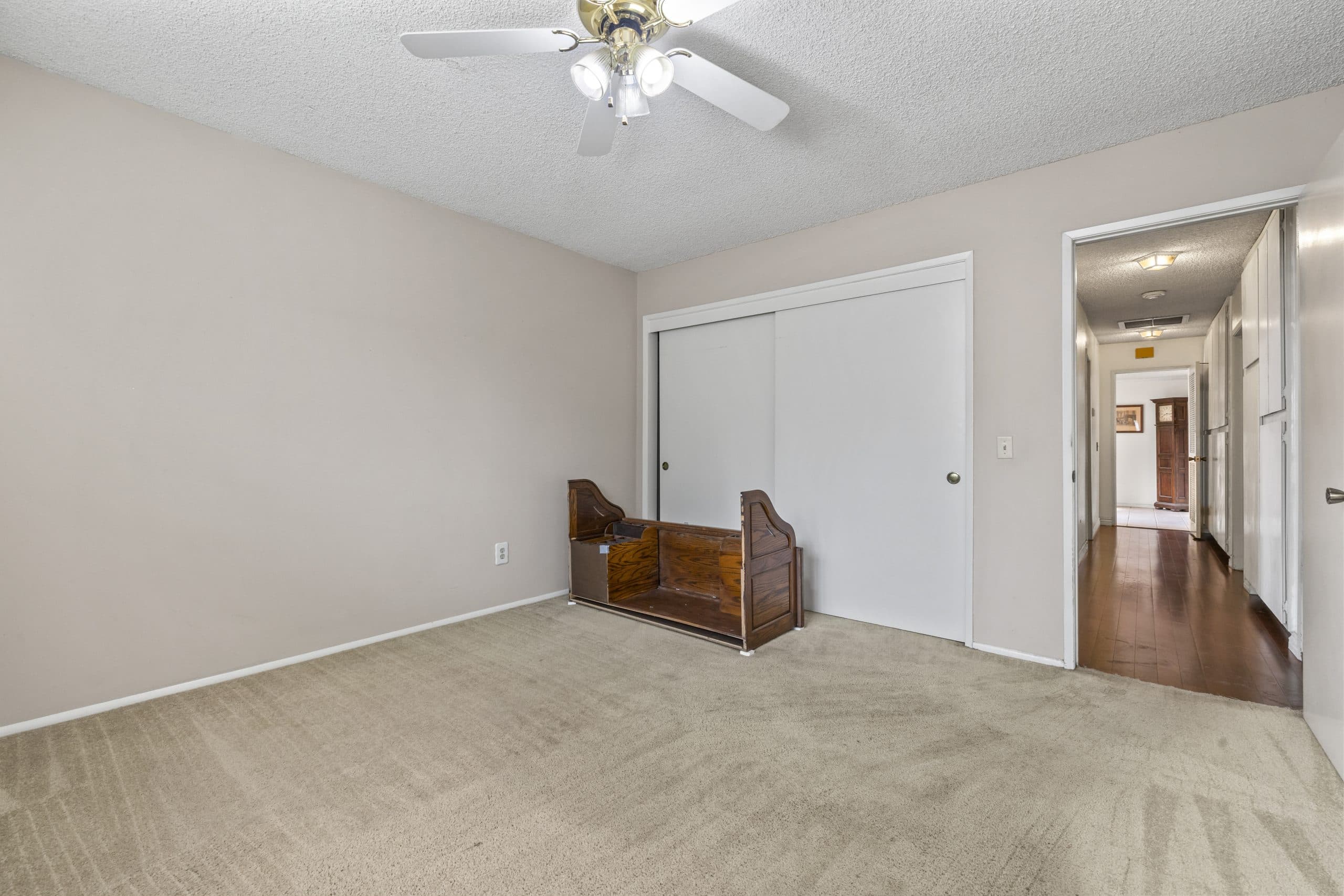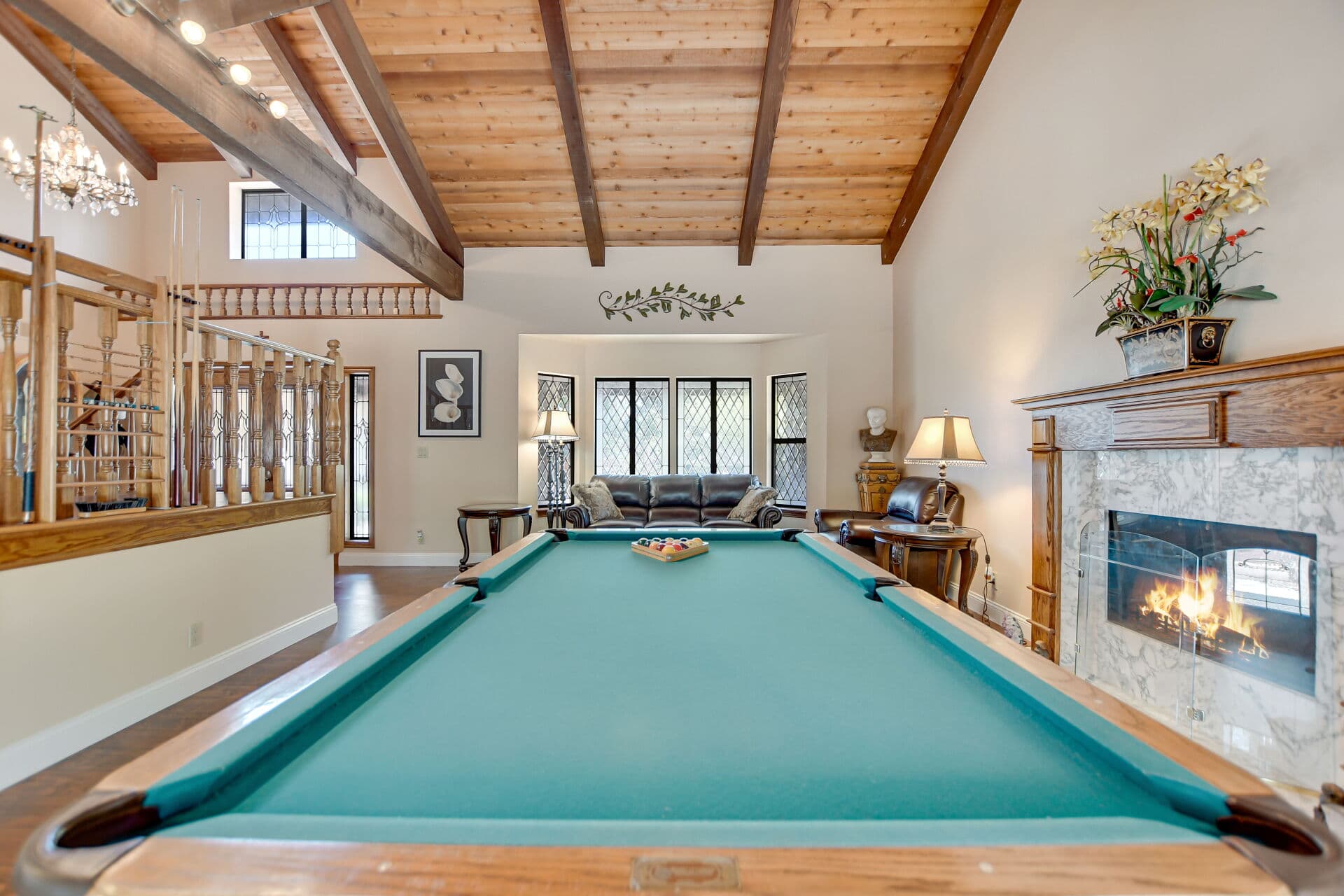
There is a stage of a downsize that almost nobody plans for, which is the first six weeks in the new house when the furniture is wrong.
Not missing. Wrong. Too large, too much of it, and arranged the way it was arranged in a house with different proportions. People report this as the moment the move feels like a mistake, and it usually is not a mistake at all. It is a furnishing problem being mistaken for a housing problem.
Some planning ahead of time takes most of it out.
Furniture is scaled to the room it was bought for
A sofa purchased for a large family room is not merely bigger than a smaller room needs. It is proportioned for a different space.
Depth is the usual culprit. Deep seating eats floor area that a compact room does not have, and once it is in place the room has no circulation. Height is the second, particularly with case goods. A tall armoire that read as substantial against a nine-foot wall reads as looming against an eight-foot one.
This is why measuring can tell you a piece fits and you can still be unhappy with it. Fitting and suiting are different questions. The fitting question is answered in will the sofa fit, and this article is about the second one.
Sort your furniture into three groups, honestly
Group one: it comes, no discussion. Things you love, things that fit the new proportions, and anything with real meaning attached. This group should be smaller than instinct suggests and it should include everything that genuinely matters to you.
Group two: it goes. Pieces that exist because a room needed filling. Pieces you have not liked for a decade. Anything that only worked in a room you no longer have, such as a formal dining set for a formal dining room.
Group three: undecided. The honest middle. Perfectly good pieces you are not sure about.
The trap is group three, because undecided furniture travels. It is easier to load it on the truck than to make a decision, and then it occupies the new house while you decide, which you do not, because now it is in place.
A better rule: undecided pieces need a reason to come, not a reason to go. If you cannot say where a piece will stand in the new house, it is a group two item that has not admitted it yet.
Do not buy before you move
This is the single most useful instruction in this article.
People shop for the new house while they are still living in the old one, buy from a photograph and a floor plan, and end up with pieces that are wrong in ways that were not visible in advance. Light is different. Proportions are different. Where you actually sit is different.
Move in first. Live with what you brought for a few weeks, even if it is imperfect and even if the room is too full. You will learn things you could not have predicted: which chair you use, which corner is dark at four o'clock, where you actually eat.
Then buy, once, correctly. It is slower and it costs less, and the pieces are right.
The exception is anything with a long lead time or anything you cannot manage without, such as a bed. Order those in advance and let everything else wait.
What a smaller home actually wants
A few patterns that hold up.
Fewer pieces, better placed. Compact rooms suffer more from too many objects than from objects that are too large. Circulation matters more than seating capacity, and a room you can walk through comfortably feels larger than one crowded to its limits.
Storage inside furniture. When the closets and the garage are smaller, a bench that opens or a bed with drawers is doing real work rather than being a gimmick.
Pieces that do two things. A table that serves as a desk and as a place to eat. A guest arrangement that is not a permanently dedicated room. Whether the guest room earns its keep at all is worth deciding before you furnish one, and that case is made in does the guest room still earn its space.
Lighter visual weight. Legs rather than skirts, less bulk, fewer tall solid pieces on the walls you see first. This is not a style preference so much as an observation about how small rooms read.
The pieces to be careful about letting go
Balance, because it is possible to overcorrect.
Anything with genuine meaning stays, even if it is impractical. A downsize that strips a house of the things that make it yours produces a home that feels like temporary accommodation, and that is one of the recognized routes to regret.
Seating for the number of people who actually visit. Downsizers sometimes cut this too far and then cannot host their own family, which was rarely the intention. What that looks like in practice is covered in still hosting in a smaller Claremont home.
And anything genuinely well made. Good furniture can be reupholstered, refinished and rescaled in ways that new furniture at a similar cost usually cannot. If a piece is sound and only the fabric is wrong, that is a fixable problem rather than a reason to replace it.
What to do with what does not come
Start earlier than you think. Furniture takes time to place, buyers must be able to collect it, and donation organizations have limits on what they accept, particularly with upholstered items.
Family first, with a real date attached rather than an intention. Then sale, with enough runway that the deadline is not setting the price. Then donation, confirmed in advance. Then disposal, which is a legitimate ending for things nobody wants.
The full set of destinations and how to work through them is in sell, donate, keep.
A calmer way to run it
Decide what comes on the basis of where it will stand, not on the basis that it is perfectly good.
Move in with slightly too little rather than slightly too much. An underfurnished room is comfortable and easy to correct. An overfurnished one is neither.
Live in it for a month before buying anything you can postpone.
And expect the first few weeks to feel unsettled regardless. That is the move, not the house, and it passes. The wider account of what changes once you are actually living there is in what a smaller Claremont home changes about an ordinary day, and the Claremont downsizing hub holds the rest of the sequence.
Anthony Grynchal has been licensed in California since November 2009.
Frequently asked questions
Should I buy new furniture before or after moving?
After, for anything you can postpone. Light, proportions and how you actually use the rooms are difficult to predict from a floor plan. Order only long lead-time essentials such as a bed in advance.
How do I decide which furniture comes with me?
Require a reason to bring rather than a reason to leave. If you cannot say where a piece will stand in the new home, it usually should not travel, because undecided furniture tends to settle in place and never get decided.
Why does furniture that fits still feel wrong in a smaller home?
Fitting and suiting are different. Deep seating consumes circulation space, and tall case goods that suited a taller wall can dominate a smaller room. Proportion matters as much as measurement.
What should I be careful not to give up?
Anything with real meaning, enough seating for the people who actually visit, and well-made pieces that could be reupholstered or refinished rather than replaced.

Written by
Anthony Grynchal
Anthony Grynchal is a California real estate professional with eXp Realty, licensed since November 2009 (California DRE# 01873626), and the Designated Local Expert™ for Claremont — where he has lived for more than 33 years.
More about AnthonyPublished · Updated