One of the most common reasons people stay in a house that no longer suits them is a table.
Not the furniture. The gathering. The house is where everyone comes, and moving somewhere smaller feels like announcing that the gathering is over. That is a real consideration and it deserves better than being waved away as sentiment.
It also deserves to be examined, because the assumption underneath it is frequently wrong. Plenty of smaller homes host well, and plenty of large ones host badly.
Separate the two questions
There are two different things being asked, and they get tangled.
The first is whether people can be seated and fed. The second is whether people can stay overnight. They have completely different answers and completely different costs.
Seating twelve for a meal is a question about one afternoon a few times a year. Sleeping six is a question about rooms that sit empty the rest of the time. A house bought to solve the second question is expensive year-round to solve a problem that occurs twice.
Ask which one actually matters to your household, because the answer changes what you are shopping for.
What hosting actually requires
Watch how a gathering works in your current home and you will notice it uses less of the house than you think, and different parts than you would guess.
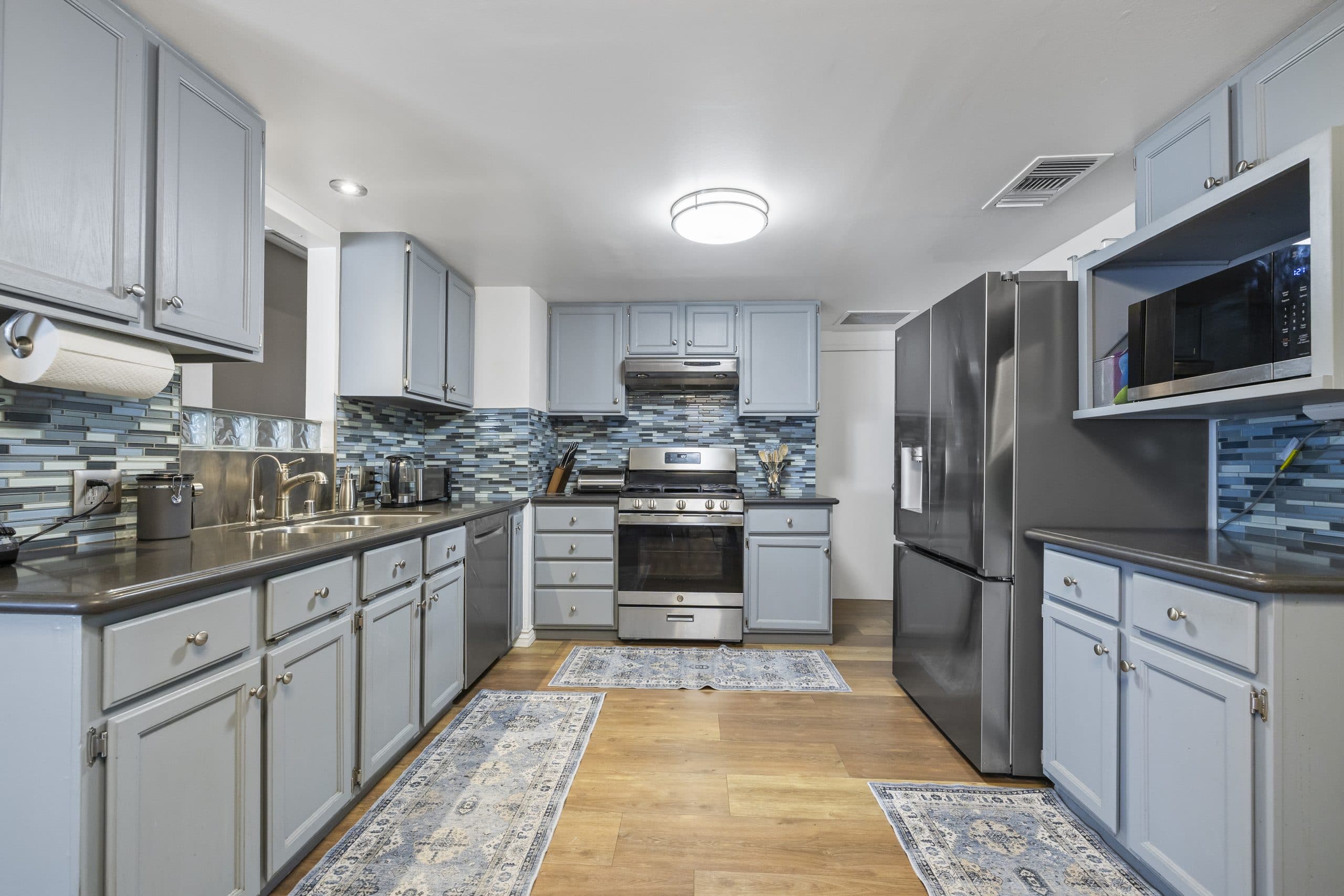
It requires a surface long enough for everyone to sit at, or a plausible way to make one. It requires somewhere to stage food that is not the same surface people are eating from. It requires a path from kitchen to table that does not run through where people are standing. It requires enough seating in one room that the group is not split in two. And it requires more bathroom access than a normal day.
Note what is not on that list. Square footage. Formal rooms. A separate dining room.
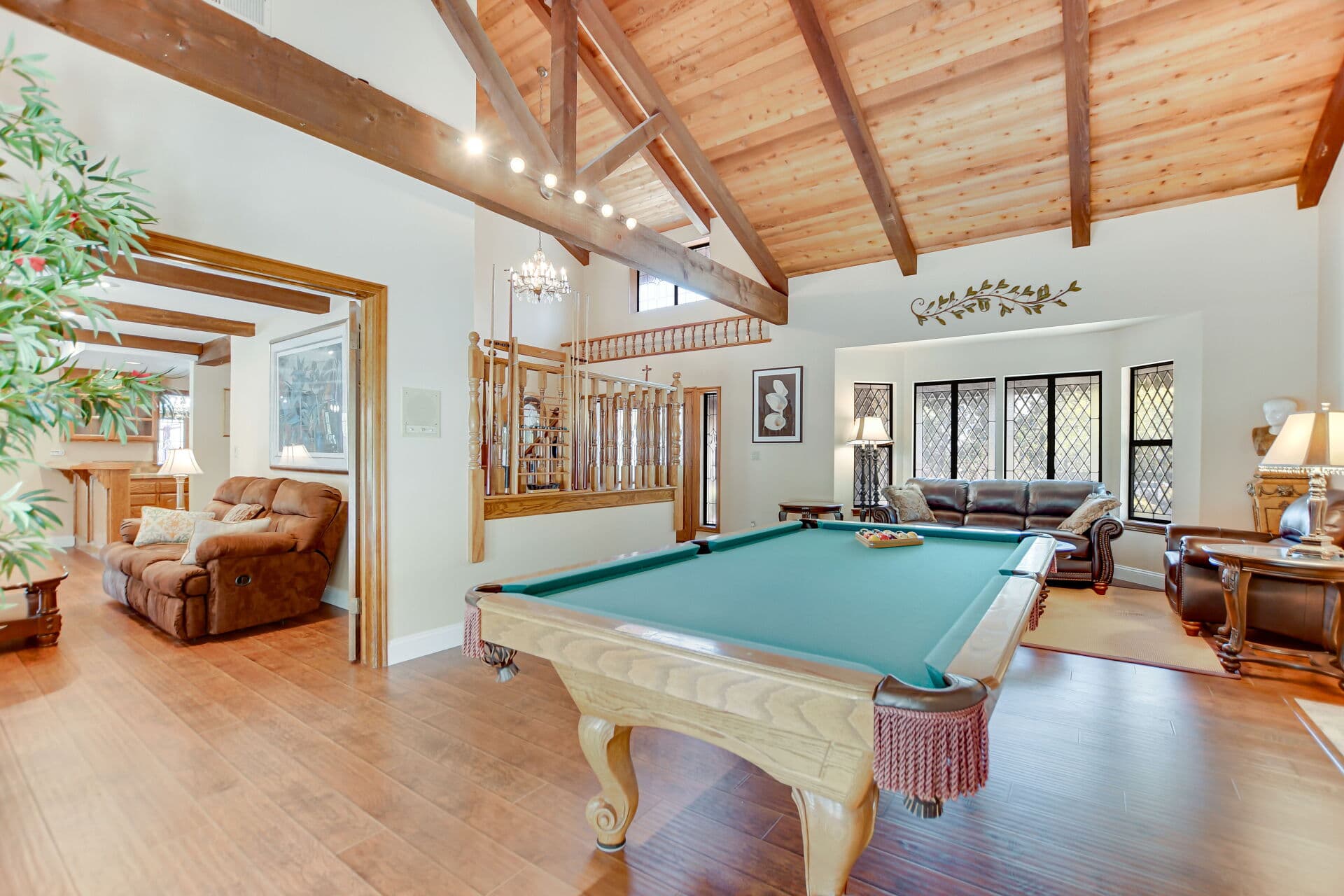
Some of the best hosting homes are modest ones where the flow works. Some of the worst are large ones where the kitchen is isolated and the group ends up in three rooms shouting at each other.
Test the flow, not the floor plan
When you tour a smaller home with hosting in mind, walk the route rather than reading the plan.
Stand where the table would go and see whether a chair can be pulled out without hitting a wall. That single measurement, roughly three feet behind each seat, is what makes a room dine well or badly. Then walk from the oven to that table carrying an imaginary dish and note what you have to go around.
Look at whether the seating area and the eating area can see each other. A group that can be in two places while remaining one group is what makes a small home feel generous.
Look at outdoor space, because in this climate a good deal of hosting happens outside for much of the year. A patio that seats people is functionally another room, and it is usually cheaper than an indoor one.
The overnight question, honestly
If people genuinely stay, there are more options than a dedicated guest room.
A room that works as a study, a hobby room, or an office most of the year and takes a bed occasionally is one room doing two jobs, which is the whole idea of a smaller home. Working out how that room serves a working household is covered in whether the guest room still earns its space.
There is also the option nobody likes to say out loud, which is that guests stay nearby rather than in the house. For a visit of several days, that is frequently better for everyone, and the cost of it a few times a year compares favourably with carrying an extra bedroom permanently.
What matters is deciding deliberately rather than defaulting. A guest room kept for two weekends a year is a choice, and it is a legitimate one if you make it knowingly.
Storage is the hidden hosting requirement
Hosting needs equipment: the serving pieces, the extra chairs, the leaves for the table, the roasting pan, the platters, the linens.
That equipment lives somewhere for the other fifty weeks. In a larger house it disappears into a cupboard nobody thinks about. In a smaller one it has to be planned for, and if it is not, it occupies daily space and makes the home feel cramped.
Count these items before you shop. They are a specific volume, and asking a smaller home to absorb them is a fair question to put to it, alongside the general storage assessment in reading a smaller home's storage before you buy.
The part that is not about the house
Sometimes the real worry is that if the house changes, the gathering stops. That the family comes because the house is the family house.
That is worth saying out loud rather than solving with square footage. In practice, gatherings move and keep happening, and often the reason they stop has nothing to do with the room they were held in. Buying a house to hold a tradition in place is a lot of weight for a building to carry.
It is also worth asking the people who come. They frequently have a view, and it is frequently more relaxed than the one being worried about on their behalf. The wider version of that conversation is in when the kids push and you are not ready.
Judge the home on the gathering it can hold
If hosting matters, make it an explicit requirement rather than a background anxiety. Write down the number of people, the meal, and the overnight question, and then measure homes against it.
Done that way, it turns from a reason not to move into one more thing on the list, and quite often the list is satisfied by homes you had not been considering. The kitchen half of the same question is set out in the kitchen test, and the rest of the cluster is at the Claremont downsizing hub.
Anthony Grynchal has been licensed in California since November 2009.
Frequently asked questions
Can a smaller home still host holiday meals?
Often yes. Hosting depends on a long enough surface, staging space away from the table, a clear path from kitchen to table, seating that keeps the group together, and bathroom access. None of those require a large house or a formal dining room.
Do I need a guest room in a downsize?
Not necessarily. A room that serves as a study or hobby room most of the year and takes a bed occasionally does two jobs, which is the point of a smaller home. Guests staying nearby is also a legitimate choice, and for longer visits it is frequently better for everyone.
How do I test whether a room will seat everyone?
Stand where the table would go and check there is roughly three feet behind each seat so chairs can be pulled out. Then walk the route from oven to table carrying an imaginary dish and note what you have to go around. Flow matters more than floor area.
Where does hosting equipment go in a smaller home?
It has to be planned for. Serving pieces, extra chairs, table leaves, platters, and linens are a specific volume that sits unused most of the year. Count them before shopping, and ask each home whether it can absorb them without eating into daily space.

Written by
Anthony Grynchal
Anthony Grynchal is a California real estate professional with eXp Realty, licensed since November 2009 (California DRE# 01873626), and the Designated Local Expert™ for Claremont — where he has lived for more than 33 years.
More about AnthonyPublished · Updated