There is a version of a downsize where the owner does not empty the house first. The furniture stays, the sale happens, and whatever is left is dealt with afterward or not at all.
Sometimes this is exactly right. Sometimes it costs more than the work it avoided. Knowing which situation you are in comes down to a few specific questions.
As-is is a condition, not a permission slip
The phrase gets used loosely, so it is worth being precise.
Selling as-is means you are not agreeing in advance to make repairs. It signals to buyers that the price reflects the home in its current state.
It does NOT mean the home does not have to be described honestly. California sellers have disclosure obligations, and an as-is sale does not remove them. What you know about the property still has to be disclosed, in writing, and the specifics of what applies to your situation are a matter for your agent and, where anything is unclear, an attorney.
It also does not mean nobody will inspect. Buyers inspect as-is homes routinely. What changes is the expectation about who fixes what afterward, not whether anyone looks.
Empty, clean and dated shows better than full and dated
Here is the distinction that matters most, and it gets lost inside the phrase as-is.
Buyers can see past an old kitchen. They can see past original flooring and a bathroom from another era. Dated is a known quantity, and it prices in.
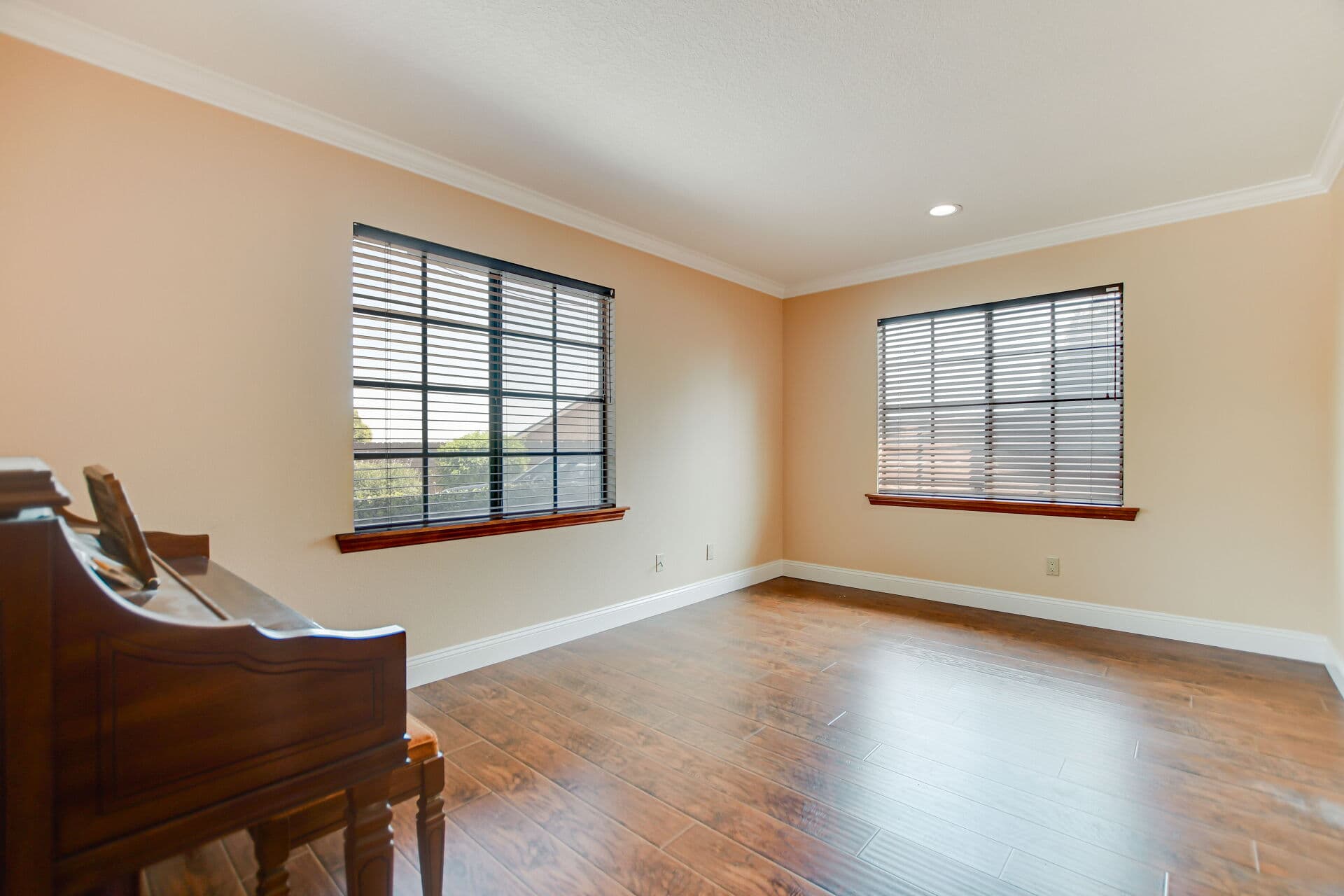
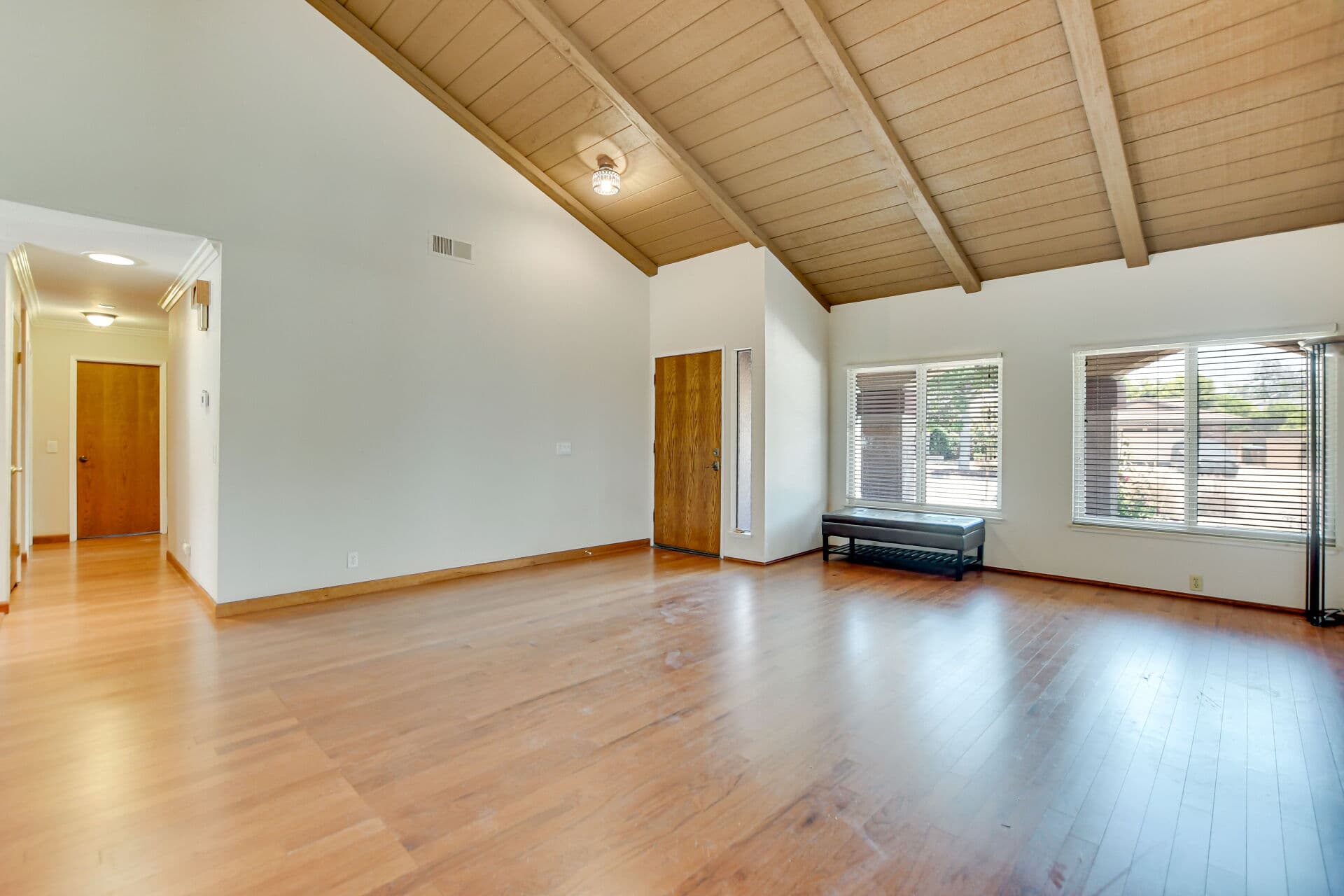
What buyers struggle with is a house they cannot read. A full home with decades of belongings in it hides the rooms. Corners are blocked, closets cannot be opened, and the sheer volume makes spaces feel smaller than they are and the maintenance feel worse than it is.
So the useful line is not between renovated and as-is. It is between LEGIBLE and not. A home that is empty, clean, and honestly presented, with no work done to it at all, generally does better than the same home full of furniture.
That is why the emptying step is worth doing even when nothing is being repaired, and it is a job in its own right, laid out in sell, donate, keep.
When furnished as-is genuinely makes sense
There are real situations where leaving the contents is the right answer.
When the owner is not physically able to do the sorting and no one else can. When health or a care transition has set the timeline and the sale cannot wait for a months-long clearing project. When the contents genuinely have little value and the cost of removal is the only thing at stake. When the likely buyer for the property is going to make significant changes regardless.
In those cases the honest framing is that you are trading some proceeds for time and effort you do not have. That is a legitimate trade and nobody should feel bad about making it.
Partial is usually better than all or nothing
The choice is rarely binary, and the middle option is frequently the best value.
Remove what is personal and what is blocking. Papers, medications, clothing, photographs, the boxes stacked in front of windows and closets. Leave the furniture that is simply furniture.
A partly furnished home that reads clearly, with clean surfaces and open circulation, often shows nearly as well as an empty one and takes a fraction of the effort. This is where most downsizers land once they see both options laid out, and it is the practical middle ground between doing everything and doing nothing. The fuller preparation question is covered in preparing a full Claremont home.
Be explicit about what stays
If furniture is remaining with the property, that needs to be written down and agreed rather than assumed.
Assumptions here cause real problems at closing. A buyer who expected the dining set to stay and finds an empty room, or an owner who assumed the buyer would deal with the garage and finds it is now their obligation, both end up in an avoidable dispute during the most stressful week of the process.
Be specific, item by item where it matters, and get it into the paperwork.
Do not skip the safety and access items
Whatever else you leave alone, a home that will be walked through by strangers needs to be safe and navigable.
Clear paths through every room. Nothing stacked where it can fall. Working lights so rooms can be seen. Access to the attic, the panel, the water heater and the garage, because inspectors and appraisers need to reach them and a blocked area invites a worse assumption than the truth.
These are cheap, they are quick, and they are not renovation. Skipping them is the version of as-is that actually costs money.
Decide with real numbers, not a guess
Before defaulting to either extreme, get an actual sense of what the work would involve. A quote from a clearing service, an estimate of your own time, and a conversation about how the home would present each way.
Sometimes the effort is smaller than feared. Sometimes it is genuinely beyond what the situation allows. Either way it is a decision worth making on information rather than on dread.
And if the conclusion is that none of this needs to happen yet, that is fine. Staying put while working through the house at your own pace is a perfectly reasonable plan. The Claremont downsizing hub covers the sequence without assuming a date.
Anthony Grynchal has been licensed in California since November 2009.
Frequently asked questions
Does selling as-is mean I do not have to disclose anything?
No. An as-is sale means you are not agreeing in advance to make repairs. California disclosure obligations still apply, and what you know about the property still has to be disclosed in writing.
Is it better to sell a home empty or furnished?
The important difference is whether the home is legible. Buyers see past dated finishes but struggle with rooms they cannot read. An empty, clean, unrenovated home usually shows better than a full one.
When does selling furnished actually make sense?
When health, ability or timeline makes a long clearing project impossible, or when the contents have little value and removal cost is the only issue. It trades some proceeds for time you do not have.
What should I clear even if I sell as-is?
Personal items, medications and papers, anything blocking windows, closets or walkways, and anything blocking access to the attic, panel, water heater and garage. Those are safety and access items, not renovation.

Written by
Anthony Grynchal
Anthony Grynchal is a California real estate professional with eXp Realty, licensed since November 2009 (California DRE# 01873626), and the Designated Local Expert™ for Claremont — where he has lived for more than 33 years.
More about AnthonyPublished · Updated