
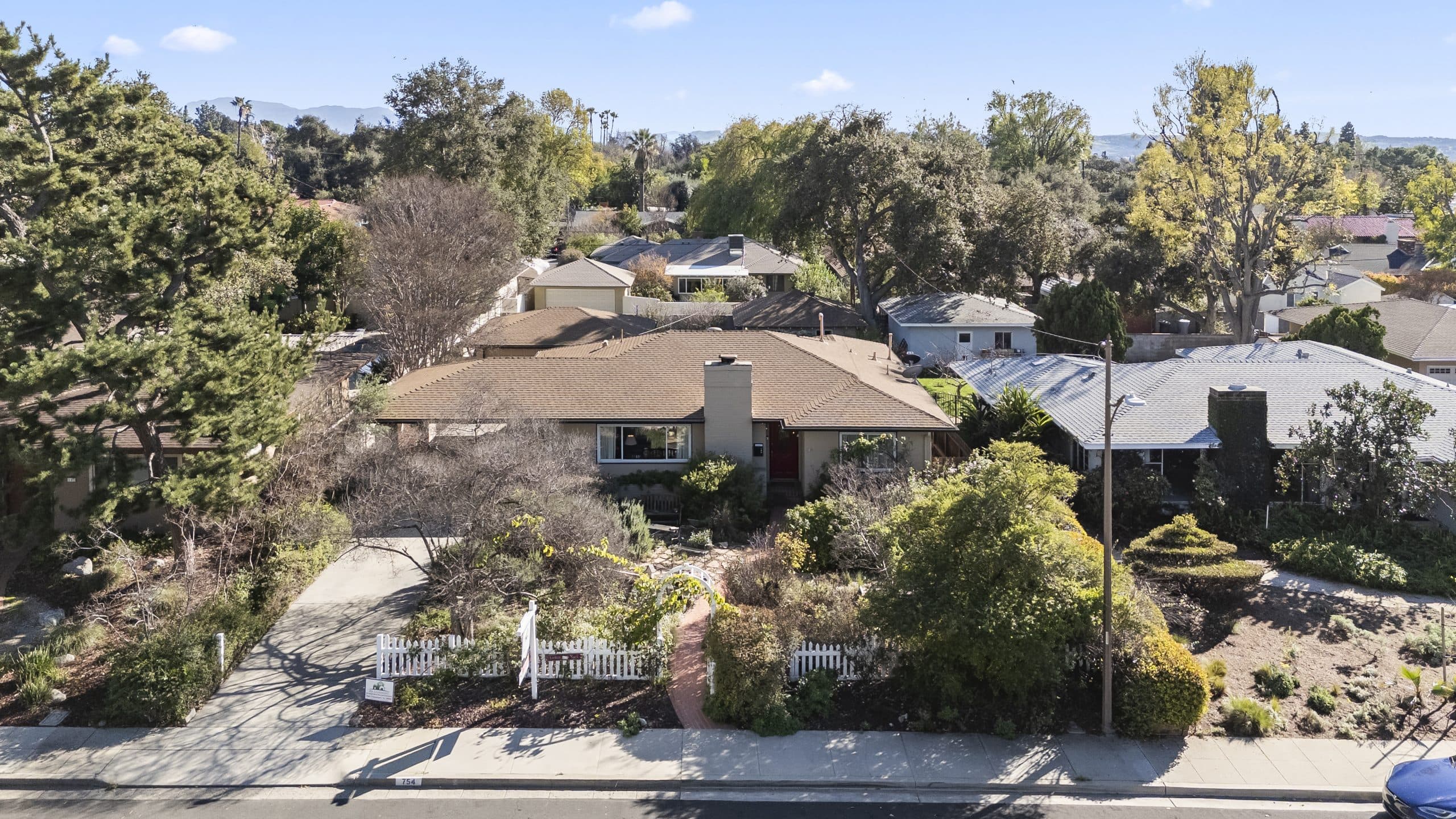
If you are moving to Claremont CA and still weighing it against La Verne and Upland, here is the honest version: Claremont buys you a college-town core and a walkable center, La Verne buys you the strongest test scores of the three plus a rail station that already exists, and Upland buys you square footage. All three sit inside twenty minutes of each other. The difference between them is not scenery. It is price per square foot, which school district your kids land in, and how you get to work.
I have lived in Claremont for more than 33 years and sold here for more than 17. I am not going to tell you Claremont wins every comparison, because it does not.
The short answer before you tour a single house
Claremont fits the family that wants to walk to dinner, cares about the Colleges being next door, and will trade lot size for a location inside the Village grid. La Verne fits the family whose top priority is public school outcomes and who wants a quieter, less-visited downtown. Upland fits the family that needs the most house per dollar, is comfortable in San Bernardino County, and will drive to everything.
That is the whole comparison compressed. The rest of this post is the evidence. Here it is in one view:
- Median price per sq ft — Claremont: $520 (Redfin, July 2026) · La Verne: $522 (Redfin, 2026) · Upland: $462 (Redfin, November 2025)
- County — Claremont: Los Angeles · La Verne: Los Angeles · Upland: San Bernardino
- District ranking — Claremont: Claremont Unified, #322 of 1,932 · La Verne: Bonita Unified, #164 of 1,908 · Upland: Upland Unified, #666 of 1,907
- Rail today — Claremont: Metrolink; A Line targeted 2031 · La Verne: A Line, open since September 2025; no daily Metrolink station · Upland: Metrolink
- Downtown — Claremont: Claremont Village, walk-up · La Verne: Bonita Ave at D Street, quiet · Upland: Euclid Ave, drive-to
One structural fact to hold onto: Claremont and La Verne are Los Angeles County. Upland is San Bernardino County. That single line on a map changes your county services, your property tax administration, and, for some buyers, your insurance quotes. Nobody's relocation guide mentions it. It matters.
What moving to Claremont CA costs per square foot against La Verne and Upland
Most buyers assume Claremont is dramatically more expensive than La Verne. It is not. The real gap is between both of those towns and Upland.
Per Redfin, Claremont's median sale price per square foot was $520 as of July 2026, up 4.3% year over year, with a median sale price of $1.1M over the trailing three months. Homes were selling after about 35 days, compared with 26 days a year earlier. Per Redfin's La Verne page in 2026, the median was $522 per square foot, down 4.7% year over year, with a median sale price of $1.1M in May 2026 and roughly 23 days on market.
Read that again. Claremont at $520 and La Verne at $522 are, for practical purposes, the same price per foot. La Verne is not the cheaper alternative to Claremont. It is the same money in a different town.
Upland is where the number drops. Per Redfin, Upland's median sale price was $815K with a median of $462 per square foot as of November 2025, up 7.1% year over year, and homes were sitting about 43 days with an average of two offers. That is a real discount — roughly 11% less per foot than either Los Angeles County town — and on a 2,200-square-foot house it is a meaningful monthly payment difference.
Two cautions on those figures. First, the Upland reading is dated later than the Claremont and La Verne readings, so do not treat the gap as precise to the dollar; verify current numbers before you write an offer. Second, La Verne's monthly medians swing hard because the town is small. Redfin's own neighborhood tables for March 2026 showed South La Verne closing 2 homes and West La Verne closing 3. A 26.1% year-over-year jump built on that few transactions is directional, not a trend you should underwrite.
For a slower-moving cross-check, Zillow's 2026 average home values put Upland at $822,580 (up 1.4% over the year), Claremont at $917,896 (down 3.6%), and La Verne at $940,085 (up 0.2%). Different methodology, same ranking at the top: La Verne and Claremont trade near each other, Upland sits below both.
Moving to Claremont CA means buying into a smaller, denser school district
This is the section where the three towns genuinely diverge, and where most comparison content just says "great schools" and moves on.
Per PublicSchoolReview, using 2022–2023 state testing data:
- Bonita Unified (serves La Verne and San Dimas): 58% math proficiency, 67% reading, ranked #164 of 1,908 California districts — top 10%.
- Claremont Unified: 48% math, 60% reading, ranked #322 of 1,932 — top 20%. Enrollment is 6,120 students across 11 schools.
- Upland Unified: 37% math, 48% reading, ranked #666 of 1,907 — top 50%.
California's statewide averages in the same dataset were 34% math and 47% reading. All three districts clear the state bar. Only one of them clears it by a wide margin in both subjects, and it is not Claremont.
So be honest with yourself about what you are buying. If raw district-level proficiency is your single deciding factor, La Verne's Bonita Unified is the answer and you should stop reading comparisons. What Claremont Unified offers instead is scale and adjacency: a small district of about 6,120 students, and seven undergraduate and graduate institutions in walking distance of the high school. That produces things a proficiency percentage does not capture — college-town programming, lecture access, an unusually credentialed parent body.
Upland Unified is the largest of the three and posts the weakest district-wide numbers, but a district average is not a school. Upland has strong individual campuses, and the north end of town near the foothills feeds differently than the south end near Foothill Boulevard. If Upland's price is what makes your budget work, do not disqualify it on the district number. Pull the specific school's report card, then go stand in the pickup line at 3 p.m. and watch.
One more piece of homework: confirm the attendance boundary for the exact address, not the city. Bonita Unified crosses into San Dimas. City limits and district lines do not agree, and buyers get this wrong every year.
Three downtowns that behave completely differently
This is where the towns stop being interchangeable.
Claremont Village is the only true walk-up downtown of the three. The 1922 Packing House anchors it, the Village holds more than 50 independent shops, studios and restaurants, and the street grid connects directly into the Colleges and into older residential blocks on the west side of Indian Hill Boulevard. You can park once on a Saturday and not move the car. Philz at 330 W Bonita Ave, dinner, a gallery, the farmers market — all on foot. Homes inside that walk radius carry a premium, and they hold it because the supply is physically fixed. You cannot build another Village.
La Verne's center runs along Bonita Avenue near D Street, with the University of La Verne folded into the neighborhood and Wheeler Avenue running north-south through it. It is a quieter, more residential downtown — fewer visitors, fewer weekend crowds, less to do after 9 p.m. Some buyers hear that as a downgrade. Families with elementary-age kids often hear it as the entire point.
Upland's downtown is a different animal because Euclid Avenue is the town's spine. The stretch from Philadelphia Street in Ontario north to 24th Street in Upland was listed on the National Register of Historic Places as a district in 2005, and a bridle path still runs down the center median from Foothill Boulevard to 24th Street. It is a genuinely grand boulevard with turn-of-the-century architecture along it. The retail core near Second Avenue and Ninth Street has been reinvesting for years. What Upland does not have is a compact grid you can cover on foot — it is a driving town with historic bones.
Rank them by how you actually live. If your Friday night is a ten-minute walk, Claremont. If it is a fifteen-minute drive and you would rather have the extra bedroom, Upland.
Commute math: Metrolink today, the A Line later
Every guide describes these towns as places to live. Almost none describe them as places to commute from. That is the biggest gap in the existing content, and it is the thing that will define your weekdays.
Metrolink's San Bernardino Line serves Claremont, Montclair and Upland — not La Verne. La Verne's only stop on the line, Fairplex on Arrow Highway, runs on fair days only, so its nearest daily station is Pomona–North. For plenty of people moving to Claremont CA the line is the deciding amenity. Claremont's depot sits at the edge of the Village, Montclair has a transit center, and Upland has its own station. Claremont to L.A. Union Station runs roughly 57 minutes by train. As of January 2025 the line ran 44 weekday trips, 22 in each direction, with five short turns that only run as far east as Montclair. If you are a downtown L.A. commuter, this is the option that makes any of these towns work, and Claremont's station being inside a walkable downtown rather than in a parking field is a real daily difference.
The Metro A Line is where La Verne pulled ahead. The Foothill extension opened for passenger service on September 19, 2025, adding stations in Glendora, San Dimas, La Verne and Pomona. La Verne/Fairplex station is at 1950 3rd St. That is light rail into Pasadena and downtown L.A., running today, from a La Verne address.
Claremont's A Line station is not built. The Pomona-to-Claremont segment, Phase 2B2, is a 2.3-mile extension targeting a 2031 opening; Parsons was awarded a six-year, $60 million final design contract on January 29, 2026, with construction expected to break ground in 2027. Twenty-three of the 25 planned stations from Los Angeles to Montclair are complete. Claremont and Montclair are the two that are not.
Be clear-eyed about that. If you need rail transit in 2026, La Verne has it and Claremont does not. If you are buying a house you will hold for fifteen years, Claremont's station is a future amenity you are partially paying for now.
By freeway: Claremont has both the 10 and the 210 within a few minutes. La Verne sits closer to the 210 with the 57 available south. Upland's access is the 210 across the north and the 10 down Euclid. For an Orange County commute the 57 favors La Verne. For an Inland Empire commute Upland is the obvious origin.
What your money actually buys block by block
Treating any of these towns as one market is how buyers overpay. Moving to Claremont CA is not one decision either; the city holds at least three separate markets.
In Claremont, the Village and the streets immediately around it deliver walking access on smaller lots. North Claremont, above Baseline Road toward the foothills, gives you the bigger lot, the newer construction and the mountain backdrop — and a car trip to everything. Claremont's south side, closer to Arrow Highway, is the entry point into the school district and the most competitive price band in town. Three different markets, one city name, one median that describes none of them.
La Verne splits north and south of Foothill Boulevard, with the northern hillside tracts commanding the premium and the older flats near the university offering the value. Redfin's 2026 neighborhood readings showed Northwest La Verne around $630 per square foot against the University of La Verne area near $409 — a spread of more than 50% inside one small city. Anyone quoting you "the La Verne median" is quoting a number that applies to almost nobody.
Upland's split is the sharpest of the three. North Upland toward the foothills and the 210 is a different market from south Upland near the 10. Same district, same city, materially different housing stock and price.
The practical takeaway: shop micro-areas, not cities. A north Upland house and a south Claremont house can end up within a few dollars per foot of each other while the city-level medians suggest a large gap.
Who each town fits: moving to Claremont CA, La Verne or Upland
Here is the verdict, stated plainly.
Choose Claremont if you want to walk to your life. You have a downtown L.A. commuter who will use Metrolink, you value the Colleges as a daily-life amenity rather than a brochure line, and you accept a top-20% district instead of a top-10% one in exchange for that setting. You are comfortable at roughly $520 per square foot for less land than Upland gives you. You are the family that will use the Village three times a week, not three times a year.
Choose La Verne if school outcomes are your number one and everything else is negotiable. Bonita Unified's top-10% ranking is the strongest data point any of these three towns can put forward, and the A Line station is running now. You are trading downtown energy for quiet. You are paying essentially Claremont prices to do it — go in knowing that.
Choose Upland if you need space and the payment has to work. You get about $462 per square foot against $520, historic Euclid Avenue, foothill access, and San Bernardino County. You will drive more. You will vet individual schools rather than trusting the district average. For a family with two kids, a home office and a real budget ceiling, this is often the rational answer, and I say that as the guy whose name is Mr. Claremont™.
Choose none of the three if you cannot articulate which of those three sentences is yours. That is a sign you are shopping houses instead of shopping towns, and you will end up bidding on whatever is pretty and available.
Your next five moves before touring homes
Work through these in order. It takes a weekend and it saves months.
- Set your true budget range, then convert it to square footage at each town's rate. The same payment is a different house in Upland than in Claremont.
- Pick your one non-negotiable — walk-to-downtown, district ranking, rail access, or lot size. Exactly one. The other three become tiebreakers.
- Drive your actual commute on a Tuesday at 7:40 a.m. from all three towns. Not on Google Maps. In the car.
- Verify the attendance boundary for any specific address with the district directly, and pull that individual school's report card rather than the district average.
- Re-pull the price data the week you write an offer. Every figure above carries a source and a date for a reason; markets move and stale numbers cost money.
Anthony Grynchal is a licensed California real estate agent (DRE #01873626) affiliated with eXp Realty and publishes under the Mr. Claremont Real Estate™ brand. He is the founder and CEO of MetaDLE™ Technologies, which operates the Designated Local Expert™ / UCI Coin™ products referenced in some posts. Articles are informational and are not legal, tax, or financial advice; market figures change and should be verified against current data before acting.
If you want a straight read on which of the three actually fits your family, reach out to Mr. Claremont for a one-on-one consultation. I will tell you if the answer is La Verne.
Sources: Redfin Claremont housing market, Redfin La Verne housing market, PublicSchoolReview: Claremont Unified School District, Foothill Gold Line project, Metrolink San Bernardino Line.
Frequently asked questions
Should I rent in the corridor first before buying? If your relocation timeline allows it, yes — six months of renting in one of the three towns tells you more than twenty showings will. Rent where your commute originates, not where the house you liked was. The most common regret I hear is not about the house at all. It is about the drive.
What about San Dimas, Glendora or Montclair as a fourth option? San Dimas and Glendora both sit in the same commuter corridor and both got A Line stations in the September 2025 extension, and San Dimas shares Bonita Unified with La Verne. Montclair has a Metrolink transit center and is the cheapest entry of the group. If your priority is rail plus school outcomes, San Dimas deserves a look before you rule the corridor out.
Does the Claremont premium still make sense if my kids are already grown? Often more, not less. Without a school district driving the decision, what you are buying in Claremont is the ability to walk to the Village, the Packing House and the Colleges' public programming — which is exactly what empty nesters and downsizers use daily. The buyers who overpay for Claremont are the ones who buy a foothill lot and never come down into town.
When in the year should I be touring these three towns? Time it against the school calendar rather than the weather. Family inventory in all three cities is heaviest in spring and early summer because sellers with kids want to move between school years, and it thins out in the fall. If you can buy in October or November you face fewer competing families, though you also choose from less.
How do I compare property tax bills across the county line? Pull the actual tax bill for the specific parcel from the county assessor — Los Angeles County for Claremont and La Verne, San Bernardino County for Upland — and read the line items beneath the base rate. Voter-approved school bonds and special district assessments vary street to street, and two homes at the same price can carry noticeably different annual bills. Ask your agent to send you the bill before you write the offer, not after.

Written by
Anthony Grynchal
Anthony Grynchal is a California real estate professional with eXp Realty, licensed since November 2009 (California DRE# 01873626), and the Designated Local Expert™ for Claremont — where he has lived for more than 33 years.
More about AnthonyPublished · Updated