
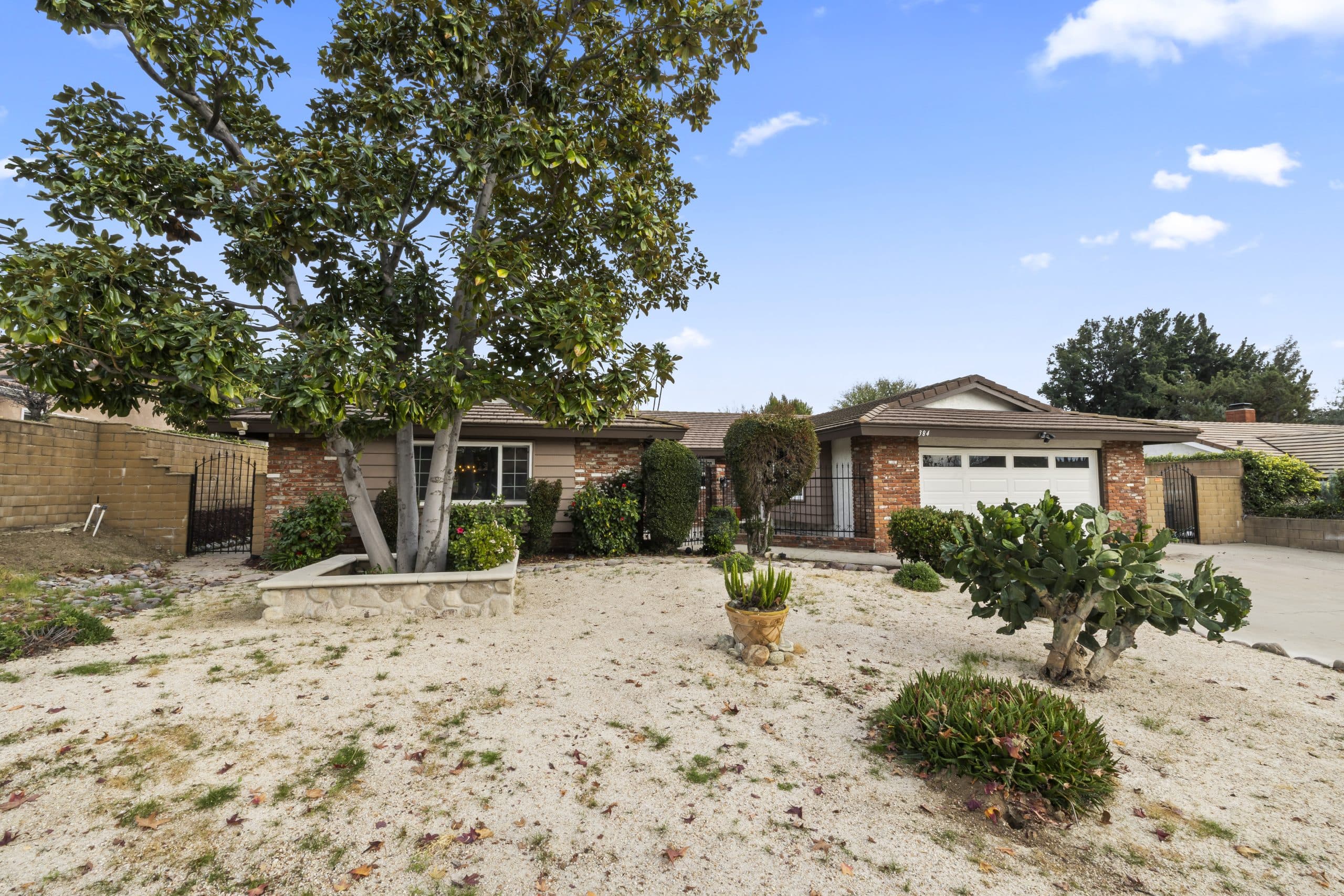
For most Claremont buyers, earthquake insurance Claremont CA deserves serious consideration, not an automatic yes. The right decision turns on the home’s construction, its insured rebuilding amount, its retrofit history, your emergency cash, and the deductible you could actually absorb after a major quake.
Start with the basic fact: standard California homeowners insurance does not cover earthquake damage. It does cover fire damage caused by or following an earthquake, but that is a separate coverage question. For earthquake insurance Claremont CA, think of it as catastrophe protection. It is not a maintenance policy for cosmetic cracks, a loose chimney cap, or a small repair bill you can comfortably pay yourself. California Department of Insurance
In Claremont, the conversation should be more specific than “California has earthquakes.” A 1920s or 1950s wood-frame house near the Village can present a different insurance and retrofit decision than a newer tract home south of Foothill Boulevard. A foothill-adjacent property north of Baseline Road deserves a different disclosure review than a flatter home closer to Arrow Highway. The address matters. So does the structure sitting on it.
What does earthquake insurance Claremont CA actually cover?
Most California buyers encounter earthquake coverage through the California Earthquake Authority, or CEA. You do not buy a CEA policy directly from CEA. You buy it through a participating insurer connected to your residential policy. California insurers must offer earthquake coverage to homeowners every other year, but you are not required to accept it. (insurance.ca.gov)
For a detached home, the core CEA policy has three useful buckets.
- Dwelling coverage. This pays for covered earthquake damage to the house and certain attached structures, such as an attached garage, up to the dwelling limit on your homeowners policy.
- Personal-property coverage. This addresses covered damage to belongings. CEA offers limits from $5,000 to $25,000.
- Additional living expenses, also called loss of use. This can help with the added cost of temporary housing, meals, storage, moving, and similar expenses if covered damage or a civil authority keeps you out of the house. CEA offers limits from $1,500 to $100,000, and this part has no deductible. (insurance.ca.gov)
CEA homeowners policies also include building-code-upgrade coverage, with higher limits available, plus limited emergency-repairs coverage. Read the declarations page and actual policy form before you rely on either. A policy is a contract. The marketing summary is not the contract.
Just as important is what a typical earthquake policy does not cover. The policy excludes at least 9 major categories: land, landscaping, pools, fences, masonry, detached structures, vehicles, flood or tsunami water damage, and sewer or drain backup. Fire damage falls under the homeowners policy instead.
That distinction matters for a Claremont house with a pool, mature landscaping, a freestanding garage, decorative block walls, or a hillside lot. You might insure the residence for a very large rebuilding amount and still have meaningful out-of-pocket exposure outside the policy’s covered categories.
Do not buy the policy assuming every consequence of ground movement is covered. Do not reject it because it will not cover everything, either. The real question is narrower: would this policy help you survive a structural loss that you could not self-fund?
How does the CEA deductible work in dollars?
This is where buyers make the biggest mistake. An earthquake deductible is usually a percentage of the dwelling coverage limit, not a percentage of your purchase price, loan balance, land value, or down payment.
CEA deductible choices for homeowners are 5%, 10%, 15%, 20%, and 25% of the dwelling limit. The available choices can be narrower for a home with a Coverage A limit above $1 million, or for a pre-1980 home on a raised or other non-slab foundation without a verified retrofit. In those cases, the lower available deductible is 15%.
Here is the clean way to evaluate it.
If the house is insured for $500,000 under Coverage A and you select a 10% deductible, your deductible is $50,000. That does not change because you paid $1.2 million for the property. Purchase price includes the land, location, lot size, school access, and market demand. Insurance is focused on the cost to repair or rebuild the insured structure.
CEA’s own example uses a $500,000 dwelling limit with a 5% deductible. That equals $25,000. If a covered earthquake causes $80,000 in damage, the payment would be $55,000: covered loss minus deductible, subject to the policy limit.
Use this calculation before you remove your inspection contingency:
- Find the seller’s current Coverage A amount, if available. Do not confuse it with the listing price.
- Multiply it by every deductible option your insurer will quote.
- Compare those dollar amounts with cash you would still have after closing.
- Add a realistic period of displaced living, repairs, and continued mortgage payments.
- Decide if the premium buys protection against a loss that would otherwise change your financial position.
A 15% deductible can look acceptable in a quote because it lowers the annual premium. But on a high rebuilding limit, it can be a six-figure self-insurance decision. That is fine for some buyers. It is reckless for others.
Also understand how the standard homeowners policy handles personal property. Under the standard CEA homeowners policy, personal-property losses are subject to the same 1 dwelling deductible. In other words, a few thousand dollars of broken furniture or electronics may not produce a payment unless covered dwelling damage exceeds the deductible. CEA’s Homeowners Choice policy can allow separate choices for dwelling and personal-property coverage, but you need to compare the terms rather than assume the policies work alike.
Why does Claremont’s location change the earthquake insurance Claremont CA conversation?
No honest agent, inspector, or insurance professional should tell you that every Claremont property has the same seismic exposure. It does not. Parcel-level risk depends on the site, soil, slope, construction, and mapped hazards. But it is equally wrong to treat Claremont as insulated from earthquake risk because the city has avoided the kind of destruction seen elsewhere in Southern California.
Claremont’s Local Hazard Mitigation Plan identifies 4 fault zones capable of affecting the city: the Sierra Madre, Whittier, San Jose, and San Andreas fault zones. The plan notes that the San Jose Fault runs for roughly 18 kilometers in the Claremont-Pomona area and records earthquakes exceeding magnitude 5 in 1988 and 1990. It also describes ground shaking as the primary seismic effect in the city. City of Claremont’s Local Hazard Mitigation Plan
That local context should make you ask better earthquake insurance Claremont CA questions. It should not make you panic-buy a policy without reading it.
North Claremont and foothill-adjacent homes
If you are looking north of Baseline Road, nearer the San Jose Hills, consider the property’s slope, drainage, retaining conditions, foundation configuration, and any geotechnical reports in the disclosure package. The city plan identifies foothill areas as potentially exposed to earthquake-induced landslides and notes that ground rupture concerns are more concentrated in foothill portions of the city.
Insurance is not a substitute for due diligence here. A policy may exclude land damage, and a hillside repair issue can involve more than the house itself. If the seller supplies a soils report, grading plan, repair invoice, drainage record, or engineering letter, read it. If the record raises unanswered questions, pay for qualified advice before you are locked into the purchase.
The Village and established central blocks
Around the Village, Indian Hill Boulevard, and older blocks near the Claremont Colleges, buyers often encounter homes from different construction eras. An older wood-frame house may be a better candidate for a seismic retrofit review than a newer home built to later codes. Age alone does not tell you the condition of the foundation connection, cripple walls, chimney, water-heater strapping, or prior alterations.
Do not let a renovated kitchen distract you from the crawl space. Ask what is under the house. Ask for permits. Ask who performed prior structural work. A seller’s verbal assurance that “it was retrofitted years ago” is not the 2-part documentation you need: permits and verifiable work records.
Flatter southern and eastern areas
A flatter lot south of Foothill Boulevard does not erase earthquake exposure. The city plan says soil conditions, groundwater, and location can influence liquefaction and ground-failure concerns, including areas near canyon and wash conditions at the base of the foothills.
The takeaway is simple: use citywide information to prompt a property-specific review. Do not use a neighborhood label as a substitute for one.
Can a retrofit lower the cost of earthquake insurance Claremont CA?
Sometimes. But a retrofit and an insurance policy solve different problems.
A proper retrofit is intended to reduce damage by improving how a vulnerable structure performs during shaking. Insurance helps address covered financial loss that remains after a deductible. You may want both. You may decide one comes first. The answer depends on the house and your budget.
CEA offers a Hazard Reduction Discount of up to 25% for qualifying retrofitted single-family homes. To qualify, a home must meet specific criteria, including being a one-to-four-unit, wood-frame dwelling built before 1980, with a raised or other qualifying foundation type and a properly secured water heater. The discount varies by age and foundation type:
- Built 1940–1979, raised foundation — CEA premium discount: 20%
- Built 1939 or earlier, raised foundation — CEA premium discount: 25%
- Built 1940–1979, other non-slab foundation — CEA premium discount: 10%
- Built 1939 or earlier, other non-slab foundation — CEA premium discount: 15%
CEA says slab-foundation houses do not receive this particular discount because their pricing already reflects the relative characteristics of that foundation type. The retrofit must be properly verified; an old receipt without enough detail may not be enough. CEA’s retrofit-discount guidance lays out the construction requirements and discount schedule.
For an older Claremont home, request the paperwork before you treat a retrofit as real value. Useful records include:
- Building permits and final approvals.
- A structural engineer’s report or letter.
- A contractor invoice that identifies the scope of work.
- Photographs taken during foundation bolting or cripple-wall bracing.
- Documentation showing that the water heater is secured.
- The insurer’s verification or discount confirmation, if one exists.
If there is no record, do not claim the discount in your budget. Get a quote based on the house as documented. Then ask an appropriately qualified retrofit professional or structural engineer what verification or work would be required.
A retrofit can be money well spent even if you do not buy earthquake insurance. Conversely, a retrofit does not guarantee a home will avoid damage in a major event. It improves the risk picture. It does not eliminate risk.
Who should seriously consider earthquake coverage?
You should move earthquake insurance higher on your list if several of these conditions apply:
- You would struggle to pay the deductible from available cash after closing.
- You are buying an older wood-frame home with a raised foundation.
- The home has no verified retrofit, or the documents are thin.
- You are purchasing near the foothills and the disclosures identify slope, drainage, geotechnical, landslide, or ground-condition issues.
- You have a large mortgage and cannot comfortably keep paying it while funding major repairs.
- You would need temporary housing for 30 days or more if the house became uninhabitable.
- You own a condo and the HOA could assess unit owners for earthquake-related common-area repair costs.
For condos, do not stop at the unit’s interior policy. Review the HOA master-policy summary, reserve information, recent meeting minutes, deductible amount, prior loss history, and any earthquake coverage carried by the association. A condo owner can face an assessment after damage to the building or common areas. CEA condo policies can provide up to $100,000 for a qualifying share of certain earthquake-related assessments, but you need to review the HOA documents and policy terms together.
Renters should still consider coverage for belongings and additional living expenses. You do not need dwelling coverage because you do not own the building. But you may need a place to live and a way to replace what was damaged.
Who might reasonably decline the coverage? A buyer with substantial liquid reserves, a structurally newer home, a lower-risk construction profile, and a clear plan to self-insure may decide the premium is not worth it. That is a financial decision, not a badge of confidence. Write down the deductible amount and decide consciously that you can carry it.
What should you do before removing contingencies?
Do not wait until after closing. Quotes, documentation, and exclusions are much easier to evaluate while you still have negotiating leverage and contingency rights.
Take these steps during the investigation period:
- Obtain an earthquake quote for the actual address. Ask for at least two deductible options, not just the cheapest premium.
- Confirm Coverage A. Make sure you know the rebuilding limit used for the calculation.
- Convert each percentage deductible into dollars. Put the number next to your post-closing reserve balance.
- Read the seller disclosures for foundation, slope, drainage, cracks, repairs, and prior claims. Do not assume a disclosure box is complete simply because it is checked “no.”
- Verify the year built, construction type, and foundation type. Your inspector can identify visible conditions, but a retrofit specialist or structural engineer is necessary when the inspection identifies 1 or more unanswered foundation questions.
- Request retrofit evidence. Permits, plans, invoices, and final inspections matter.
- For a condo, review HOA insurance and assessment exposure. Ask the HOA manager for the current documents in writing.
- Separate land value from rebuild value in your thinking. The premium and deductible follow the insured structure, not the purchase price.
- Keep an emergency reserve even if you buy coverage. A deductible, exclusions, and disruption costs still exist.
This is not a reason to walk away from every older home near the Village or every foothill property north of Base Line Road. It is a reason to price the risk before you own it.
The strongest buyer decision is usually not “insurance or retrofit.” It is: understand the house, reduce avoidable vulnerability, choose a deductible you can survive, and insure the loss you cannot carry yourself.
If you are comparing older Claremont homes, a foothill property, or a condo with complicated HOA documents, reach out to Mr. Claremont for a one-on-one consultation.
Anthony Grynchal is a licensed California real estate agent (DRE #01873626) affiliated with eXp Realty and publishes under the Mr. Claremont Real Estate™ brand. He is the founder and CEO of MetaDLE™ Technologies, which operates the Designated Local Expert™ / UCI Coin™ products referenced in some posts. Articles are informational and are not legal, tax, or financial advice; market figures change and should be verified against current data before acting.
Frequently asked questions
Does standard homeowners insurance cover earthquake damage in Claremont?
Usually no. Standard homeowners insurance generally excludes earthquake damage, although California homeowners and renters policies cover fire damage caused by or following an earthquake. Review your policy and ask your insurer about any specific exceptions or endorsements.
Is earthquake insurance required for a mortgage in California?
No. A lender requires homeowners insurance, but earthquake insurance is not required. Your insurer must offer earthquake coverage at intervals required by California law, but you can decline it.
Is an earthquake deductible based on my Claremont home’s purchase price?
No. A CEA dwelling deductible is calculated from the insured dwelling limit, called Coverage A. It is not calculated from the purchase price, land value, loan amount, or down payment.
Can a seismic retrofit reduce my CEA premium?
Possibly. Qualifying pre-1980 wood-frame single-family homes with raised or other non-slab foundations may receive a CEA Hazard Reduction Discount of up to 25% after a properly verified retrofit. The home’s year built, foundation type, and documentation all matter.
Do Claremont condo owners need earthquake insurance?
Yes—every condo owner should investigate it before closing. Your HOA may insure parts of the building, but the association may still assess owners for its earthquake deductible or covered repair costs. Review the HOA insurance documents and consider the loss-assessment coverage available through a condo earthquake policy.

Written by
Anthony Grynchal
Anthony Grynchal is a California real estate professional with eXp Realty, licensed since November 2009 (California DRE# 01873626), and the Designated Local Expert™ for Claremont — where he has lived for more than 33 years.
More about AnthonyPublished · Updated