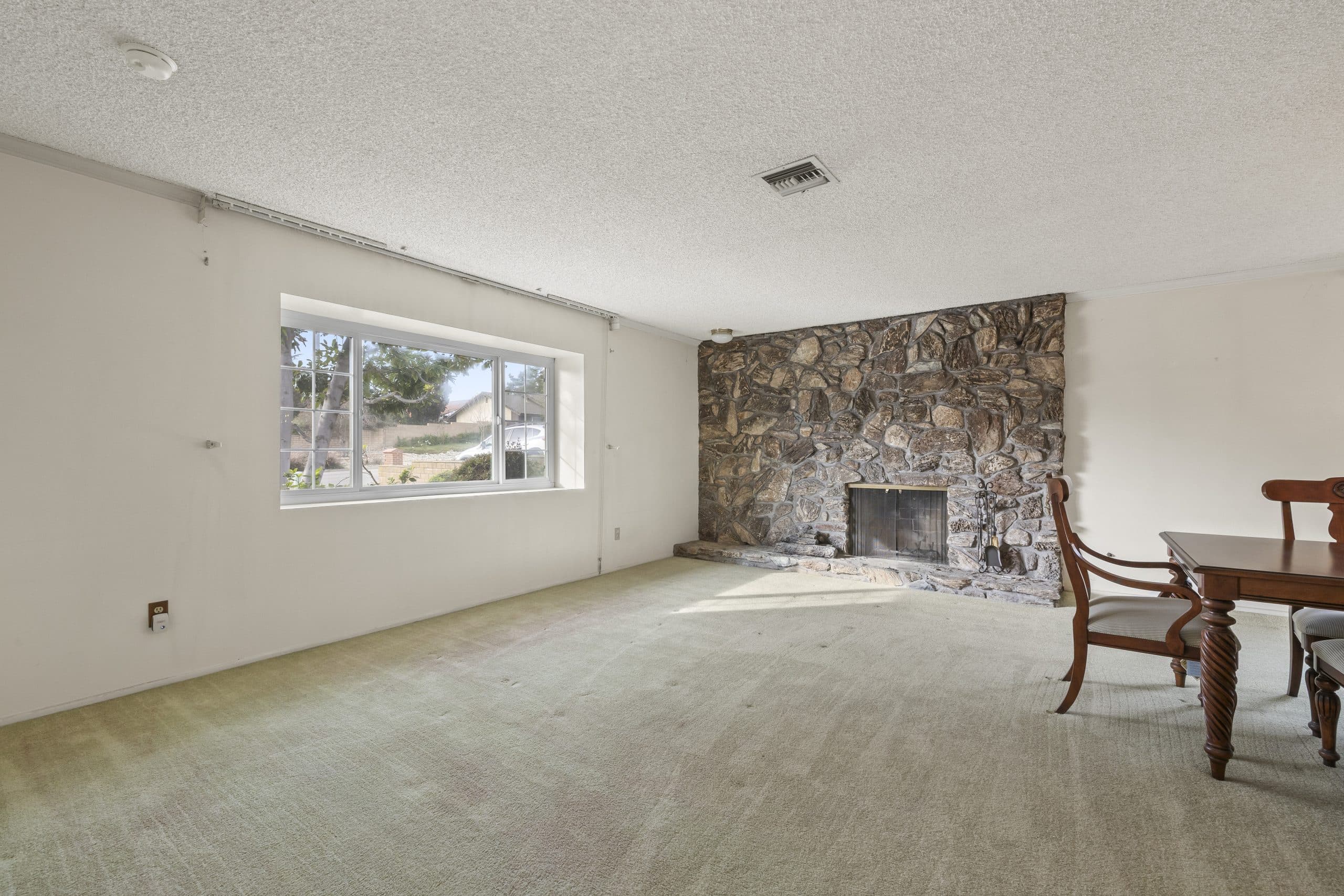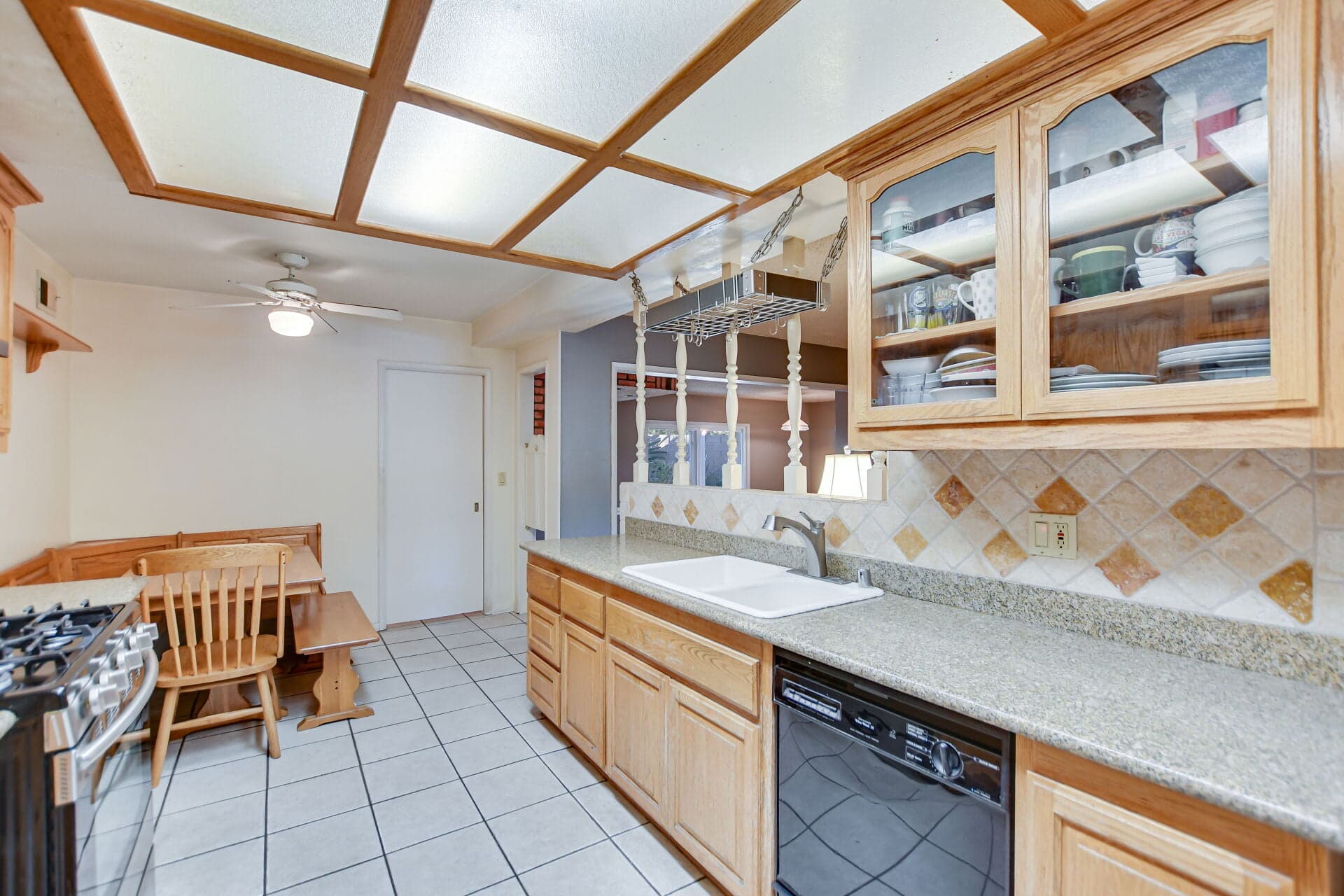
A large share of Claremont's housing stock predates the rules that would govern putting it back up. Bungalows from the twenties. Post-war tracts. Ranches from the fifties and sixties that were entirely code-compliant on the day they were finished and would not be permitted in that form now.
That gap is fine while the house is standing. A legal nonconforming structure is allowed to keep existing. The problem arrives only if something forces a rebuild, because at that point you are not rebuilding the house you had. You are building a new house, and a new house has to meet the current code.
Ordinance and law coverage is the part of a homeowners policy that exists to deal with that difference.
What the standard promise actually covers
A dwelling limit is a promise about the cost to repair or replace what was damaged. It is not a promise about the cost to satisfy a building department.
So if a fire takes half a house, the base coverage is aimed at that half. If the inspector then requires the surviving half to be brought up to current standards before anything is reconnected to it, that requirement did not come from the fire. It came from the code. And a lot of policies treat that as outside the loss.
This is a different question from replacement cost versus depreciated value, though people mix the two up constantly. We separate them in replacement cost versus actual cash value. You can have full replacement cost coverage and still meet a code-upgrade bill that is not covered by it.
The three pieces
Ordinance and law endorsements generally break into three parts, and it is worth knowing which one you are actually worried about.
The undamaged portion. When a code or ordinance requires you to demolish parts of the structure the loss never touched, this is the piece that addresses it. On an older home with a partial loss, this is frequently the largest number of the three, and it is the one owners never see coming.
Demolition and debris removal. Tearing down and hauling away what the code says cannot stay. Mechanical, unglamorous, and genuinely expensive on a hillside lot with limited access.
Increased cost of construction. The delta between rebuilding what was there and building what is now required. Seismic connections. Egress windows. Insulation and fenestration standards. Electrical service. Fire-resistant assemblies where the location calls for them.
Why the older the house, the wider the gap
The logic here is simple and it is not intuitive to most owners. The gap is not a function of how much the house is worth. It is a function of how far the original construction sits from the current standard.
A house finished last year has essentially no gap. It already meets the code. A house finished seventy years ago may need to change in ways that touch the frame, the envelope, the electrical, the plumbing, and the roof assembly all at once, none of which is a defect and all of which is now required.
Two Claremont houses can be worth similar money and carry very different exposure here, purely because of when they were built and what has been remodeled since. A home that had a permitted whole-house rewire and a re-roof in the last decade has already absorbed part of the upgrade. One that has original everything has not.
How the coverage is usually sized
This endorsement is typically written as a share of the dwelling limit rather than as a flat amount, and the size of that share is generally a choice rather than a fixed feature. Which means it is one of the few coverage decisions where the answer genuinely depends on the individual house rather than on a rule of thumb.
Ask your agent or broker three things. What share is currently on the policy. What options exist above it. And whether the endorsement covers all three pieces above or only some of them, because that varies between forms and it is the detail most likely to be assumed rather than read.
Do not try to answer any of this from a summary page. The declarations page tells you the limit. The endorsement itself tells you what the limit does.
One boundary worth stating plainly: Anthony Grynchal is a licensed real estate salesperson, not an insurance broker or a claims adjuster. Nothing here is a coverage opinion. Every decision below belongs to a licensed insurance professional who can read your actual policy.
Where it shows up outside a total loss
Owners tend to picture ordinance and law as a wildfire question, and around the foothill edge it certainly is. But the more common encounter is smaller and much less dramatic.
A kitchen fire that stays in one room. A slab leak that opens up a floor. A vehicle into a garage wall. Any of those can trigger a permit, and a permit can trigger an inspector's attention to things that were never part of the damage. That is the moment when the undamaged-portion coverage either exists or does not.
It is also why the endorsement matters on homes nowhere near a hazard zone. The trigger is the permit, not the fire.
What this means when you are buying
If you are under contract on an older Claremont home, this belongs in the same window as the rest of the insurance work rather than after closing. The general sequence is laid out in insuring a Claremont home, and the practical point is that you are already talking to an insurance professional during escrow. That is the cheapest time to ask what the ordinance and law piece looks like, because you can ask it about the specific house rather than in the abstract.
Bring what you know about the house to that conversation. Year built. Any permitted work, with dates. Whether the electrical panel has been replaced. Whether the roof has. Whether an addition was permitted or not, because unpermitted square footage is its own conversation and it is better had before a claim than during one.
The honest summary
Nobody buys this endorsement because it is exciting. It is a line item that does nothing at all for years and then, on the one bad day, turns out to be the difference between a rebuild that is funded and a rebuild that is partly out of pocket.
The reason it deserves a deliberate decision rather than a default is that the default was not written for a seventy-year-old house.
If you want the broader map of how coverage decisions fit together on a Claremont property, start with the home insurance resources. For the specific numbers and endorsement wording on your policy, that is a conversation for your licensed agent or broker, and it is worth having before you need it.
Anthony Grynchal has been licensed in California since November 2009.
Frequently asked questions
What does ordinance and law coverage actually pay for?
Broadly, three things: demolishing and removing undamaged parts of the structure that a code requires you to remove, the cost of that demolition and debris removal, and the increased cost of rebuilding to current standards rather than to the original construction. Which of the three your policy includes, and at what limit, is set by the endorsement itself. Ask your agent to read it with you.
Do I need it if my house is not near a fire zone?
It is not only a wildfire question. The trigger is usually a permit, and a permit can follow a kitchen fire, a slab leak, or a vehicle into a wall. Any of those can bring an inspector's attention to conditions that were legal when built and are not permitted now. Older homes carry the exposure regardless of hazard mapping.
Is this the same as replacement cost coverage?
No, and this is the most common confusion. Replacement cost addresses depreciation on what was damaged. Ordinance and law addresses code requirements that were not caused by the damage at all. You can carry full replacement cost and still face an uncovered code-upgrade bill.
How much of it should I carry?
That depends on the specific house, mainly on how far its original construction sits from the current code and how much permitted upgrading has already happened. There is no responsible rule of thumb here, and a real estate agent is not the person to set it. A licensed insurance professional who can price options against your dwelling limit is.

Written by
Anthony Grynchal
Anthony Grynchal is a California real estate professional with eXp Realty, licensed since November 2009 (California DRE# 01873626), and the Designated Local Expert™ for Claremont — where he has lived for more than 33 years.
More about AnthonyPublished · Updated