The part of a claim that goes worst is almost never the structure. Buildings are measurable. A contractor can walk a burned or flooded house and price it.
Contents are different. Contents are a memory test, conducted under stress, about objects that no longer exist, and the person conducting it needs proof rather than recollection.
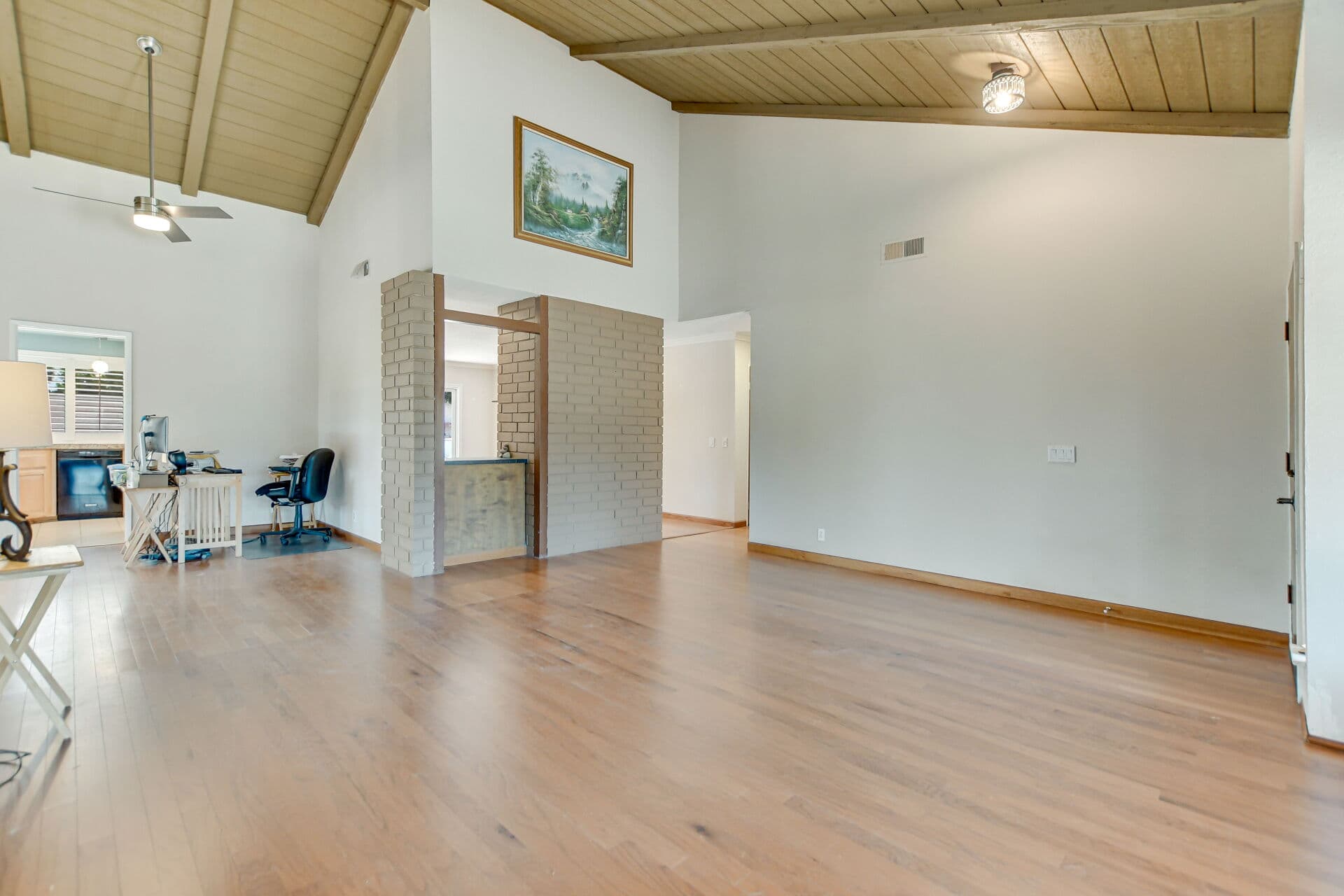
Which is why the most valuable hour an owner can spend on insurance has nothing to do with the policy. It is walking the house with a camera while everything is still there.
Why the burden lands on you
This surprises owners, and it should not. An insurer cannot pay for property it has no evidence existed. Establishing what was in the house, and roughly what it was worth, is the claimant's job.
After a significant loss that job becomes very hard. Try listing the contents of your own kitchen drawers from memory right now, in a quiet room, with no deadline. Then imagine doing it after a fire, from a hotel, with a form to fill in.
People routinely underclaim by a wide margin for exactly this reason. Not because the coverage was not there, but because they could not reconstruct what they had lost.
The fast method that is good enough
The elaborate spreadsheet approach is why most people never do this. Skip it.
Walk the house with your phone recording video, room by room, narrating as you go. Open closets. Open cabinets. Pull drawers out. Talk about what things are, roughly when you got them, and anything notable about them.
Then go back through with still photographs for the things that matter: serial numbers on electronics and appliances, maker marks on furniture, hallmarks on jewelry, signatures on artwork.
Do the garage. Do the shed. Do the attic and the space under the stairs. Those are where the forgotten value lives, and they are the rooms everybody skips.
An hour, done imperfectly, beats a perfect system you never start. Nobody is grading the file, and the only audience for it is a future version of you who is trying to remember what was in a closet that no longer exists.
A boundary worth repeating: Anthony Grynchal is a licensed real estate salesperson, not an insurance broker or an adjuster. Nothing here is a coverage opinion, and the decisions below belong with a licensed insurance professional reading your actual documents.
Where the file has to live
A home inventory stored only in the home is not an inventory. It is another thing that burns.
Put it somewhere off the property. Cloud storage, an email to yourself, a copy with a family member outside the area. The requirement is simply that it survives an event that takes out the house.
Keep receipts for significant purchases in the same place, along with appraisals, the policy declarations page, and photographs of the exterior and the roof.
The things that need naming individually
Standard policies commonly apply internal sublimits to certain categories of property, meaning that the overall contents limit is not what actually applies to them. Jewelry, watches, furs, firearms, silverware, fine art, and collections are the usual list.
That is not a hidden term, but it is a term almost nobody looks for until it matters. Where a category exceeds its sublimit, the answer is generally to schedule those items separately, which is its own conversation and its own documentation requirement.
The mechanics of that are covered in scheduling valuables and policy sublimits. The inventory is what tells you whether you have a problem in the first place.
Refresh it when the house changes
An inventory ages. The natural moments to update it are the ones where the house genuinely changes: after a remodel, after a major purchase, after an inheritance brings furniture or jewelry into the house, and when a child moves out and takes half a bedroom with them.
A remodel is the most important of those, because it usually moves both the contents and the rebuild cost at once. That combined update is described in what your policy stops covering during a renovation.
Documenting during a loss is a separate skill
The inventory is the before picture. There is an after picture too, and it has its own rules: photograph the damage before mitigation begins, keep failed components, keep every invoice, and record dates.
Those habits are set out in filing smart on a Claremont home. Combined with a pre-loss inventory, they are most of what separates a claim that settles cleanly from one that grinds.
One caution about small claims
Having good documentation makes filing easier, which occasionally leads owners to file for things they would otherwise absorb. That is worth a second thought, because claims history follows a property and an owner, and it can affect what happens at renewal. The mechanism is explained in the CLUE report.
Document everything. File deliberately. Those are different decisions.
Do it this weekend
There is no version of this that gets easier later, and there is no version of it that is useful after the fact. An hour with a phone, a copy stored somewhere else, and a note in the calendar to redo it after the next big change.
That is the whole assignment, and almost nobody does it.
For the wider set of coverage questions on a Claremont property, start with the home insurance resources. For what your policy sublimits actually are and whether anything needs scheduling, ask the licensed agent or broker who wrote the policy.
Anthony Grynchal has been licensed in California since November 2009.
Frequently asked questions
What is the fastest way to make a home inventory?
Walk the house recording video on your phone, room by room, narrating what things are and roughly when you got them. Open closets, cabinets, and drawers. Then take still photographs of serial numbers, maker marks, hallmarks, and signatures. Include the garage, shed, and storage spaces, which are where forgotten value tends to sit.
Where should I store it?
Anywhere except the house. Cloud storage, an email to yourself, or a copy with someone outside the area all work. The only requirement is that the file survives an event that destroys the property. Keep receipts, appraisals, and the policy declarations page in the same place.
Why does an inventory matter if I have contents coverage?
Because establishing what existed is the claimant's responsibility, and memory is a poor instrument after a major loss. Owners routinely underclaim, not because coverage was missing but because they could not reconstruct what they had. Proof gathered beforehand is far easier than proof gathered afterward.
Do special items need separate treatment?
Often yes. Policies commonly apply internal sublimits to categories such as jewelry, watches, firearms, silverware, fine art, and collections, so the overall contents limit may not be what applies. An inventory is how you find out whether you are over a sublimit; a licensed insurance professional is who tells you what to do about it.

Written by
Anthony Grynchal
Anthony Grynchal is a California real estate professional with eXp Realty, licensed since November 2009 (California DRE# 01873626), and the Designated Local Expert™ for Claremont — where he has lived for more than 33 years.
More about AnthonyPublished · Updated