
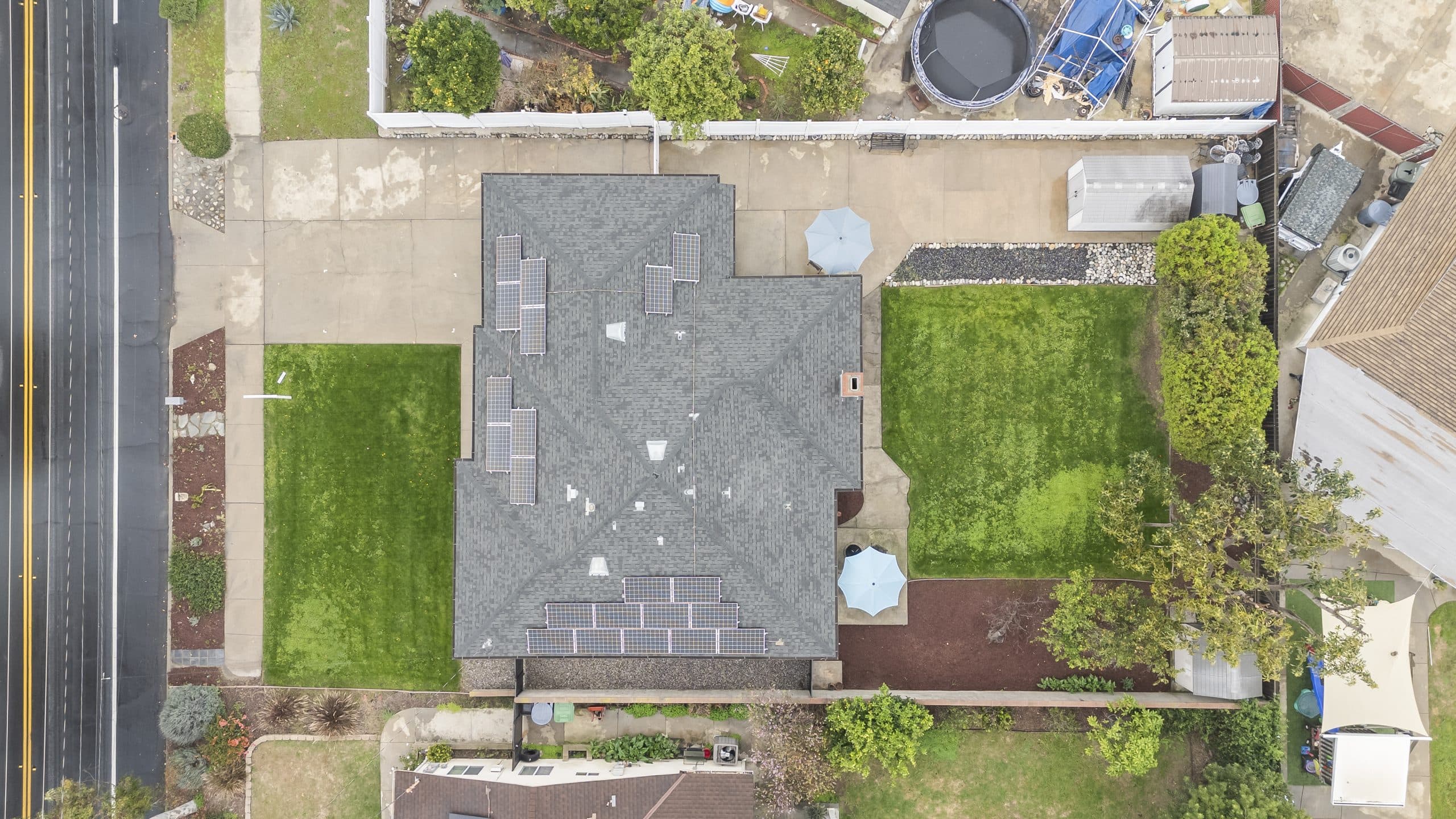
Claremont is the City of Trees, and nobody buys a home here in spite of the canopy — it is a large part of why the town looks and feels the way it does. But a mature canopy and a roof carry on a running negotiation, and the owner is the mediator. Leaves fill gutters, limbs shade shingles and drop debris, roots claim territory underground (that half of the negotiation has its own guide), and the same trees that shade your summer cool the deal with maintenance obligations. This article covers the above-ground half: what the canopy actually does to a roof, the seasonal rhythm that keeps the relationship healthy, and the rules about which trees are even yours to touch. It deepens the home-maintenance guide's calendar.
What the canopy actually does to a roof
Overhanging growth affects a roof through four channels, none dramatic on any single day and all cumulative. Debris: leaves, twigs and seed litter accumulate in valleys and against penetrations, holding moisture against the roof surface long after everything else has dried — the slow mechanism behind localized deterioration. Gutters: the same debris ends up in the drainage path, and a blocked gutter in a winter storm sends water where the roof was never designed to hold it — over the fascia, behind the eaves, against the foundation. Shade and moisture: heavily shaded roof planes dry slower, which in damp winters encourages the moss-and-organic-growth pattern that shortens surface life. Contact and abrasion: limbs that touch the roof scour it in every wind, and limbs positioned to fail onto the roof are the canopy's one genuinely acute risk. None of this argues against trees; it argues for management — clearance between limb and roof, drainage kept open, and an honest eye on aging limbs. The roof's own aging arc is a separate subject; the canopy is the variable an owner most directly controls.
Whose tree is it? The rule that surprises new owners
Before pruning anything, answer the ownership question — because in Claremont it is genuinely two-part. Trees in the parkway strip and other public rights-of-way are generally CITY trees, managed under the city's urban-forest program, and pruning or removing one yourself is not your call, even when its leaves fill your gutters — requests go through the city, which maintains its trees on its own program. Trees on your own parcel are yours, subject to any protections the municipal code places on particular species or significant specimens — verify with the city before removing anything substantial, because tree-protection rules exist here and the fines for guessing wrong are real. Boundary trees shared with a neighbor carry their own etiquette and law: branches overhanging your side are generally yours to trim to the property line, done reasonably and without destroying the tree — and a conversation before a chainsaw preserves more than the tree. When in doubt on any of the three: the city's published tree rules and a certified arborist, in that order.
The seasonal rhythm
Late autumn, after the main leaf drop: the year's most important gutter clearing, done before the first serious winter storm arrives — downspouts flushed, valleys cleared, drainage proven with a hose. Homes under heavy canopy often need a second pass; gutter guards help under some trees and merely relocate the chore under others. Winter, in the storms: watch behavior, not forecasts — overflowing gutter sections, water sheeting where it should channel, and limbs moving more than they used to are each a specific work order. Spring: the inspection season — walk the property line of sight with binoculars, looking for winter's damage, lifted shingles under trees, debris dams, and any limb now touching or newly positioned over the roof. Summer: pruning season logistics — major structural pruning is arborist work, scheduled ahead, and summer is when to book the autumn work rather than compete for it after the first storm. An annual professional look at mature trees near structures is the cheapest insurance in this entire article.
The insurance and fire dimension
Two adjacent facts belong in the canopy conversation. Insurers increasingly care about vegetation near structures — roof condition and overhanging growth appear in inspections and aerial reviews, and clearance work sometimes arrives as a renewal condition; the insurance guide covers how carriers read a property. And for homes toward the foothills, defensible-space expectations make vegetation management a safety obligation as well as a maintenance one — the specific clearance standards are published by the fire authorities, and verifying against the current ones beats any article's summary. In both cases the practical move is identical: keep limbs clear of the roof, keep dead material out of the canopy, and keep records of the professional work — the same documentation habit the appraisal-preparation guide banks value from later.
The bottom line
The canopy is a privilege with a chore attached. Clear limbs off the roof, empty the gutters before the storms rather than after, learn which trees are yours and which are the city's before cutting anything, and put a professional eye on the big specimens annually. Managed, the trees and the roof both outlast the argument — and the read-the-signals habit this article teaches is the same one the repipe guide applies to the house's other aging system.
Anthony Grynchal has been licensed in California since November 2009 and has yet to meet a Claremont buyer who wanted fewer trees — only owners who wished they had met their gutters sooner. This is general information; the city's tree rules and a certified arborist govern the specifics.
Frequently asked questions
Can I prune the street tree in front of my Claremont home?
Generally no — parkway and right-of-way trees are city trees under the urban-forest program, even when their leaves fill your gutters. Requests go through the city rather than your own pruning saw. Trees on your own parcel are yours, subject to any species or specimen protections in the municipal code — verify before removing anything substantial.
How do overhanging trees actually damage a roof?
Cumulatively, through four channels: debris holding moisture in valleys, blocked gutters sending storm water where the roof was not designed to hold it, heavy shade slowing drying and encouraging organic growth, and limbs that touch scouring the surface in wind. The management answer is clearance, open drainage, and an annual look at aging limbs.
When should gutters be cleared on a tree-covered Claremont home?
The critical pass is late autumn after the main leaf drop and BEFORE the first serious winter storm — downspouts flushed and drainage proven, not just scooped. Heavy-canopy homes often need a second pass, and gutter guards help under some species while merely relocating the chore under others.
Can I trim a neighbor's branches that hang over my roof?
Generally yes, to the property line, done reasonably and without destroying the tree's health — and boundary situations reward a conversation before a chainsaw. For anything structural, near a roof, or involving a protected species, a certified arborist and a check of the city's tree rules come first.

Written by
Anthony Grynchal
Anthony Grynchal is a California real estate professional with eXp Realty, licensed since November 2009 (California DRE# 01873626), and the Designated Local Expert™ for Claremont — where he has lived for more than 33 years.
More about AnthonyPublished · Updated