Claremont is the City of Trees and PhDs, and homeowners tend to treat the first half of that name as civic decoration. It is not. Canopy is one of the few features of this town that shows up in almost every valuation conversation, and it is one of the hardest for anyone outside the area to read.
This article is about the mechanism, not a number. Nobody can hand you what a tree is worth, because canopy never sells separately from the street it belongs to. What can be described precisely is how it enters buyer behavior, where it helps most, and where it comes with obligations that buyers subtract for.
Canopy is a street-level feature, not a lot feature
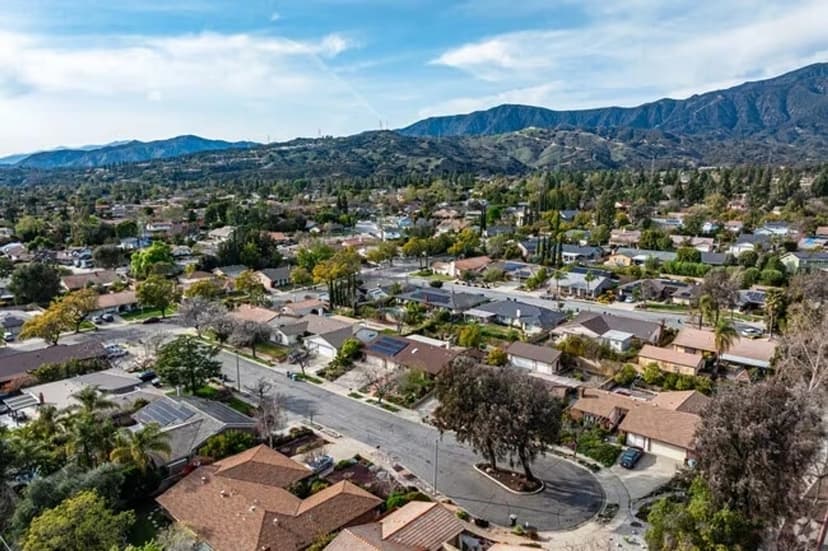
The single most useful thing to understand is that canopy value is collective. A magnificent tree on your lot in a bare neighborhood does far less for you than an ordinary tree on a street where every parkway matches. Buyers do not evaluate individual specimens; they read the tunnel effect of an established street and form an impression of the neighborhood before they have parked.
That impression does real work. An established canopy signals age, stability, and municipal care. It moderates afternoon heat on the walk from the car to the door in a way people notice physically. It softens architecture, which flatters modest houses and makes ambitious ones look settled rather than new. None of that is sentimental; it is the same first-thirty-seconds response that decides which homes a buyer returns to.
How canopy enters a valuation
In practice, canopy is almost never adjusted as its own line. It expresses itself through demand: on a well-canopied street, more buyers come, they stay longer, and the property competes from a stronger position. Two structurally similar homes can perform differently, and if you only compared the buildings you would have no idea why.
This is exactly the kind of variable that automated valuation models handle badly. A model sees beds, baths, square footage, lot size, and a sale history. It does not see that one address sits under a corridor of mature sycamores and the other faces a treeless frontage road. When people ask why online estimates behave strangely here, canopy is one of the specific answers, alongside boundaries, walkability, and hillside views.
Reading it correctly is comp-selection work rather than arithmetic. If a nearby sale sits on a visibly different streetscape, the honest move is either to weight it down or to bracket it against a sale that shares your street character. Reading Claremont comps walks through how that judgment gets made.
The obligations buyers price in
Mature trees are also a maintenance profile, and Claremont buyers know it. Experienced local buyers walk a property with a mental list, and it is worth walking yours the same way before you list.
- Roof and gutter load. Overhanging limbs mean debris, shade-driven moss, and abrasion during wind. A roof under heavy canopy needs to look maintained, because the buyer is imagining the cleanings.
- Sewer laterals and hardscape. Roots follow moisture. Older clay laterals, lifted driveway sections, and cracked walkways under large trees are common enough here that buyers factor them in whether or not you raise them.
- Structural condition of the trees themselves. A large tree in decline near a structure is a liability rather than an amenity, and it reads that way instantly.
- Who is responsible. Parkway trees between sidewalk and curb are generally city trees, with rules about pruning and removal, while trees inside your property line are yours. Confirm the specifics with the City of Claremont before assuming either way, because guessing wrong is how a seller promises something they cannot deliver.
The pattern is consistent: canopy in good condition is an asset, canopy in poor condition is a disclosed problem with a quote attached, and the difference between the two is documentation. Recent arborist work, a maintained roof, and a clean sewer inspection convert an ambiguous feature into a confident one. That is the same principle that governs deferred maintenance generally: buyers do not subtract for conditions, they subtract for uncertainty.
The windstorm lesson
Claremont learned how much its canopy matters the hard way, in the windstorm that stripped a significant share of the city's mature trees in a single night. Streets that lost their canopy did not simply look different afterward; they lost the settled quality that had taken decades to grow, and replanting restores it on a timescale measured in decades rather than seasons.
The practical consequence for owners is that canopy is not a renewable feature on a homeowner's timeline. A street with intact mature trees is holding something that cannot be manufactured quickly, and that scarcity is precisely why it registers with buyers.
What this means if you are selling
Do not try to monetize the trees directly, and be suspicious of anyone who offers you a figure for them. What you can do is present the canopy as an asset rather than a question. Clear the gutters. Prune what is yours to prune, correctly and in advance. Have the sewer lateral scoped if the trees are large and the house is old, because a buyer will otherwise imagine the worst version of that answer. Photograph the street in the light that shows it best.
Then have the property valued by someone who has walked these streets, because street character is exactly the input that gets lost at a distance. Start at the Claremont home values hub for the wider picture, and call (909) 731-5374 when you want the canopy on your block read as part of a real valuation rather than ignored by a model. Anthony Grynchal has been licensed in California since November 2009.
Frequently asked questions
Do trees really affect what a Claremont home sells for?
They affect how a street competes, which affects outcomes. Mature canopy signals an established, cared-for neighborhood and shapes a buyer's impression before they reach the door. It is not adjusted as a line item; it shows up as stronger demand for homes on well-canopied streets.
Who is responsible for the tree in my parkway?
Trees in the parkway strip between sidewalk and curb are generally maintained by the city, with rules about pruning and removal, while trees inside your property line are the owner's responsibility. Confirm your specific situation with the City of Claremont rather than assuming, particularly before promising anything to a buyer.
Do large trees hurt a home's value because of roots and roofs?
Unmanaged ones can. Buyers price in roof debris, lifted hardscape, and older sewer laterals near mature trees. Recent pruning records, a maintained roof, and a sewer scope turn an open question into a documented condition, which is usually the difference between a discount and none.
Will an online estimate account for my street's canopy?
No. Automated models work from beds, baths, square footage, lot size, and sale history. Streetscape is invisible to them, which is one specific reason online estimates behave inconsistently in a town where canopy varies sharply from block to block.

Written by
Anthony Grynchal
Anthony Grynchal is a California real estate professional with eXp Realty, licensed since November 2009 (California DRE# 01873626), and the Designated Local Expert™ for Claremont — where he has lived for more than 33 years.
More about AnthonyPublished · Updated