The Claremont Colleges are the reason this city looks and behaves differently from its neighbors, and their effect on housing is more structural than most owners realize. It is not a premium that gets added at the end of a valuation. It is a set of forces that shape who is shopping, how much housing exists to shop for, and how steady demand is when conditions change.
An employment base that does not move
The consortium is a large, permanent institutional employer in a small city. Institutional employment behaves differently from employment tied to a single industry or a single company: it is geographically fixed, it renews on an academic cycle, and it does not relocate when a market turns. That produces a continuous stream of households who need housing within a reasonable distance of a campus, year after year, regardless of what the wider economy is doing.
The relevant point for valuation is not that these households pay more. It is that the demand floor under the housing nearest the campuses is unusually stable, and stability is itself a value characteristic. Markets that empty out when one employer contracts price differently from markets where the anchor cannot leave.
Supply that cannot respond
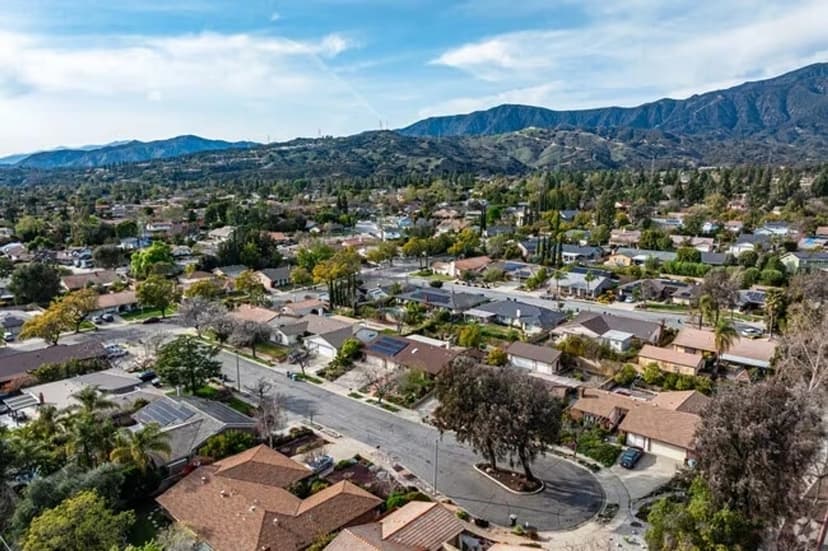
The second half of the mechanism is the one people forget. Claremont is small, largely built out, and deliberately protective of its streetscape. The colleges occupy a substantial contiguous area near the center of town, which means the land closest to the strongest demand is the land least available to build on.
Put a durable demand source next to a supply that cannot expand, and you get the defining feature of central Claremont housing: turnover is low, and when something does come to market it is competing against very little. That is why owners near the campuses often find that comparable sales are scarce, which is its own valuation problem. Thin data is the reason a careful valuation here reaches for judgment rather than volume, and it is covered in reading Claremont comps.
The effect is a gradient, not a boundary
The most common mistake owners make is treating the college effect as binary, as though there were a line inside which homes benefit and outside which they do not. It behaves as a gradient, and it fades with practical distance rather than mapped distance.
What matters is whether a daily walk or a short bike ride to a campus or to the Village is genuinely plausible from the front door. Plausible means the route exists, is pleasant, and is not interrupted by a major crossing. Two homes the same mapped distance from a campus can sit in different positions on that gradient because one is on a connected residential street and the other is separated by an arterial.
Farther out, the effect does not vanish; it changes character. Homes in the northern tracts and on the hillside are not competing for a walk-to-campus buyer. They compete on space, quiet, lot size, and outlook, and their value story is a different one. That contrast is the subject of how the two halves of Claremont value differently.
What the colleges add beyond employment
Several secondary effects travel with the institutions and reach households with no connection to them at all.
- A cultural calendar. Lectures, performances, exhibitions, and athletics run through the year and are open to the town. That is amenity value, and it is unusual to find at this scale in a city this size.
- A walkable center with a reason to exist. The Village is supported by a daily population that is not only residential, which is part of why a small downtown here sustains the mix it does.
- Preserved streetscape. The architectural character near the campuses, and the canopy that goes with it, is bound up with the presence of the institutions and the civic attention they attract.
- Returning buyers. A steady share of Claremont's demand comes from people who first knew the town some other way and came back to it. That is a demand source with no local employment link at all, and it is unusually resistant to whatever the regional job market is doing in a given year.
- Visitor and guest traffic. Admissions visits, reunions, parents' weekends, and academic events keep an outside audience circulating through the Village and the residential streets around it, which is one quiet reason the town is known well beyond its size.
Reading the effect on your own address
If you own near the campuses, three practical implications follow. Your comparable set is likely to be thin, so the valuation depends more than usual on judgment about which sales genuinely stand in for yours. Your buyer pool may be narrower and more specific than a portal assumes, which changes marketing rather than value. And features that support the walkable premise, a workable front-door route, usable outdoor space, character that fits the streetscape, carry more weight than they would in a car-oriented tract.
If you own farther out, the useful conclusion is not to claim a premium you do not have, but to recognize that the college effect stabilizes the entire local market indirectly. A town anchored by institutions that cannot relocate holds attention through cycles that thin out demand elsewhere.
None of this produces a figure on its own. Where your home sits on the gradient is an input to a valuation, not a conclusion, and the only way to get the conclusion is to have the property valued against real, recent, genuinely comparable sales. Start at the Claremont home values hub, then read how a valuation gets built. Call (909) 731-5374 when you want yours done properly. Anthony Grynchal has been licensed in California since November 2009.
Frequently asked questions
Do homes near the Claremont Colleges hold value better?
Proximity to a fixed institutional employer supports steadier demand, and the land nearest the campuses is largely built out, so supply cannot respond. Stable demand plus constrained supply is the structural reason central Claremont turns over slowly. It is a factor in a valuation, not a fixed premium.
How close to campus does a home need to be?
There is no line. The effect fades gradually and depends on whether a walk or short ride is genuinely plausible from the front door, which is about route quality and crossings as much as mapped distance. Two homes an equal distance out can sit differently on that gradient.
Does the college effect help homes in north Claremont?
Indirectly. Homes farther from the campuses compete on space, quiet, and outlook rather than on walkability, so they are not buying the same premium. They still benefit from the town-wide stability that a permanent institutional anchor provides.
Why are there so few comparable sales near the campuses?
Central Claremont is built out and turnover is low, so genuinely comparable recent sales are scarce. That makes valuation there more dependent on judgment about which sales truly stand in for the subject property, and it is a common reason automated estimates behave inconsistently in that part of town.

Written by
Anthony Grynchal
Anthony Grynchal is a California real estate professional with eXp Realty, licensed since November 2009 (California DRE# 01873626), and the Designated Local Expert™ for Claremont — where he has lived for more than 33 years.
More about AnthonyPublished · Updated