A valuation is a photograph, not a permanent record. It describes a property, a market, and a competitive field at one moment, and two of those three keep moving after the photograph is taken. Acting on an old number is one of the more expensive habits a homeowner can develop, because the number feels like a fact long after it has stopped behaving like one.
The useful question is not how often a home should be revalued on a schedule, but which events change the answer enough to matter.
The two halves of a valuation age differently
Every valuation has a structural half and a market half. The structural half is your house and your street: layout, condition, siting, canopy, boundary, view. It changes slowly, and mostly only when you change it.
The market half is everything around the property: what buyers can choose instead of it, how quickly well-presented homes are moving, and how buyers are behaving. That half moves continuously, which is why a valuation can be correct when prepared and stale within a season without a single thing changing about the house.
So the practical rule follows from which half moved. Renovate, and the structural half changed. Wait a year, and the market half did.
Events that call for a fresh look
- You are approaching a decision. Listing, buying next, borrowing against equity, weighing an unsolicited offer. Any decision that will be made using a number deserves a current one.
- You completed significant work. A kitchen, a primary bath, a permitted addition, a roof, a systems overhaul. Note that this cuts both ways: quality work supports value, while over-personalized or thin cosmetic work can fail to earn back what it cost.
- Something material changed on the property. A permit resolved, a converted space regularized, a large tree removed, drainage corrected, an accessory dwelling unit added.
- Comparable homes near you have sold. In a slow-turnover town, a small number of nearby sales can meaningfully change the evidence available, particularly on streets where sales are rare.
- An unsolicited offer arrives. Never evaluate one against a stale number or a portal estimate. Knowing your actual range is the entire basis on which such an offer can be judged.
- A life event puts the property in question. An estate, a trust administration, a dissolution, a partnership unwinding. These usually have their own valuation requirements and may call for an independent, state-licensed appraiser rather than a broker's analysis.
- Your insurance or coverage conversation comes up. Rebuilding cost is a different measurement from market value, so this is a prompt to check that the right question is being answered by the right professional.
How stale is too stale
There is no fixed expiry, because the answer depends on the market rather than the calendar. A useful test is whether the evidence behind the valuation still exists in its original form. If the comparables it relied on have been overtaken by newer sales, or if what is currently available to buyers looks materially different from what was available then, the conclusion is describing conditions that have passed.
For owners simply staying informed, an annual check-in is reasonable and low effort. For anyone actively planning a move within the year, the useful cadence is closer to whenever the competitive picture shifts, because the competition is what a seller actually prices against. That step is described in how a valuation is built.
There is one more trigger that owners rarely think of as a valuation event: a change on the street rather than in the house. A neighboring property redeveloped, a large tree lost, a corner reconfigured, or a run of nearby sales at a different quality of finish all shift the context your home is read in, even though nothing inside your walls moved.
Do not refresh with a portal
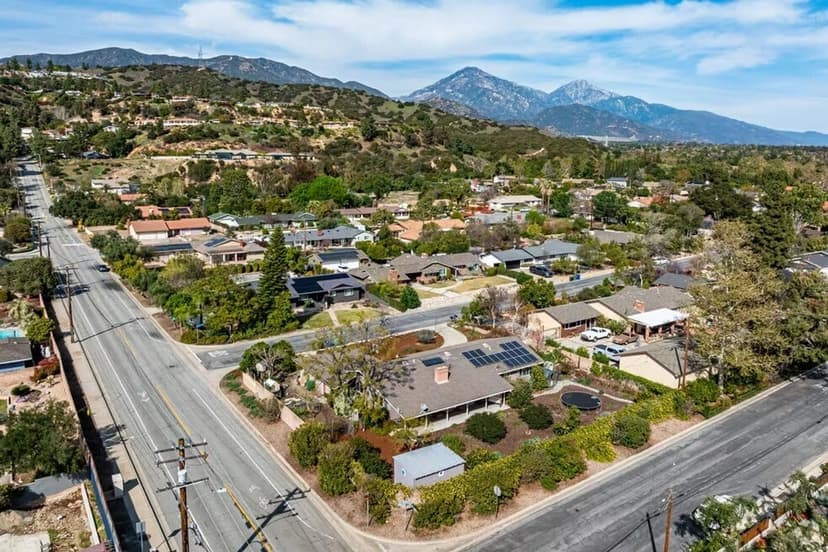
The tempting shortcut is to check an online estimate between valuations and treat any movement as news. That is a poor instrument for this job specifically. Automated models are weakest on exactly the Claremont properties where the stakes are highest, hillside homes where outlook varies lot by lot, recently renovated homes still carrying a pre-renovation data trail, long-tenure homes with no recent sale to anchor on, and architecturally unusual houses in a town with plenty of them.
An estimate can be a rough orbit. It cannot tell you where in that orbit your house sits, and it cannot tell you when it is wrong or in which direction, which is precisely the information a decision requires. The alternative is a real read of your street, and reading comps is what that involves.
Keep the file current, not just the number
The most useful habit is not periodic revaluation at all. It is keeping the evidence in order as you go: permits filed and retained, receipts for major work, service records for systems, arborist and sewer records if you have mature trees, and a note of what was done and when.
Owners who maintain that file get better outcomes for a simple reason. Documented conditions get weighed as facts; undocumented ones get weighed as risks, and risk is always priced conservatively by buyers, agents, and appraisers alike.
If it has been a while, or if something on this list applies to you, start at the Claremont home values hub for context and then call (909) 731-5374 to have your property looked at against current evidence rather than last year's. Anthony Grynchal has been licensed in California since November 2009.
Frequently asked questions
How often should a Claremont home be revalued?
There is no fixed interval. An annual check-in is reasonable for owners staying informed, but the real trigger is an event: a decision, significant work completed, a material change to the property, or new comparable sales nearby. A valuation goes stale when the evidence behind it has been overtaken.
Does a valuation expire?
Not formally, but its usefulness fades as the market half changes. If the comparable sales it relied on have been overtaken and what buyers can choose today looks different, the conclusion is describing conditions that no longer apply. The property may be unchanged and the number still out of date.
Can I just check an online estimate between valuations?
It is a poor substitute. Automated models are least reliable on hillside homes, recently renovated homes, long-tenure homes with no recent sale, and architecturally unusual properties, which describes a large share of Claremont. Treat an online figure as a rough orbit rather than as news.
Do I need a new valuation after renovating?
Yes, if the work was significant, because the structural half of the analysis has changed. It is also worth understanding that quality matters more than recency: well-executed work supports value, while over-personalized or thin cosmetic work may not return what it cost.

Written by
Anthony Grynchal
Anthony Grynchal is a California real estate professional with eXp Realty, licensed since November 2009 (California DRE# 01873626), and the Designated Local Expert™ for Claremont — where he has lived for more than 33 years.
More about AnthonyPublished · Updated