Homeowners often expect a valuation to be a lookup. Someone consults a source, the source returns a figure, the figure is the answer. That is how the online tools present themselves, and it is not how a defensible valuation works.
A real valuation is an argument. It gathers evidence, weighs it against your specific property, tests the conclusion against what buyers can choose instead, and shows its reasoning. Here is the sequence, so you know what you are getting and what questions to ask.
Step one: establish the facts about the property
Before any comparison, the subject has to be described accurately, and this is where a surprising number of valuations quietly go wrong. Recorded details and reality diverge more often than owners expect, especially in older housing stock.
The work is unglamorous: confirm living area and which spaces are permitted, identify additions and conversions and whether they have records, note systems and their age, establish lot dimensions and how much of the ground is genuinely usable. A converted garage that everyone has treated as a bedroom for years is a material fact, not a detail, and it is far better to establish it now than to have a buyer's inspector or an appraiser establish it later.
Step two: walk the property and the street
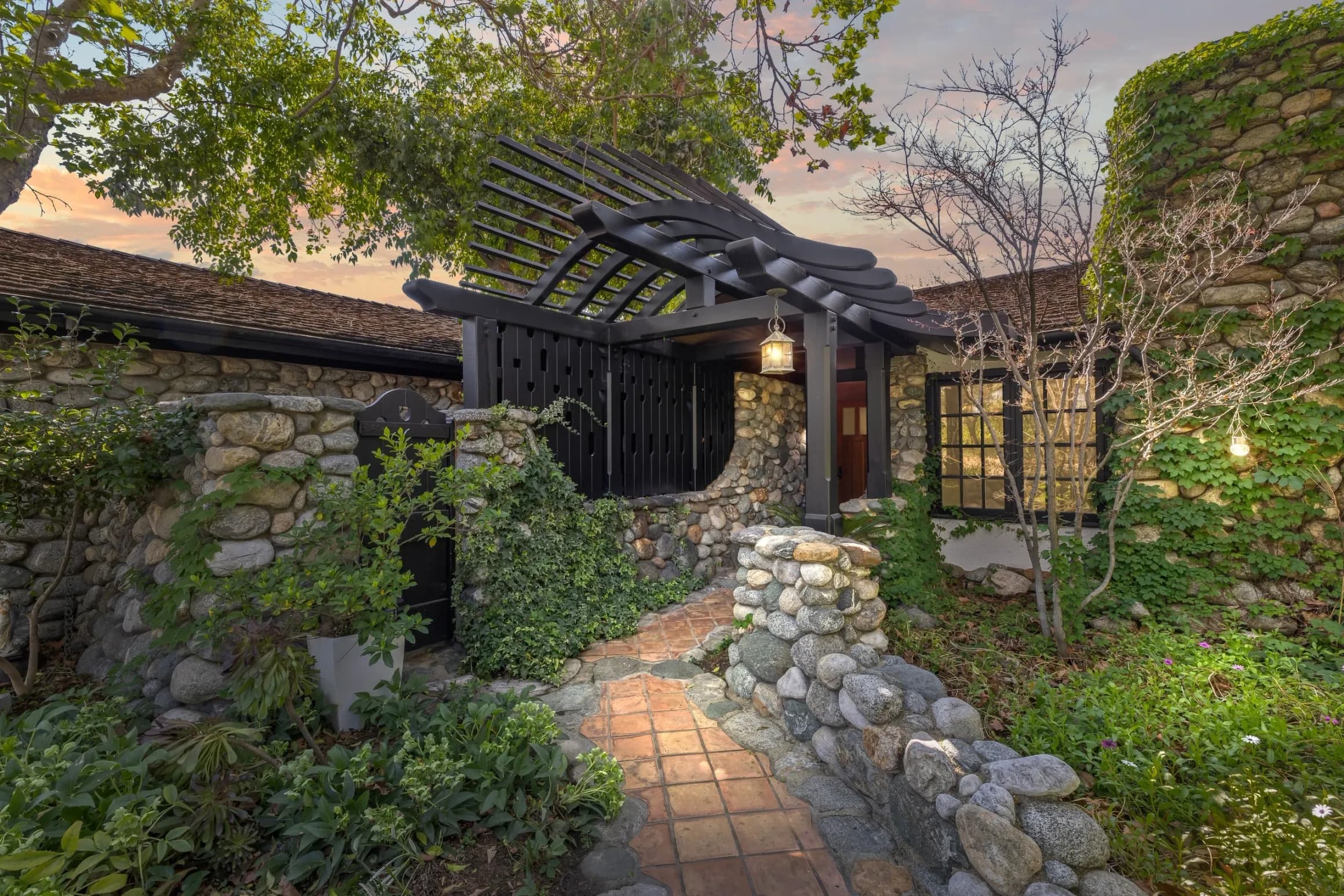
The walkthrough is where a local valuation earns its keep, because most of what separates Claremont homes is not in any record. Light through the main living spaces, how the plan flows, condition and the quality of past work, the relationship between the house and its yard, orientation, privacy.
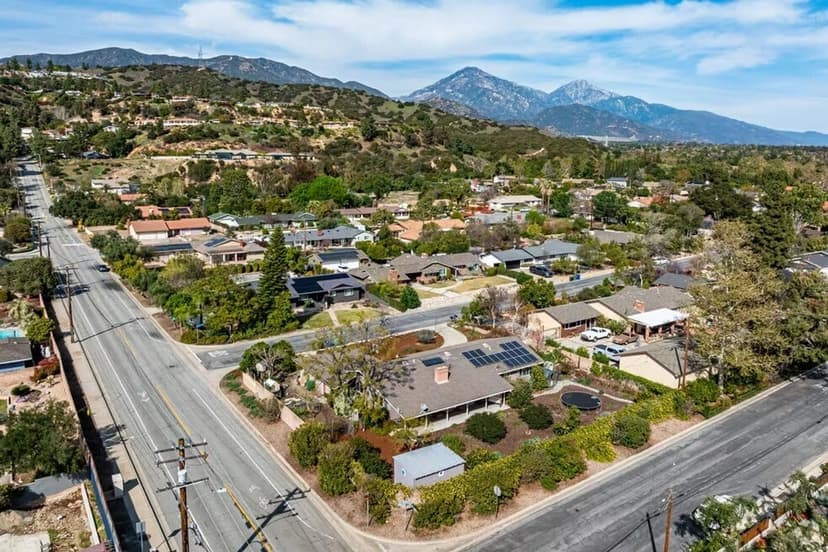
Then the street itself. Canopy, traffic, the condition of neighboring frontages, whether the block reads as a quiet interior loop or a route people use to get somewhere else. These are the inputs an out-of-area analysis cannot see, and they are the reason two houses that match on paper do not perform alike. Siting alone accounts for a large share of that variation.
Step three: select true comparables
Comparable selection is the decision that determines everything downstream, which is why a valuation with a weak comp set cannot be rescued by careful arithmetic afterward.
Sales come from the CRMLS record rather than from a portal's aggregation, and they have to pass three tests: same micro-market, same product type, recent enough to describe current conditions. A radius search fails all three routinely in a city this small, because a circle drawn around most addresses crosses submarkets built decades apart. The details are in how to read Claremont comps.
Where a property is unusual and true comparables are scarce, the honest response is to say so and widen the reasoning, not to substitute weak sales and present the result with false precision.
Step four: adjust for real differences
Adjustment accounts for how each comparable differs from your home, using the market's own behavior rather than a price list. Bracketing keeps the conclusion fenced in from above and below; paired analysis reads what the market has paid for a specific difference on a comparable kind of street.
In Claremont the adjustments that carry the most weight are the local ones: streetscape and canopy, attendance boundary, siting, condition and the quality of past work, view tier on the hillside streets, and the permitted status of finished space.
Step five: read the current market layer
Closed sales describe agreements reached earlier. A valuation has to account for the distance between then and now: how much is available to buyers at the moment, how quickly well-presented homes are moving, and how buyers are behaving toward properties like yours. The same house does not carry the same price in a market with urgency and one without.
Step six: test against live competition
The step most often skipped. Your home will not sell against closed sales; it will sell against whatever a buyer can choose instead of it this month. Reviewing active and pending competition is how a seller avoids becoming the reference point that makes a neighbor's house look like the better deal.
Competition is also what makes timing legible. If several similar homes are already available on nearby streets, a seller is entering a crowded field and the analysis should say so plainly rather than presenting a number as though the property existed alone. If almost nothing comparable is available, that scarcity is itself part of the reasoning, and it is one of the recurring conditions in a town that turns over slowly.
What you receive, and what it is not
The output is a supported range with the reasoning visible: the comparables used, why they were chosen, how the differences were weighed, where the current market sits, and what is competing. A range with reasons behind it is more useful than a single figure with nothing, because the range is what survives contact with a buyer, another agent, or an appraiser.
Two limits should be stated plainly. This is a comparative market analysis, a broker's opinion of value prepared by a licensed real estate agent, and it is not an appraisal; an appraisal is a separate report by an independent, state-licensed appraiser, and when one is needed I coordinate an independent appraiser rather than preparing it. And a valuation cannot be produced to order. If the evidence supports a range, that is the range, whatever anyone would prefer it to be. An analysis shaped to a desired number is worthless precisely when you need it most.
To see the wider picture first, start at the Claremont home values hub. When you want the work done for your address, call (909) 731-5374 and we will walk it together. Anthony Grynchal has been licensed in California since November 2009.
Frequently asked questions
How long does a Claremont home valuation take?
The walkthrough itself is usually a single visit, and the analysis follows once the comparable set has been assembled and reviewed. The variable is the property: a common product on a well-documented street resolves quickly, while an unusual home in a thin comparable market takes longer because the reasoning has to carry more weight.
Is a valuation the same as an appraisal?
No. A comparative market analysis is a broker's opinion of value prepared by a licensed real estate agent for pricing decisions. An appraisal is a separate report prepared by an independent, state-licensed appraiser, usually at a lender's request. When an appraisal is required, an independent appraiser is coordinated.
Do I need to clean up before a valuation walkthrough?
Not for accuracy. Condition is assessed underneath presentation, so clutter does not change the analysis. It is worth having permit records, improvement receipts and any past reports available, because documented facts remove uncertainty that would otherwise have to be treated conservatively.
Why is the result a range instead of one number?
Because the evidence supports a range. Comparable sales differ from your property in several respects at once, and honest adjustment produces a band rather than a point. A range with visible reasoning holds up in negotiation; a single figure with no support behind it does not.

Written by
Anthony Grynchal
Anthony Grynchal is a California real estate professional with eXp Realty, licensed since November 2009 (California DRE# 01873626), and the Designated Local Expert™ for Claremont — where he has lived for more than 33 years.
More about AnthonyPublished · Updated