In a town where small multifamily barely exists, the practical way most investors add a second unit is to build one. California's rules on accessory dwelling units have loosened materially over the last several years, and the result is that LOT POTENTIAL has become a real component of what a Claremont property is worth to an investor.
Which creates a new skill to learn: reading a lot for whether a second unit is genuinely feasible, as opposed to theoretically permitted. Those are different things, and the gap between them is where budgets die.
This article is about that reading. It contains no cost figures, no rent projections, and no rules stated as current, because construction pricing is local and volatile and the statutory framework here has changed repeatedly and will change again. Confirm current requirements with the City of Claremont and current costs with licensed contractors bidding your actual site.
Permitted is not the same as feasible
Start from this distinction, because it is the one that separates investors who build successfully from investors who buy a plan.
PERMITTED means the law and the local code allow a unit of some description on the lot. FEASIBLE means that on THIS lot, given its shape, slope, access, utilities, trees, easements, and existing structures, a unit can actually be built at a cost that makes sense against what it will produce.
Plenty of Claremont lots are the first and not the second. A lot can be legally eligible and physically awkward enough that the project costs materially more than a similar project two streets over. Nobody can tell you which from a listing photograph.
How to read a lot
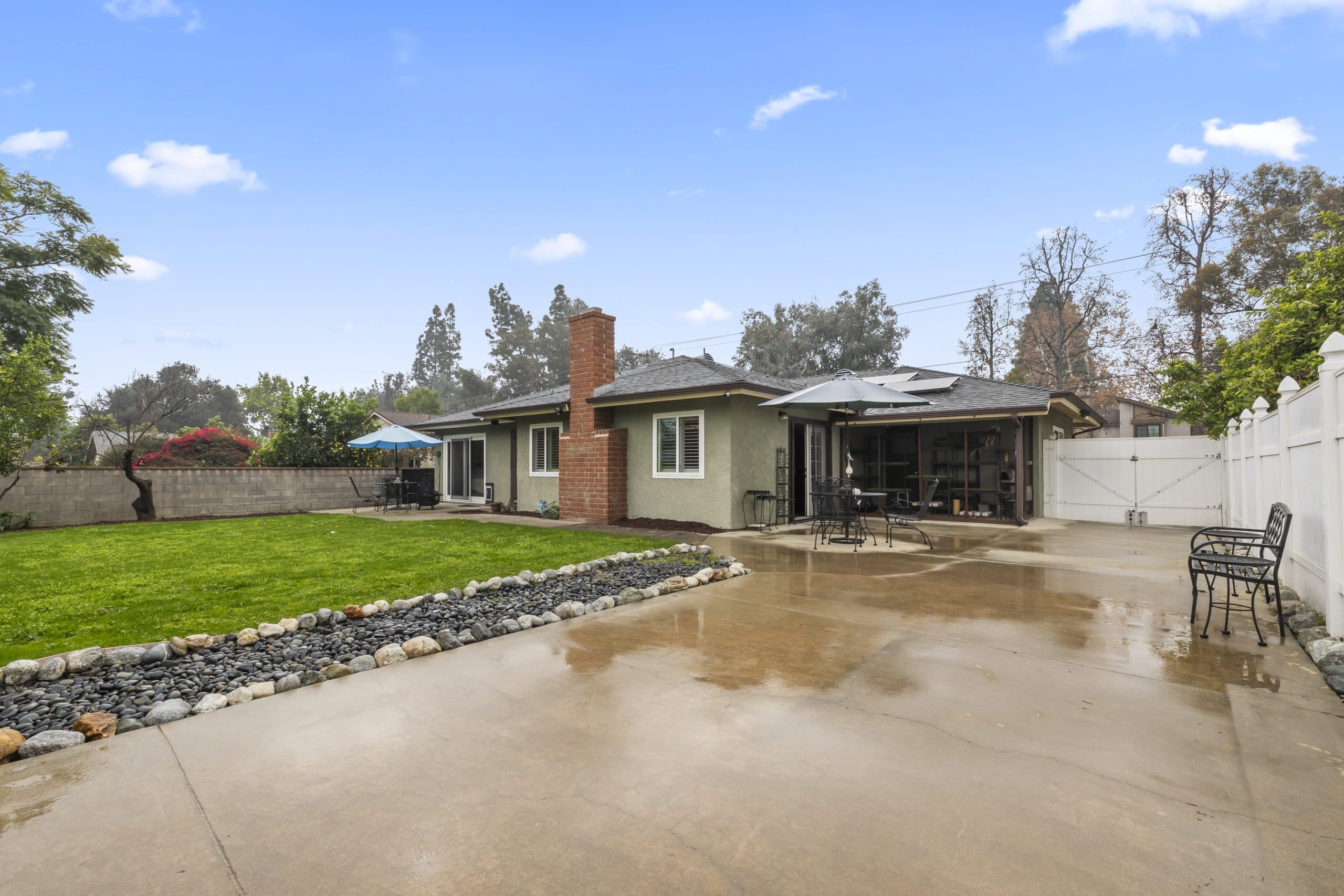
ACCESS. How does a crew, and later a tenant, reach the rear of the property? A long narrow driveway beside a house is common in older Claremont stock and it constrains everything: equipment, materials delivery, and sometimes the design itself. Sites with alley or side-street access are meaningfully easier.
UTILITIES. Where are the sewer lateral, the water service, the gas line, and the electrical panel, and what capacity do they have? Connecting a new unit can require upgrading the electrical service or running a long sewer connection across the property, and either can be a significant line item. An old, undersized panel is a very common finding on older housing.
THE BUILDABLE ENVELOPE. Setbacks, coverage limits, and height rules define where a structure may sit, and what remains after applying them to an already-built lot is often smaller than the eye estimates. Existing structures, required open space, and parking all consume it.
SLOPE AND DRAINAGE. Grade adds foundation and drainage cost quickly, and any change to how water moves across a lot is both an engineering question and a neighbor question.
TREES. Mature trees are one of Claremont's defining features and some are protected. Assume nothing about removal; ask the city.
EXISTING STRUCTURES. A detached garage or outbuilding can sometimes be converted rather than replaced, which changes the arithmetic. Whether it is sound enough, and whether it was permitted in the first place, are inspection and records questions.
EASEMENTS AND RECORDED RESTRICTIONS. Read the title report. A utility easement running through the only buildable area ends a project before it starts, and recorded covenants can restrict what zoning permits.
Where the money actually goes
Investors consistently underestimate the non-construction portion of a build.
DESIGN AND ENGINEERING. Plans, structural work, sometimes soils or survey work.
PERMITS AND FEES. Municipal fees, and potentially utility connection charges. Ask the city for the current schedule for your scope; do not estimate from a national article.
SITE WORK AND UTILITIES. Trenching, service upgrades, grading, drainage. This is the category most often missing from an optimistic budget and the one most influenced by the lot reading above.
THE BUILD ITSELF, quoted by licensed contractors on your actual plans, in writing, with a contingency you genuinely expect to use. Older properties produce discoveries.
TIME. Design, plan check, permitting, and construction all take real months, during which you carry the property with no additional income. Budget the carry.
PROPERTY TAX. New construction is generally assessed and added. Under the California Constitution's Proposition 13 framework, the base levy is one percent of assessed value with increases capped at two percent annually while ownership is unchanged, and new construction is typically assessed at its own value on completion. Your CPA and the county assessor are the right sources on how this applies to you.
Underwriting a lot-potential purchase honestly
The disciplined approach is to buy the property on what it IS, and treat the added unit as upside you have verified rather than as value you have already paid for.
That is a real discipline, because in a market where lot potential is visible to everyone, sellers price it. Paying a premium for potential and then discovering the site is awkward is a straightforward way to lose money, and real estate can lose money.
So the sequence is: verify feasibility during diligence with the city and with a contractor or designer who has walked the site; get real numbers rather than ranges; and if the project turns out not to work, be willing to buy the property anyway only if it stands on its own as a rental. The operating budget method is how you test that standalone case, and the margin discipline from the fixer guide applies directly to construction spending.
One more consideration: adding a unit changes how the property is financed, insured, managed, and eventually sold, and it may change which tenant streams the property serves. Think about the finished configuration, not just the construction.
Zoning is the gate on all of it, and it is worth reading the zoning material before you start looking at lots. Nothing here is legal, tax, or construction advice.
For where this strategy sits among the town's options, see the investor guide.
Anthony Grynchal has been licensed in California since November 2009.
Frequently asked questions
What makes a Claremont lot genuinely ADU-ready?
Practical access to the rear of the property, adequate and reachable utilities, a real buildable envelope after setbacks and coverage rules, manageable slope and drainage, and no easement or protected tree sitting in the only usable area.
What costs do investors most often miss on a second unit?
The non-construction items: design and engineering, permits and utility connection fees, site work such as trenching and service upgrades, the carrying cost during months of permitting and building, and the property tax effect of new construction.
Should I pay a premium for a lot with development potential?
Cautiously. Sellers price visible potential, so the disciplined approach is to buy on what the property is today and treat the added unit as verified upside. Confirm feasibility with the city and a contractor during diligence.
Are California's accessory dwelling unit rules settled?
No. This is the fastest-moving area of California land use law and it has changed repeatedly in recent years. Confirm the current requirements directly with the City of Claremont rather than relying on any published summary.

Written by
Anthony Grynchal
Anthony Grynchal is a California real estate professional with eXp Realty, licensed since November 2009 (California DRE# 01873626), and the Designated Local Expert™ for Claremont — where he has lived for more than 33 years.
More about AnthonyPublished · Updated