One of the most durable facts about housing in this part of California is a mismatch: over long stretches, the region has added jobs faster than it has added homes. That imbalance is the background condition against which every local market operates, and Claremont sits in a particular position within it. This article explains the mechanism and what it does here. It extends the local-economy guide and holds its rule: the structure is teachable, the counts are not, and current figures belong to the public sources named at the end.
What a jobs-housing gap actually is
The concept is simpler than the debate around it. A metropolitan region adds employment when firms and institutions expand. It adds housing when units get built. When the first outpaces the second for long enough, the same number of homes must accommodate more households with more income, and the adjustment happens through price, through crowding, and through longer commutes as households search outward for something they can afford.
The important part is that the adjustment is REGIONAL, not municipal. Housing markets do not respect city limits. A household priced out of one community appears as a buyer in the next one, and the pressure propagates outward along commuting corridors. That is why a town that added no jobs at all can still see prices rise: it is absorbing the overflow of a region that did.
Why the two sides move at different speeds
Employment can grow quickly. A firm expands, an institution adds a program, a distribution operation opens. Hiring happens in months.
Housing cannot. New units require land, entitlement, financing, infrastructure, labor, and materials, and the path from proposal to occupancy runs in years. Every one of those steps has its own constraints, and any of them can stall a project entirely.
The asymmetry is structural rather than anyone's fault, and it is why gaps open faster than they close. It also means that a period of construction does not relieve pressure immediately; the relief arrives on a lag long after the conditions that motivated the building have changed.
Claremont's specific position
Claremont's version of the gap has a distinctive shape, because of what the town is.
Its own job base is modest and service-shaped, as the employment map article describes, and most residents earn elsewhere. So local job growth is not the driver of local housing demand here. What drives demand is regional employment and income, filtered through the town's desirability and its commute geography.
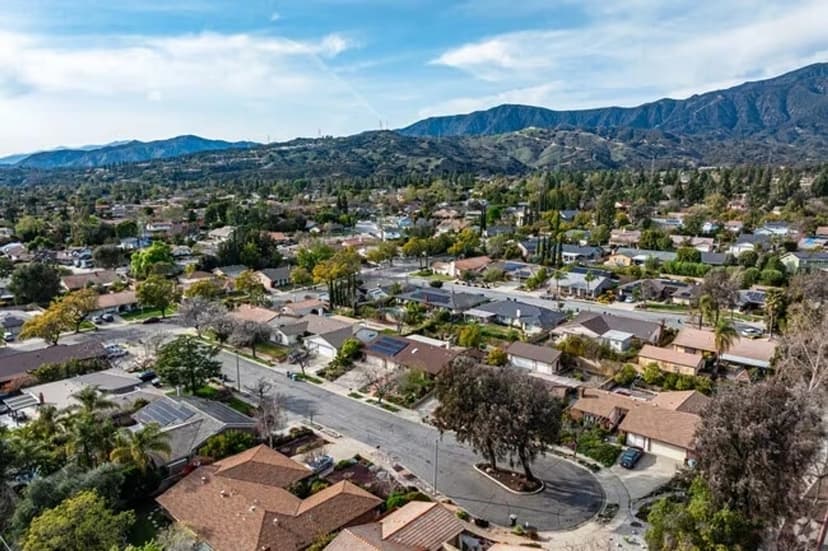
Its housing supply is close to fixed. A finished street map leaves little developable land, and what gets added arrives in small increments rather than in subdivisions. So the supply side of the local equation barely moves regardless of what happens to demand.
Put those together and Claremont is a price-taker on demand and nearly static on supply, which is the arrangement most likely to translate regional pressure directly into local prices. That is the arithmetic behind the affordability conversation this town has had for decades, and it is a structural condition rather than a market phase.
What the gap does to a local market
Four observable effects follow, and each of them is visible to anyone paying attention.
PERSISTENT COMPETITION for the limited stock that reaches the market, especially at price points where the buyer pool is deepest.
SLOW TURNOVER, which is partly a cause and partly an effect. Households that own something scarce and hard to replace do not move casually, and every household that stays put removes a listing from the market.
OUTWARD MIGRATION of households priced out, into surrounding communities with longer commutes. That is the mechanism by which one town's gap becomes another town's demand, and it is why the inland corridors have grown the way they have.
PRESSURE ON THE RENTAL LAYER, since households that cannot buy still need somewhere to live, and a constrained ownership market pushes demand into rentals.
What actually closes a gap, and what does not
Only two things close a jobs-housing gap. Either housing production rises to meet employment, or employment and income growth slow. Nothing else changes the underlying arithmetic, whatever else it changes.
It is worth being precise about what does NOT close it. Rate movements change monthly payments and therefore transaction volume, but they do not add units, which is why affordability can worsen and sales volume fall at the same time. Local policy can influence how much gets built in one city, but a single small city's production is a rounding error against a regional imbalance. And an individual household's timing decisions do nothing to the aggregate, though they matter enormously to that household.
This article makes no prediction about where the balance goes next. The honest position is that the structural conditions are slow-moving and well documented, and that anyone claiming to know the timing of a shift is guessing.
How to read the balance yourself
No counts appear here by design. The live sources are specific. State and county labor agencies publish employment by area. Federal census products publish housing units, household formation, and commuting patterns. Regional planning bodies publish housing needs assessments and regional growth forecasts. Cities publish their own housing elements and building permit activity.
Read them for direction: is regional employment growing faster than permitted units, is household formation outpacing completions, are commute distances lengthening. Those trends are the gap. A single year's figure is noise.
What a household should do with this
The practical value of understanding the gap is that it corrects two common mistakes. The first is expecting a local supply response to relieve local prices; in a town with a finished map, that response is not coming at any scale that matters. The second is treating price levels here as a temporary distortion; they are the output of a durable structural condition, and planning around a reversion that the structure does not support is a poor basis for a decision.
Anthony Grynchal has been licensed in California since November 2009, and the jobs-housing imbalance has been the background condition of this region for that entire period, through every kind of market. If you want the fuller structural picture, start at the local-economy hub, then read the commuter economy article, which describes the outward search this gap sets in motion.
Frequently asked questions
Does Claremont's own job growth drive its home prices?
Not primarily. The town's job base is modest and service-shaped, and most residents earn elsewhere in the region. Local prices respond to regional employment and income, filtered through the town's desirability and commute geography, rather than to the number of positions inside the city limits.
Why does housing take so long to catch up with jobs?
Hiring happens in months; housing takes years. New units require land, entitlement, financing, infrastructure, labor, and materials, and any step can stall a project. That asymmetry means gaps open faster than they close, and relief from construction arrives on a long lag.
Will more building in Claremont fix local affordability?
A single small city's production is a rounding error against a regional imbalance, and a finished street map limits how much can be added here at all. The imbalance closes only if regional housing production rises to meet employment growth or if employment and income growth slow.
Where can I check the jobs-housing balance for myself?
State and county labor agencies publish employment by area, federal census products publish housing units, household formation, and commuting, and regional planning bodies publish housing needs assessments. Cities publish housing elements and permit activity. Read for direction rather than any single year's figure.

Written by
Anthony Grynchal
Anthony Grynchal is a California real estate professional with eXp Realty, licensed since November 2009 (California DRE# 01873626), and the Designated Local Expert™ for Claremont — where he has lived for more than 33 years.
More about AnthonyPublished · Updated