Few parts of the built environment were reshaped as quickly by the last several years as office space, and small-town office markets were reshaped differently than downtown towers. Claremont's office inventory has always been modest and specific, which changed both what it lost and what it gained. This article works through the structure of that shift. It extends the local-economy guide and keeps the cluster's rule of teaching pattern rather than quoting rates or vacancy figures that move quarterly.
What office space in a town like this actually is
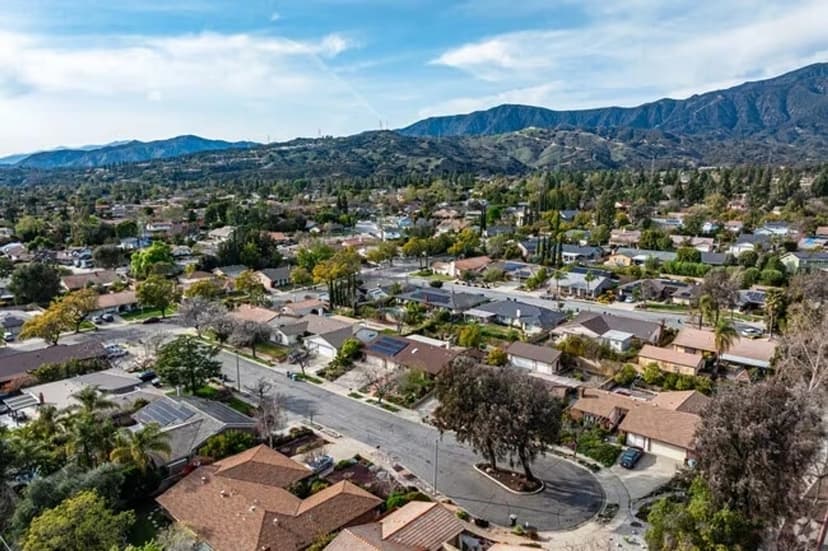
The first thing to correct is the mental image. A town of this size does not have a central business district of corporate floors. Its office inventory is mostly small: professional suites above or beside retail, converted houses along the edges of commercial streets, low-rise buildings near the arterials, and space embedded within institutional properties.
The tenants match the inventory. Medical and dental practices, therapy and counseling, law and accounting, insurance and financial advisory, real estate and title services, small design and consulting firms, nonprofits and associations. These are practices and small firms serving mostly local and regional clients, not satellite outposts of distant corporations.
That composition is why the remote-work shock landed differently here. The office demand in a town like this was never primarily desk work that could be relocated to a laptop.
What remote work took, and what it could not
Some of it did move. Consulting, administrative, and back-office functions that once justified a suite discovered they did not need one, or needed less of one, and those tenants shrank, went hybrid, or gave up space entirely. That is the demand loss, and it is real.
But a substantial share of small-town office demand is structurally UNREMOTABLE. A clinical practice needs treatment rooms. A dentist needs equipment. Physical therapy needs floor space. A firm that meets clients in person needs a place to meet them, and in a town whose client base is local, in-person service is often the product itself. Licensing, privacy requirements, and equipment tie these uses to premises regardless of what happens to knowledge work.
The net result in small markets has generally been less dramatic than in large downtown ones, for the simple reason that there was less remotable desk work to lose in the first place.
The demand that grew
Two countervailing currents matter, and they are easy to miss if you only count square footage.
The first is that remote work relocated PEOPLE, not just jobs. Households whose work travels with them chose towns for their home half, a shift covered directly in the remote work article. Some of those households eventually want a workspace that is not a spare bedroom, which supports demand for small suites, shared and flexible space, and the day-use arrangements that barely existed in small towns before.
The second is that a locally serving professional economy follows its residents. More people present in town during weekdays sustains more local practices, services, and appointments, which is office demand of the unremotable kind. That is the mechanism by which a residential shift becomes a commercial one, and it operates on a lag of years, not months.
The conversion question
Wherever office demand softened, the natural question is what the space becomes. The honest answer is that conversion is harder than it sounds. Small older office buildings often sit on parcels with zoning, parking, and access constraints; residential conversion carries code, life-safety, and utility requirements that are expensive in an older structure; and the entitlement path runs through a planning process that exists precisely to weigh those questions carefully.
The practical result is that repositioning tends to be incremental: an office suite becomes a service use, a converted house becomes a different kind of practice, a building is refitted rather than reimagined. Anyone underwriting a conversion should treat the entitlement and construction path as the main risk, not the rent difference. The ownership-side arithmetic is the subject of the commercial real estate overview.
What it means for housing
Three links run from office demand back to the residential market.
FIRST, the presence of local professional services is part of a town's quality of life, and quality of life is priced into houses. A town where residents can see a doctor, meet an accountant, and hire a lawyer without a long drive is a more livable town, and that livability is not free of commercial real estate conditions.
SECOND, workspace demand from remote households is now a housing feature. Buyers ask about a room that can hold a desk, sound separation, and reliable connectivity in a way they did not before, and older housing stock answers those questions unevenly. That is a real, durable change in what buyers look for.
THIRD, weekday population is an economic input. A town whose residents are present on Tuesday morning supports different businesses than one that empties out, and the businesses it supports are part of what the next buyer is paying for.
Getting the current picture
No vacancy rates or lease rates appear here by policy. For live conditions, use commercial brokerage market reports for the submarket, the city for zoning and permitted uses, and direct conversations with local landlords and tenants, who usually know the small-market reality earlier than any published dataset. Read for direction and composition rather than a single quarter's number.
Anthony Grynchal has been licensed in California since November 2009 and has watched this town's commercial fabric absorb more than one shock without losing its shape. If you are weighing a workspace decision alongside a housing one, start at the local-economy hub and read the remote work article, which covers the residential half of the same shift.
Frequently asked questions
Did remote work empty out Claremont's offices?
Less than it emptied large downtown markets, because the inventory here was never mostly relocatable desk work. Small-town office space is dominated by clinical, professional, and client-facing practices tied to premises by equipment, licensing, and in-person service. Some administrative and consulting tenants did shrink or leave.
What kinds of tenants use office space in a town this size?
Medical and dental practices, therapy and counseling, law and accounting, insurance and financial advisory, real estate and title services, small design and consulting firms, and nonprofits. The inventory matches: small suites, converted houses, and low-rise buildings rather than corporate floors.
Can vacant office space be converted to housing?
It is harder than it sounds. Older small office buildings carry zoning, parking, and access constraints, and residential conversion adds code, life-safety, and utility requirements that are expensive in an older structure, on top of an entitlement path through the planning process. Treat entitlement and construction as the main risk.
How has remote work changed what buyers want in a house?
Workspace became a feature rather than an afterthought. Buyers ask about a room that holds a desk, sound separation from the rest of the house, and reliable connectivity, and older housing stock answers those questions unevenly. It is a durable change in what the market prices, not a passing preference.

Written by
Anthony Grynchal
Anthony Grynchal is a California real estate professional with eXp Realty, licensed since November 2009 (California DRE# 01873626), and the Designated Local Expert™ for Claremont — where he has lived for more than 33 years.
More about AnthonyPublished · Updated