A move is the one day where your street's physical constraints become your problem in a very concrete way. A truck is long, it needs to be parked close, and it needs to stay there for hours.
Most people book the date around the escrow calendar and the mover's availability, which is correct as a starting point. What almost nobody does is check the date against the town's calendar and against the street itself. Twenty minutes of that, done early, prevents the specific bad day where the truck ends up two hundred feet away and the crew is billing by the hour.
What a truck actually needs
Three things, and they are all about the curb rather than the house.
Length. A full-size van needs a substantial run of clear curb, and it cannot use two separate short gaps. This is why a street that has plenty of parking in aggregate can still be unusable.
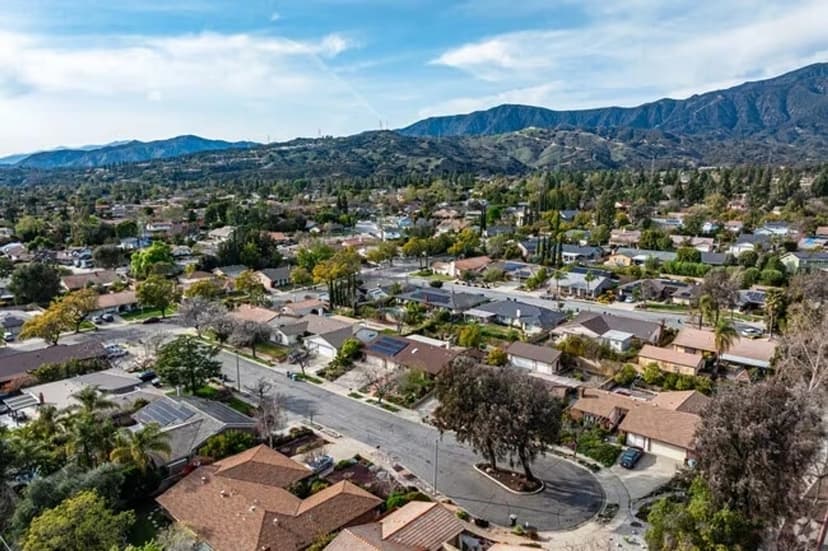
Height clearance. Mature street trees are a genuine constraint in an established neighborhood. A canopy that makes the street beautiful also makes it a problem for a high vehicle. Look up before you book, and tell the mover what you saw.
A working lane past it. On a narrow street with cars on both sides, a parked truck can close the road. That produces an unhappy neighbor at best and a real access problem at worst.
Walk out and look at your curb with those three things in mind. You will know within a minute whether this is straightforward or whether it needs planning.
The dates to check before you book
Two categories matter.
Anything that closes or congests streets. If the town is hosting something that brings crowds anywhere near you, the day is worse in every dimension: the approach is slow, the curb is taken by visitors, and enforcement attention is higher. Check the city's own current calendar rather than assuming, since these schedules move.
Anything that empties the town. Counterintuitively, these are often the best moving days. Fewer cars, more curb, easier approach. The cost is that everything else is slower, so if your move depends on a utility appointment, a locksmith, or a final walkthrough with a professional, check that they are actually working.
There is a third, smaller category that catches people out: the ordinary weekly rhythm. Street sweeping days, trash days, and school pickup hours all take curb or add traffic on a completely predictable schedule. A move that starts at the same hour as the school run on a narrow street is a self-inflicted wound.
Reserving the space
On a tight street the difference between a smooth move and a bad one is whether the curb is empty when the truck arrives.
The neighborly method works better than people expect. Knock a few days ahead, say which day and roughly what hours, and ask whether they can leave the frontage clear. Most people will, and they will also tell you something useful, like which neighbor's guest always parks there.
If the street genuinely cannot accommodate it, there may be a formal option. Temporary curb reservation and any permit for occupying public right of way are administered by the city, and both the availability and the lead time change, so ask the city directly well before the date rather than the week of.
The general question of how a street behaves when its curb fills up is worked through in judging a street by how it handles a crowd.
If you are moving into a governed community
Many have their own rules: designated move-in hours, a required notice to management, an elevator or gate reservation, sometimes a deposit. These are set by the community and are entirely independent of anything the city does.
Find out before the truck is booked, not after. A move that arrives outside permitted hours can be turned away, and the crew still bills for the day.
Sequencing the day
A few things that are obvious in hindsight.
- Start early. Curb availability is best in the morning, traffic is lightest, and heat is a real factor for a crew carrying furniture in the warmer months.
- Put someone on the street. One person whose only job is the truck, the curb, and talking to anyone who needs to get past. This role is worth more than an extra pair of hands inside.
- Keep a lane open deliberately rather than accidentally. If you decide where the gap is, you control it. If you do not, someone else parks in it.
- Have the new address's curb sorted too. Half of moving-day failures happen at the destination, where nobody has thought about it at all.
The overlooked one: your own timeline
Moves get scheduled against a closing date, and closing dates move. If your date sits immediately against a holiday stretch, there is no slack, because everyone whose signature you need is away.
Build a buffer where you can. The seller-side version of this calendar problem is covered in timing a Claremont listing, and it applies with more force to a move, because a truck is booked and a truck does not wait.
The short version
Look at your curb and look up at the trees. Check the town's calendar for the week you have in mind. Check street sweeping and the school run. Tell the neighbors. Ask the city early if you need the space formally. Put a person on the street on the day.
None of it is difficult. All of it is invisible until the truck is idling in the middle of the road.
More on how the town's rhythm affects ordinary life sits on the Claremont local events hub.
Anthony Grynchal has been licensed in California since November 2009.
Frequently asked questions
What day of the week is best for moving in Claremont?
Whichever day avoids street sweeping, the school run on a narrow street, and any town gathering that congests the area. Mornings are generally better than afternoons for curb availability and heat.
Can I reserve curb space for a moving truck?
Temporary curb reservation and permits for occupying public right of way are administered by the City of Claremont. Availability and lead times change, so ask the city well before the date rather than the week of.
Do street trees affect a moving truck?
Yes. A mature canopy over an established street can be a genuine height constraint for a full-size van. Look up along the approach and at the frontage, and tell your mover what you saw.
What if I am moving into a community with an HOA?
Check the community's rules first. Many set designated move-in hours and require notice to management, and a crew turned away for arriving outside those hours will still bill for the day.

Written by
Anthony Grynchal
Anthony Grynchal is a California real estate professional with eXp Realty, licensed since November 2009 (California DRE# 01873626), and the Designated Local Expert™ for Claremont — where he has lived for more than 33 years.
More about AnthonyPublished · Updated