The complaint is almost never about the music. It is about not knowing when it will stop.
That single sentence explains most backyard noise disputes in a residential town. A neighbor who knows a gathering ends at a stated hour will tolerate a surprising amount. A neighbor who has no idea whether this goes to midnight starts calculating at nine, and by ten the calculation has turned into resentment.
Everything below follows from that.
How sound moves between houses here
Sound does not radiate evenly. It reflects, it channels, and it behaves differently depending on what is between the source and the listener.
A few things reliably surprise people.
- Bass carries; treble does not. Your neighbor is not hearing the melody. They are hearing a low thump through a wall, which is the most intrusive part of the signal and the part your own ears stop noticing after twenty minutes.
- Fences do very little. A block wall helps at ground level and almost nothing above it. Sound goes over.
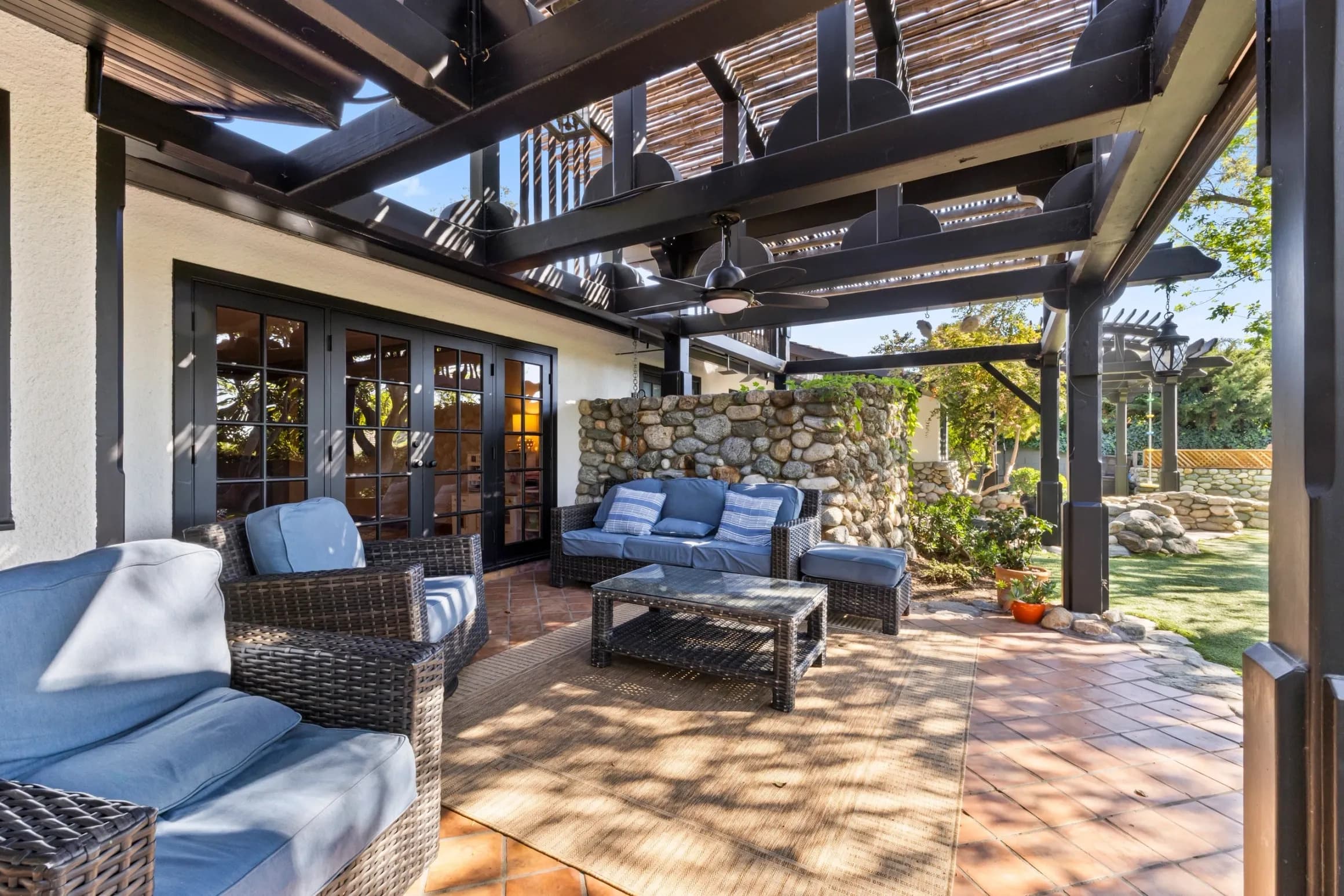
- Foliage is not a barrier. A mature canopy scatters some high frequency and looks like it should help far more than it does. It is a visual screen, not an acoustic one.
- Night is louder. Not because the source changed, but because the background dropped. The same speaker at nine reads twice as loud as at four.
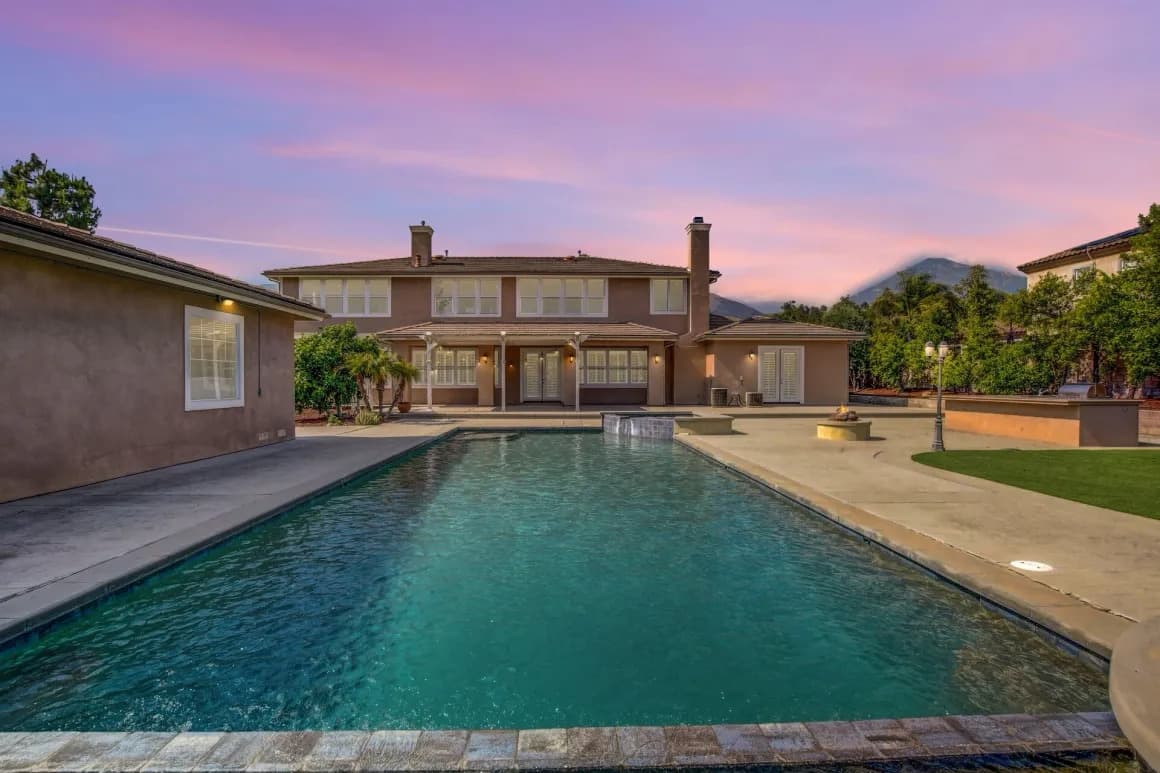
- Hard surfaces bounce. Pointing speakers at a stucco wall or a pool deck sends the reflection somewhere you did not intend, frequently over the back fence.
Older neighborhoods with deep lots and wide setbacks behave differently from newer streets with houses close together. Neither is quiet or loud by default. What matters is where the receiving windows are relative to your patio, and you can determine that in ten minutes by standing in your own yard and looking.
The test that costs nothing
Before the gathering, set up the sound the way you plan to run it, and walk. Go to the sidewalk. Go to the property line on each side. If you are on friendly terms with a neighbor, stand in their driveway.
Then turn the bass down and walk again. Most hosts find the second pass is dramatically quieter at the fence and essentially identical on the patio. That is the whole trick. You lose nothing your guests will notice and you remove the part that travels.
Aim speakers toward the house, not away from it. Two smaller sources near the people beat one large source trying to cover a yard. Volume is a function of distance from the speaker, and if the speaker is close, the volume can be low.
Notice: the highest-return five minutes
Tell the neighbors. Not a group text to the block, and not a note taped to a door if you can avoid it. Knock, say what day, say what time it starts, and say what time it ends.
Three things happen when you do this.
First, you have converted a stranger's noise into a known event with an endpoint. Second, you have given them a chance to tell you something you needed to know, like a night shift, a newborn, or a dog that panics. Third, you have given them a person to call instead of an agency. That third one is the entire ballgame. Almost nobody calls the city about a neighbor they have spoken to that week.
Inviting them is even better, and costs you nothing if they decline, which they often will.
Keep the end time you stated
If you say ten, stop at ten. Not ten fifteen. The credibility of the next notice you give depends entirely on this one, and on a street where people host regularly, that credibility is a real asset.
The practical version: designate the moment in advance and tell whoever controls the music. A host who has been talking to guests for four hours is the worst possible judge of what time it is and how loud the yard has become.
When it stops being a party
There is a line, and it is worth understanding roughly where it sits. A private gathering of invited guests in a backyard is one thing. Amplified sound directed at the public, ticketed attendance, a street or sidewalk in use, structures, or vendors selling is a different category, and that category involves the city.
Residential noise standards, permitted hours, and any requirement for amplified sound are set by the City of Claremont and they change. Do not take a number from a neighbor, a forum, or an article. Ask the city directly, because the only version that matters is the current one. The permitting side of larger gatherings is covered separately in hosting your own event in Claremont.
If you live in a governed community, there is likely a second layer of quiet hours in the governing documents, and those can be stricter than the city's.
If someone does complain
Answer the door. Do not defend the volume. Ask what they are hearing and from where, then fix that specific thing, usually by turning down the low end and moving a speaker.
The response people remember is not whether you were within your rights. It is whether you treated the complaint as reasonable. You are going to live next to this person for years, through their gatherings and yours, and the goodwill is worth far more than the last twenty percent of volume.
The buyer's version of this article
If you are shopping and you host, this is a live diligence question. Stand in the backyard of a house you are considering and listen. Where are the neighbors' bedroom windows. How close is the nearest second story looking down into the yard. Is there a hard wall that will bounce everything into one particular lot.
The same instinct applies in reverse: if you are buying next to someone who clearly entertains, you want to know that before the offer, not after. The broader question of what a street feels like when it fills up is worth reading in the event weekend trade-off, and the insurance side of hosting at home is covered in liability and insurance for a Claremont gathering.
The short version
Turn the bass down. Point the speakers at your own house. Tell the neighbors the end time. Then honor it.
That is roughly ninety percent of the problem solved, and none of it requires spending money.
More on how the town's calendar and public life work sits on the Claremont local events hub.
Anthony Grynchal has been licensed in California since November 2009.
Frequently asked questions
How late can I play music outside in Claremont?
Permitted hours and residential noise standards are set by the City of Claremont and are revised over time. Confirm the current rules with the city directly rather than relying on a remembered number, and check your community's governing documents if you have them.
Why do neighbors hear the bass and not the song?
Low frequencies travel further and pass through walls and fences far more readily than high frequencies. Reducing the low end usually cuts what reaches the property line without changing what guests hear on the patio.
Do I need to tell my neighbors about a backyard party?
You are not obliged to, but it is the single most effective step you can take. Stating a start and an end time, in person, converts an unknown disturbance into a known one and gives the neighbor a person to call rather than an agency.
Will a block wall or hedge block the sound?
Only partly. A wall helps at ground level and does little above it, and foliage is a visual screen rather than an acoustic one. Speaker placement and volume do far more than any barrier.

Written by
Anthony Grynchal
Anthony Grynchal is a California real estate professional with eXp Realty, licensed since November 2009 (California DRE# 01873626), and the Designated Local Expert™ for Claremont — where he has lived for more than 33 years.
More about AnthonyPublished · Updated