
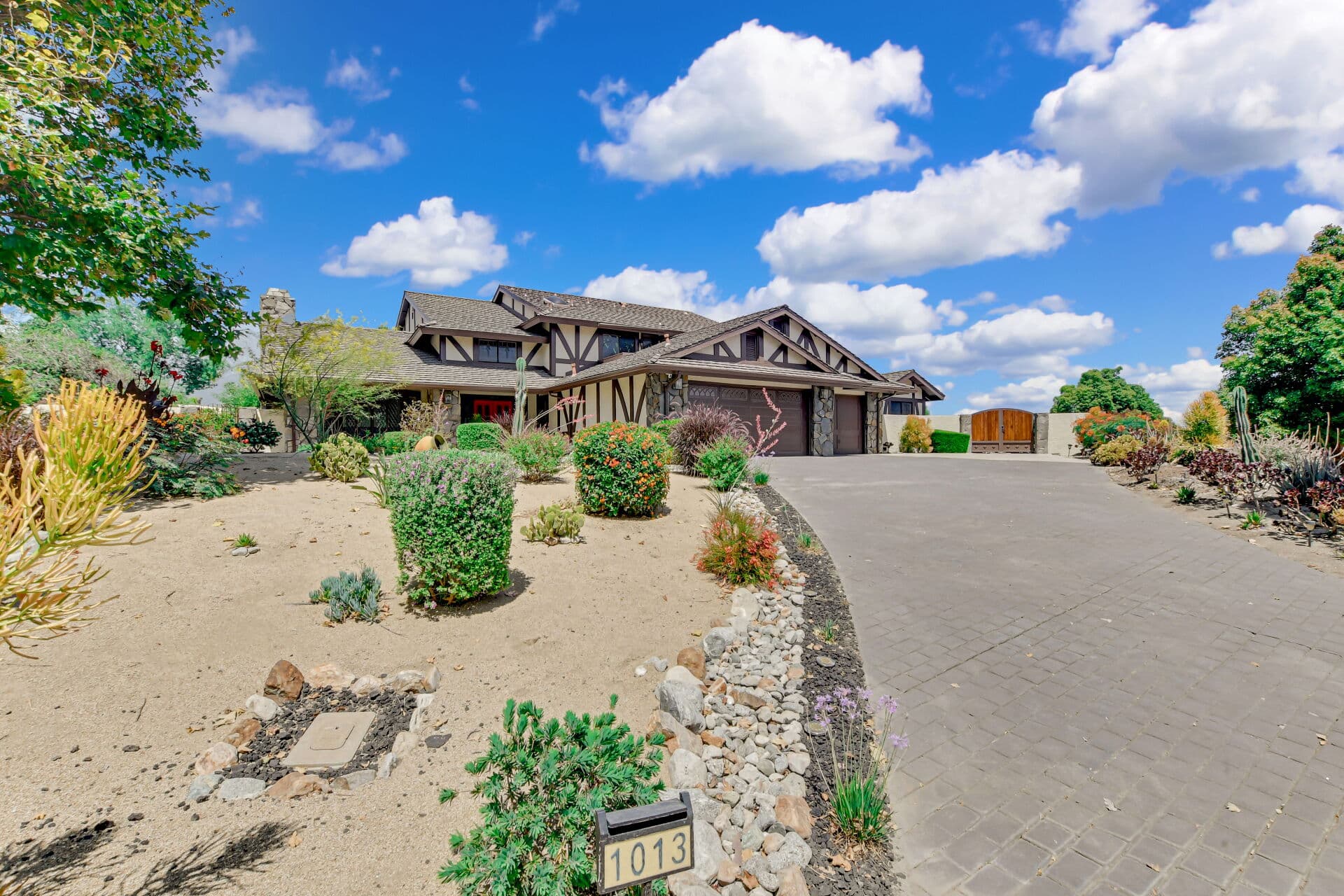
The first thing buyers notice in the Padua hills is not a house. It is the quiet. The streets that climb the foothills at Claremont's northeast shoulder run out of grid quickly, curving between parcels that were laid out around terrain instead of across it, and the ambient sound drops away until what remains is wind in the eucalyptus and, at the right hour, nothing at all. The mountains are not a view here so much as a wall at the end of the street.
This is the corner of Claremont with the most explicit history attached to it, and that history still governs how the area reads. Where the Claremont luxury neighborhood atlas places Padua within the town's broader map, this page stays inside it: the layout, the lots, the siting, and the specific questions a buyer should carry up the hill.
The theatre district and what it left behind
The area takes its identity from the landmark theatre and the artists' colony that grew around it in the earlier twentieth century. That origin matters practically, not just romantically. It meant the hills were developed with an eye toward setting rather than yield, with buildings placed for outlook and privacy on parcels shaped by the slope. It also meant the area attracted architect-designed and owner-built work from the beginning, which is why the housing stock here resists easy categorization.
The vocabulary you encounter walking these streets runs across decades: Spanish and Mediterranean revival forms that echo the colony era, midcentury custom houses that took advantage of the hillside's sightlines, and later work that continued the same instinct. What unites them is siting. Homes in the Padua hills are almost always placed with intent, angled toward a view corridor, set back behind a screen of mature planting, or tucked into a fold of ground so that the road barely registers them.
Reading a Padua-area lot
Parcels here are generous, and many of them slope. That combination produces a specific kind of property: a usable house pad, then land that falls or rises away into something closer to grounds than to a yard. Buyers who arrive expecting a flat rectangle of lawn behind the house will need to recalibrate. The land is an asset in this neighborhood, but it is an asset in the way acreage is, not in the way a level backyard is.
Three things reward close attention when evaluating one of these parcels.
GRADE. Where the usable outdoor living actually sits, how it is retained, and what maintaining the sloped portion involves in practice. Terracing, hardscape, and mature plantings on a slope all have maintenance profiles that a flat lot does not generate.
WATER. How the parcel sheds a heavy winter, where runoff enters and leaves, and whether the drainage design is still doing what it was built to do. On hill ground this is not a detail, it is the property's long-term condition.
EDGE. What the parcel borders. Some of these lots back to open terrain, and a boundary against undeveloped land brings both the neighborhood's greatest privacy and its most specific responsibilities, a subject covered fully on the page about the trail-edge estates along the Wilderness Park border.
Living at the town's wild edge
What the Padua hills offer is atmosphere, and it is a specific one. Evenings run cooler than they do on the valley floor. The night sky is genuinely darker than in the town center. The trail network of the foothills is close, and the sense of being at the edge of something open is constant. Yet the Village and its depot are a short drive, which is the trade that makes this neighborhood work: seclusion without isolation.
The exchanges are honest and worth stating plainly. Roads wind and grades are real, so the drive home is longer than the map distance suggests. Services and deliveries navigate the same geometry. And living against open terrain means defensible space and vegetation management are ongoing owner responsibilities rather than occasional projects. Buyers who want the setting should plan for the stewardship it requires; those who do not want the stewardship are usually happier on the flats.
Padua compared with the hillside view enclave
The natural comparison inside Claremont is the town's other elevated address, the hillside enclave at the northwest edge where homes step down the slope toward a panoramic valley outlook. That neighborhood is about the view: distance, light, and the grid of lights after dark. The full treatment is on the Claraboya page.
Padua answers a different instinct. Its properties are more often about enclosure than exposure, mountain presence rather than valley panorama, land and privacy rather than a sightline. A buyer who lights up at a night view usually belongs in the view enclave; a buyer who lights up at the quiet, the trees, and the sense of the mountains overhead usually belongs here. Showing both in one afternoon is the fastest way to find out which is true, and it is a tour I run often.
Buying and selling in this pocket
For buyers, patience is a strategy. Turnover in the Padua hills is unhurried, properties are individual rather than comparable, and the right house may not be on the market the week the search begins. Being positioned to hear about a property early matters more here than in neighborhoods with regular inventory.
For sellers, the case is made on setting and stewardship. Documentation of slope, drainage, and vegetation maintenance is not paperwork, it is proof that the property has been cared for the way hill ground requires. Landscaping trimmed to reveal the outlook, an approach that reads as arrival rather than as a driveway, and photography timed to the light the mountains create are what present this kind of property honestly.
If the Padua hills are on your list, walk them at dusk. Everything this neighborhood is good at happens at that hour. The wider map of the town's prestige pockets is in the Claremont luxury neighborhoods guide. Anthony Grynchal has been licensed in California since November 2009.
Frequently asked questions
What defines the Padua Hills area of Claremont?
It is the foothill corner of town shaped by the landmark theatre and the artists' colony that grew around it. The streets climb into the hills on generous, often sloping parcels, and homes are sited for outlook and privacy rather than laid out on a grid. The housing stock spans revival-era work, midcentury custom design, and later homes that follow the same instinct, so the area reads as individual rather than uniform.
How do Padua Hills lots differ from flat Claremont lots?
Most carry slope. That produces a usable house pad with land that falls or rises away into something closer to grounds than to a conventional yard. The land is a real asset, but it behaves like acreage rather than like level lawn. Buyers should look closely at grade and how the usable outdoor space is retained, at how the parcel sheds water in a heavy winter, and at what the property borders.
Is Padua Hills far from the rest of Claremont?
It feels farther than it is. Roads wind and grades are real, so the drive takes longer than the map distance suggests, but the Village and the depot remain a short trip. That combination, seclusion without isolation, is what the neighborhood trades on. Evenings run cooler than on the valley floor and the night sky is noticeably darker.
What responsibilities come with a home at Claremont's foothill edge?
Living against open terrain means defensible space and vegetation management are ongoing responsibilities rather than occasional projects. Slope, retaining structures, and drainage need periodic attention and should be inspected by someone who works on hillside properties. Insurance questions are more detailed for foothill-edge homes than for flat-lot properties, so start that conversation early rather than at a deadline.

Written by
Anthony Grynchal
Anthony Grynchal is a California real estate professional with eXp Realty, licensed since November 2009 (California DRE# 01873626), and the Designated Local Expert™ for Claremont — where he has lived for more than 33 years.
More about AnthonyPublished · Updated