
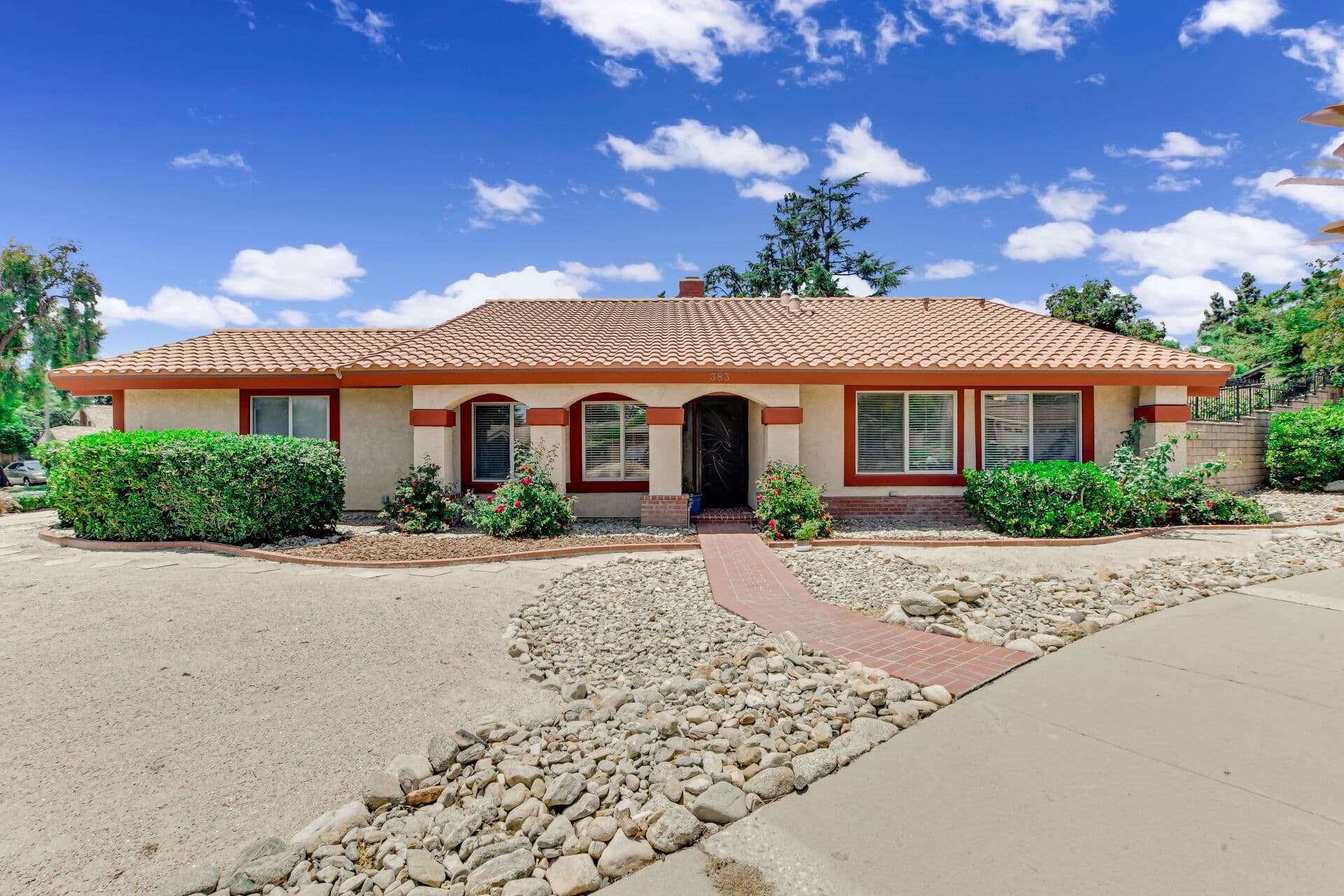
Anyone house-hunting in Claremont notices it within a week: almost nothing for sale is NEW. In a region that has built whole cities in a generation, this town adds housing at a trickle — and the trickle is structural, not accidental. Understanding WHY the town builds so little is genuinely useful, because the same forces that constrain construction shape prices, define what 'new' even looks like here, and tell you where the town's next units will actually come from. This article maps the four constraints and the mechanism they produce — no forecasts, because the structure is the durable part. It deepens the new-construction guide; the planning machinery behind everything here is the city-development guide's full subject.
Constraint one: the town is built out
The simplest force first: Claremont's developable land was largely spoken for decades ago. The core filled through the citrus-to-colleges growth era, the postwar decades completed the grid, and the hillside edges meet open-space preserves and terrain that was set aside deliberately. A builder looking for the raw twenty-acre parcel that powers subdivision economics simply does not find one here — which is why new construction in Claremont means INFILL: the odd lot, the small project, the redevelopment of an existing site. Built-out is the parent constraint; everything below compounds it.
Constraints two and three: process and preservation
What little land exists develops through machinery that is thorough by design. The city's general plan and zoning define what can go where; projects move through review processes in a town whose residents show up to meetings; and the civic culture — the same one that made the preservation tradition real — weighs character, scale, and compatibility seriously. Claremont's famous trees are a literal constraint too: protected specimens shape site plans in ways flat dirt never would. None of this is a complaint; it is a description of a town that decided what it wanted to be and built institutions to keep it. But thorough process is slow process, and slow process on scarce land compounds into very few units. Meanwhile the state pushes the other direction — California requires every city to PLAN for housing targets through its housing-element machinery, a genuine and evolving pressure on built-out towns that the city-development guide covers concept-first; how it reshapes any particular block is a verify-with-the-city question, always.
Constraint four: the economics of infill
Even where a project is possible, small-lot infill carries hard math: land here is expensive because the town is desirable, construction costs are regional and high, and a small project spreads its fixed costs — design, review, site work — across a handful of units instead of hundreds. The result is that what DOES get built tends toward the top of the market, where the numbers can close. This is also why the town's most prolific 'builder' is not a builder at all: the ADU, enabled by state law on lots owners already hold, has become the practical path by which Claremont adds units — one backyard at a time, skipping the land-acquisition problem entirely. And at the margins, the teardown replaces one house with another rather than adding count at all.
The mechanism: what scarcity actually does to prices
Here is the honest version of the title's second half, stated as mechanism rather than prediction. Prices move on supply and demand; Claremont's demand is anchored by institutions that do not relocate — the colleges, the school district, the Village — while its supply grows at the trickle described above AND turns over slowly, because the long-tenure culture keeps existing homes off the market for decades at a stretch. Constrained new supply plus constrained resale supply plus anchored demand is the textbook scarcity structure, and it is the same structure behind the appreciation tilt the investment guide maps for investors. What that means in any given season — how much, how fast, in which direction — belongs to live data and honest local conversation, never to an evergreen article. The structure is what you can rely on; the numbers are what you should ask about.
What this means for a buyer's expectations
Practically: expect the inventory to be overwhelmingly RESALE, and get good at evaluating it — the new-versus-resale guide covers the trade-offs honestly, and this cluster's premise is that in Claremont the resale skillset is the essential one. Expect the rare new project to price at a premium and move quickly. And read the town's slow growth for what it is: the constraint that frustrates your search is the same one protecting the character and scarcity you are trying to buy into. In Claremont, the trickle is the point.
Anthony Grynchal has been licensed in California since November 2009, long enough to watch the trickle stay a trickle through every market season. This is general information; current projects, current rules, and current numbers belong to the city and a live conversation.
Frequently asked questions
Why is there so little new construction in Claremont?
Four compounding constraints: the town is essentially built out (no raw subdivision land), development review is thorough in a civically engaged preservation town, protected trees literally shape site plans, and small-lot infill economics only close at the top of the market. New construction here means infill, not subdivisions.
Where do Claremont's new housing units actually come from?
Mostly ADUs — state law lets owners add units on lots they already hold, skipping the land-acquisition problem — plus occasional small infill projects and teardown-rebuilds that replace rather than add. The state's housing-element requirements keep pressure on the planning side; how that reshapes any block is a city question.
Does limited construction make Claremont homes more expensive?
It builds the scarcity structure: trickling new supply, slow resale turnover from long-tenure ownership, and demand anchored by institutions that do not relocate. That is the mechanism behind the market's appreciation tilt — what it means in any given season belongs to live data, not an evergreen article.
Should I wait for new construction in Claremont?
Expect to be disappointed by the wait: inventory here is overwhelmingly resale, and the rare new project prices at a premium and moves fast. The practical skillset for this market is evaluating older homes well — which is why the resale trade-offs guide matters more here than in most towns.

Written by
Anthony Grynchal
Anthony Grynchal is a California real estate professional with eXp Realty, licensed since November 2009 (California DRE# 01873626), and the Designated Local Expert™ for Claremont — where he has lived for more than 33 years.
More about AnthonyPublished · Updated