Every open house has a guest list nobody wrote. It is set by the front step, the width of the hallway, where the parking is, and whether the entry is lit. Some people can get through that list comfortably and some cannot, and the seller almost never knows which.
This is worth attention for two separate reasons. One is fairness, and fair housing law is not a soft consideration. The other is straightforwardly commercial: a buyer who cannot get past your entry has not evaluated your house.
Start with the rule that governs everything else
Fair housing law prohibits discrimination on the basis of protected characteristics, and disability is among them. In practice, for an open house, that translates into a few concrete disciplines.
Describe the property, never the visitor. Say that the entry has three steps and no railing. Do not speculate about who will or will not be able to manage them, and never steer anyone toward or away from a home or a neighborhood based on an assumption about them.
Answer questions about the property factually and equally. If someone asks about step-free access, doorway widths, or ground-floor sleeping arrangements, that is a question about the house. Answer it the way you would answer a question about the roof.
Do not ask about a person's condition, needs, or circumstances. It is not your information and it is not relevant to whether they can buy a house.
If any of this feels uncertain in a specific situation, get real guidance from your broker or counsel rather than improvising. The cost of guessing wrong here is not a lost sale.
Walk your own approach as if you had never been there
Sellers stop seeing their own entry sequence within about a week of moving in. Go outside and do it deliberately.
- Parking. Where does a visitor actually stop? How far is it, and is the route level? On a street with permit restrictions or narrow frontage, this is the first barrier and it is invisible from inside.
- The path from the car. Uneven pavers, a gravel strip, a hose across the walk, a step down at the curb. Look at the surface, not the distance.
- The steps. Count them. Note whether there is a railing, whether it is on both sides, and whether it is solid.
- The threshold. Raised thresholds at the front door and at slider doors are the single most common obstacle inside a house and the easiest to overlook.
- The first turn. Entry halls that require a sharp turn into a narrow corridor are hard for anyone using a walker, a chair, or a stroller.
Then walk it again after dark, because open houses in winter end in low light and a step you know by heart is a hazard to someone who does not.
What to fix, and what to simply say
Some of this is fixable in a weekend and some is architecture. Both are fine. What is not fine is leaving a removable obstacle in place.
Fix: the hose, the planter narrowing the walk, the loose paver, the doormat that slides, the burned-out entry bulb, the extension cord across a doorway, the rug with a curled edge, the furniture that turned a four-foot path into a two-foot one during staging. Staging is a frequent offender here, because the arrangement that photographs well often narrows every route in the house. That tension is worth watching while working through the 48-hour staging checklist.
Say: the number of steps at the entry, whether there is a step-free route at any door, whether there is a bathroom and a bedroom on the ground floor, and whether the hall and doorways are generous or tight. These are facts about the property and stating them is helpful rather than defensive.
Older Claremont housing stock frequently has narrow hallways, small bathroom doors, and a step at every exterior door. That is not a flaw to hide. It is a characteristic that some buyers need to know before they drive over, and telling them respects their time.
Things that cost nothing on the day
A few small operational choices widen access considerably.
- Prop the front door open where security and staffing allow it, so nobody has to manage a heavy door and a step at the same time. Where it does not allow it, someone should be positioned to open the door.
- Turn the lights on in every room, including in daylight. Low-vision visitors, and everyone else, navigate a lit house better.
- Leave one clear route through every room. Not a maze between staged furniture.
- Offer a seat. A chair in a sensible place lets someone rest and continue rather than leave.
- Do not crowd the entry. A sign-in table jammed into a narrow foyer is the most common self-inflicted bottleneck at an open house, and it interacts badly with the privacy questions covered in sign-in sheets and your privacy.
- Offer to answer from a photo. If part of the house is genuinely unreachable, having good images of that space is far better than nothing.
Do not treat the yard as an afterthought
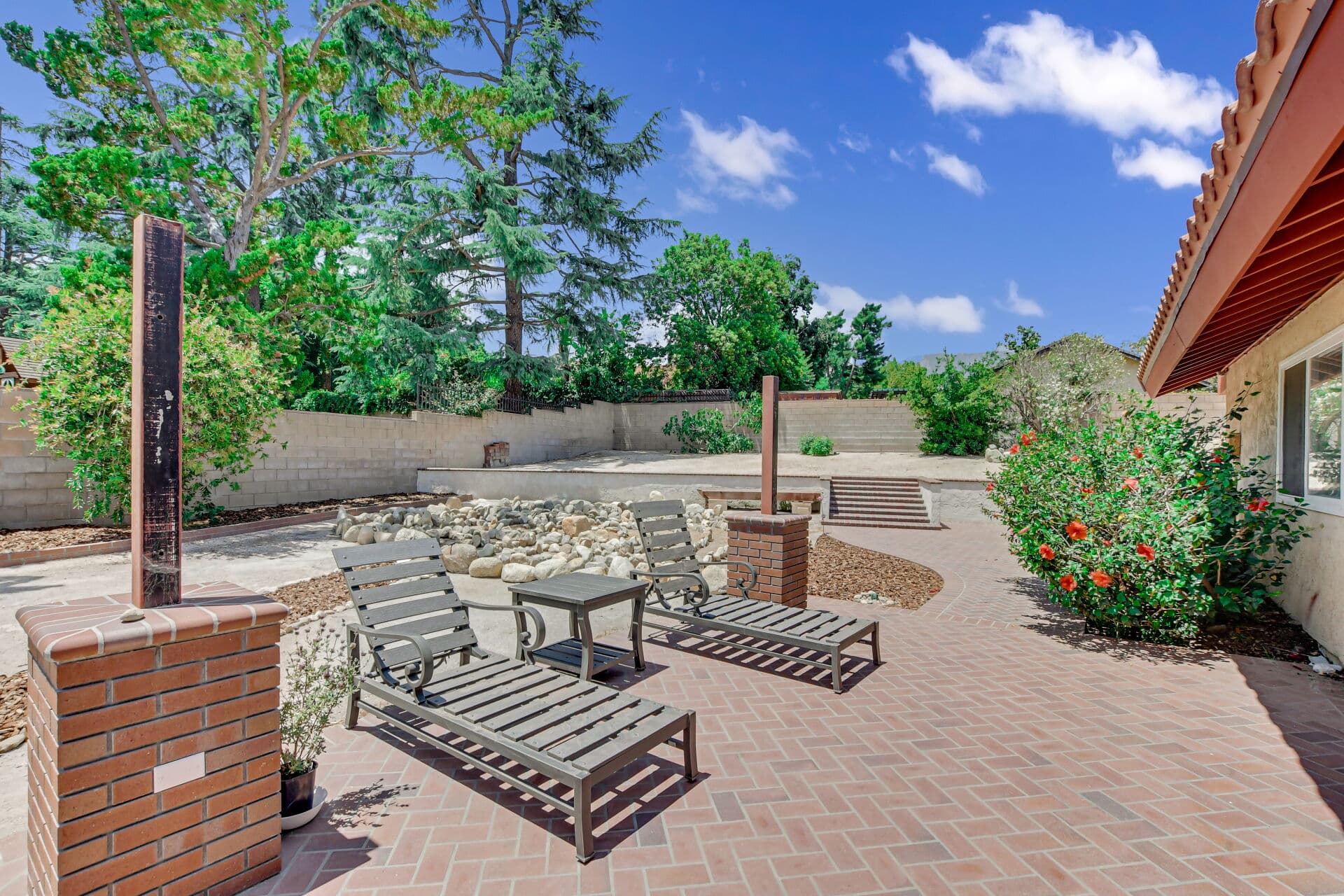
Back yards, garages, and detached structures are where access falls apart. A step down to a patio, a gravel path to the studio, a garage entered only by a raised threshold. If a substantial part of what the buyer is paying for is behind an obstacle, plan for how you will show it, and say honestly what the approach is.
Why this is also just good selling
Strip away everything else and the practical case stands on its own. Someone who cannot get comfortably through the front door does not make an offer. Someone who has to be helped over a threshold in front of a room full of strangers leaves early. Someone who read an accurate note about three entry steps and came anyway arrives prepared and stays.
Accessibility work is mostly small, cheap, and invisible to buyers who do not need it. That is a good ratio.
The short version
Describe the property, never the person. Walk your own approach with fresh eyes and again after dark. Remove every obstacle that can be removed, especially the ones staging created. State the fixed facts plainly rather than hiding them. And do not let the sign-in table block the door.
More on running an open house well is on the Claremont open houses hub. Anthony Grynchal has been licensed in California since November 2009.
Frequently asked questions
Should I mention that my Claremont home has steps at the entry?
Yes. Describing the property accurately is helpful and it respects a buyer's time. State facts about the house, such as the number of entry steps, whether any door has a step-free approach, and whether there is a ground-floor bathroom and bedroom. What you must not do is describe or speculate about the visitors themselves, or steer anyone based on an assumption about them.
What are the most common accessibility obstacles at an open house?
Usually the ones nobody notices: where visitors can actually park and how level the route from there is, unrailed entry steps, raised thresholds at front and slider doors, narrow first turns inside the entry, and unlit approaches after dark. Staging furniture that narrows a hallway is a frequent self-inflicted one, and so is a sign-in table wedged into a small foyer.
Can a visitor ask me about accessibility features and can I answer?
Questions about the property, such as doorway widths, step-free routes, or whether there is a bedroom on the ground floor, are ordinary questions about the house and should be answered factually and equally for everyone. What you should not do is ask a visitor about their condition or needs. If a specific situation feels uncertain, get guidance from your broker or counsel rather than improvising.
Do I have to modify my home to make it accessible before selling?
Selling a home is not the same as operating a place of public accommodation, and you are not being asked to renovate. The practical standard is different and much easier: remove the obstacles that can be removed, light the place properly, keep one clear route through every room, and describe the fixed characteristics of the property honestly.

Written by
Anthony Grynchal
Anthony Grynchal is a California real estate professional with eXp Realty, licensed since November 2009 (California DRE# 01873626), and the Designated Local Expert™ for Claremont — where he has lived for more than 33 years.
More about AnthonyPublished · Updated