Some households host. Not a dinner party for six - a crowd. Holidays, graduations, a memorial, a fundraiser, an extended family that arrives in one wave and stays all afternoon.
Those households buy houses differently, and they should. Hosting at scale is a building problem and a STREET problem long before it is a cooking problem, and most of what determines whether an event is pleasant or exhausting is decided at purchase, not on the day.
No caterers, venues or businesses are named here. What follows is about the house and the block.
The three bottlenecks, in order
Ask anyone who hosts regularly and the same three constraints come up, always in this order.
Parking. Twenty guests arrive in eight to twelve cars. Where do they go. This is the constraint that ruins events, and it is entirely a function of the street, not the house.
Circulation. Whether people can move between the food, the seating and the door without a bottleneck. A large room does not solve this; a good loop does.
Staging. Somewhere out of sight to put trays, coolers, boxes, dirty dishes and the mess. Hosts who lack it end up hiding it in a bedroom and being anxious all day.
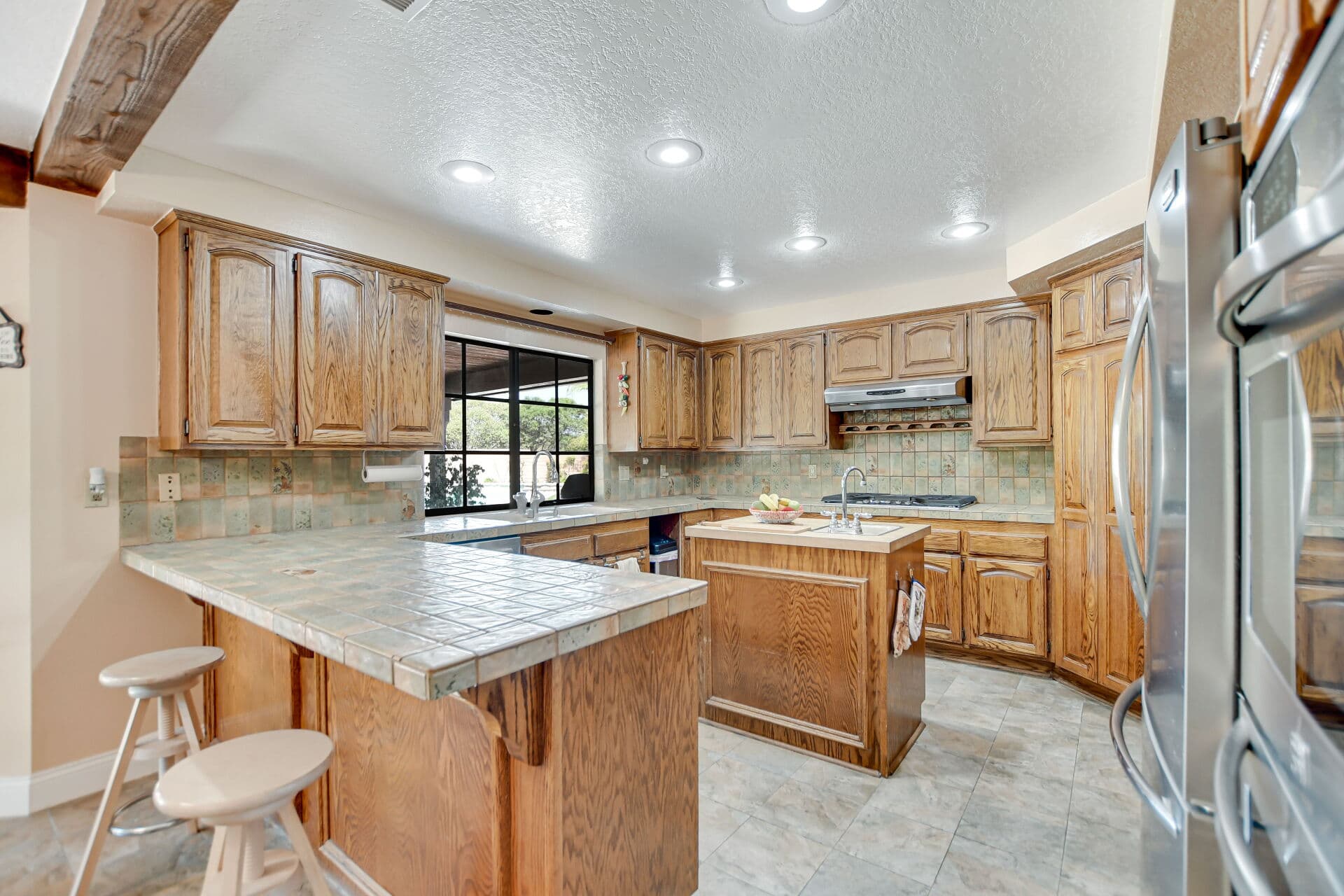
Kitchen size, which is what everyone shops for, comes fourth.
Read the street before you read the floor plan
Stand on the curb and count. How many cars can park on your side of the street in front of the house and the two either side, legally, without blocking a driveway or a hydrant.
Then check the rules. Some blocks have permit programs, some have overnight restrictions, some have street sweeping days that turn a Saturday event into a ticket. Near a commercial district or a campus edge, curb pressure can be significant on its own before your guests arrive. The general problem is set out in where everyone parks when the restaurants are full.
Then look at the driveway. Depth matters more than width, because a deep driveway absorbs three cars in a line where a wide one absorbs two side by side and blocks both. And check whether a delivery vehicle can get close enough to unload, which is not the same question as whether a car can park.
A cul-de-sac and a narrow through-street with tight parking are two extremely different hosting experiences on the same size lot.
Circulation: the loop test
Walk the ground floor as if you were carrying a plate.
Can you get from the kitchen to wherever the food is served, to the seating, to a bathroom, and back, without reversing through the same doorway. If yes, you have a LOOP, and twenty people will distribute themselves around it naturally. If the only path is out and back through one opening, everyone will stand in that opening, all afternoon, and the house will feel far smaller than its square footage.
Two more circulation questions worth asking on a showing.
Where does the coat and bag pile go, and is it in the traffic path. Where is the guest bathroom, and does the queue for it block the kitchen. These sound trivial. They are the difference between a comfortable room and a crowded one.
Indoor to outdoor is the multiplier
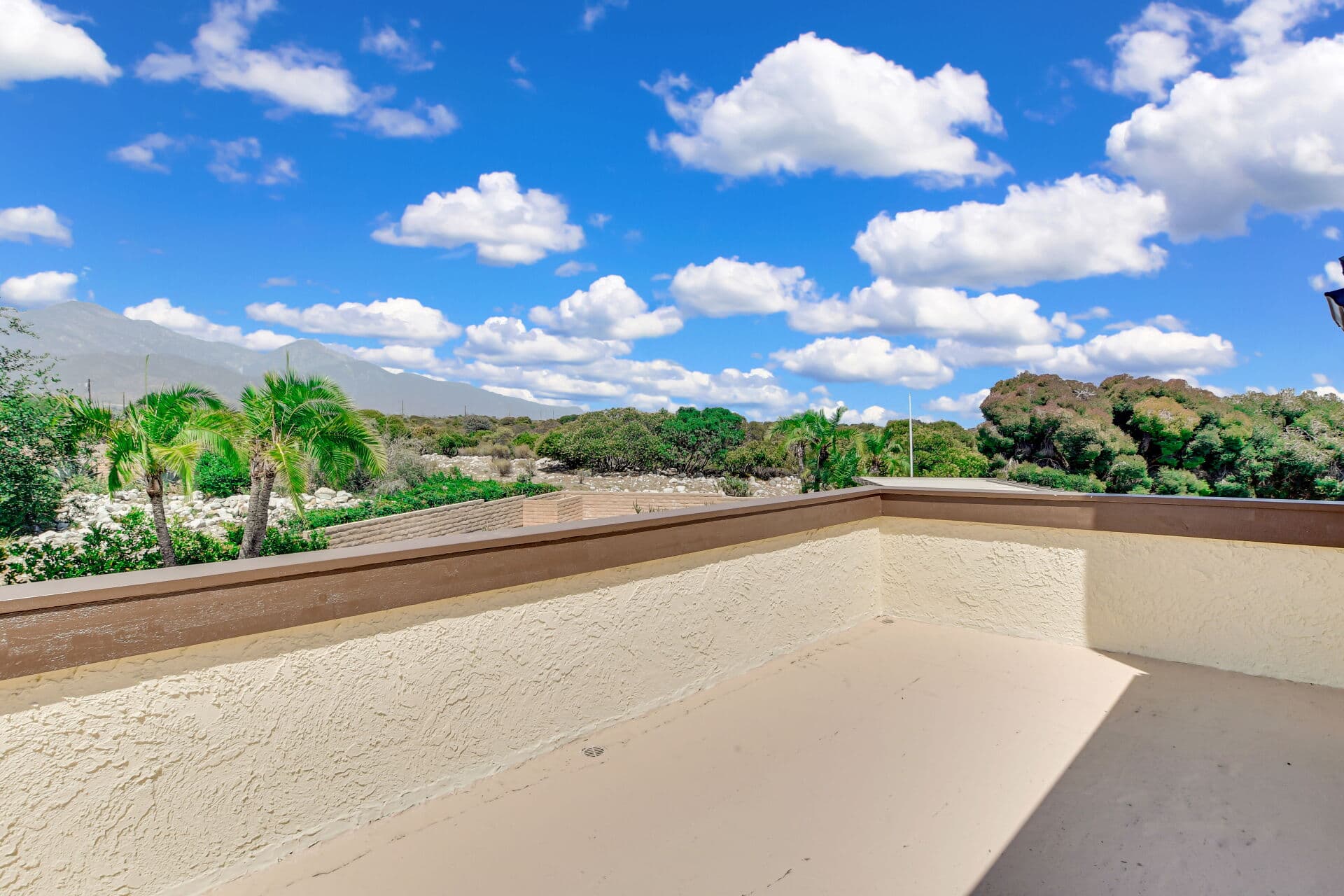
In this climate, the yard is the second room, and the connection between them is what decides whether you can host twenty or forty.
Look for a wide opening rather than a single door, a level or nearly level transition, and a shaded outdoor area that is usable in the middle of a warm afternoon. Shade is the real constraint here, not space. A large patio with no shade is unusable for several hours a day for much of the year, and the outdoor calendar in this valley is discussed in patio weather and Claremont's calendar.
Mature trees are worth more than a pergola, and they are the one feature you cannot install. Older neighborhoods with an established canopy have a hosting advantage that newer construction takes decades to match.
Staging, and the second refrigerator
The unglamorous heart of hosting is having somewhere to put things.
A garage that can be reached from the kitchen without going through the party is worth an enormous amount on the day. So is a laundry room, a butler's pantry, a covered side yard, or any secondary counter out of the sightline. A second refrigerator or a chest freezer, most often in the garage, is close to standard equipment for households that host, and the useful question at a showing is simply whether there is a place for one with power nearby.
If you plan to bring in outside help - a caterer, a taco cart, anyone cooking on site - they need three things: a route in that does not cross the guests, a place to work, and access to power and water. Verify all three exist before you assume the house can accommodate it, and confirm with the operator what they require rather than guessing.
What the neighborhood expects
Hosting has a social dimension that is easy to overlook until it bites.
Cities have noise ordinances with defined quiet hours, and they apply to private homes. Some communities have an association with its own rules on guest parking, amplified sound and event frequency, which are worth reading BEFORE you buy if you host regularly. And a good neighbor tells the two houses either side when a large gathering is coming, which costs nothing and prevents almost every complaint.
If a home sits near a commercial or mixed-use edge, the permitted uses and conditions on nearby parcels are public and worth pulling for other reasons too - the method is in what public records say about the storefront next door.
The alternative worth considering
Some households conclude, correctly, that they do not want a house built around four events a year.
The alternative is to buy the house that suits your ordinary life and host the big gatherings somewhere else, or to host smaller and more often. In a walkable district, a group can eat out and return, which turns a home into the gathering point rather than the kitchen. That pattern is the whole subject of hosting out-of-town guests without a guest room, and it is a legitimate strategy rather than a compromise.
The mistake is buying a large formal dining room for a holiday you host twice, and then living the other three hundred and sixty three days around it.
The showing checklist
- Count legal curb spaces on the block, and check the posted restrictions.
- Measure driveway depth, not just width.
- Walk the ground floor loop carrying an imaginary plate.
- Find the staging space, and the place a second refrigerator would live.
- Stand in the yard at midday and look for shade.
- Check the association rules and the local quiet hours.
Six items, ten minutes, and they will tell you more about whether you can host in that house than any listing photograph.
The rest of the series is at the Claremont restaurants hub. For anything about current vendors, permits or rules, confirm directly with the city and the providers themselves.
Anthony Grynchal has been licensed in California since November 2009.
Frequently asked questions
What limits how many people I can host at home?
Usually parking first, then circulation, then somewhere to stage food and mess out of sight. Kitchen size matters less than people expect, and street conditions matter far more.
Do I need permission to host a large gathering at a private home?
Ordinary private gatherings generally do not require a permit, but noise ordinances apply and any homeowners association may have rules on guest parking, amplified sound and event frequency. Read those rules before buying if you host often.
What makes a yard good for entertaining here?
Shade, above all. A patio with no shade is unusable through the middle of a warm afternoon. Mature trees are worth more than built structures and are the one thing you cannot add quickly.
Is a formal dining room worth paying for?
Only if you will actually use it. Many households are better served buying for their ordinary life and hosting large groups elsewhere, or hosting smaller gatherings more often in a walkable area.

Written by
Anthony Grynchal
Anthony Grynchal is a California real estate professional with eXp Realty, licensed since November 2009 (California DRE# 01873626), and the Designated Local Expert™ for Claremont — where he has lived for more than 33 years.
More about AnthonyPublished · Updated