The most common disappointment in a Claremont appraisal has nothing to do with comparable sales or the state of the market. It is a homeowner who spent real money on a kitchen, a bathroom, a pool or a whole-house renovation, and then found the report treating that work as worth considerably less than the invoices.
The concept doing the work here is CONTRIBUTORY VALUE, and it is the single most useful appraisal idea a homeowner can learn. It is also the one that most reliably changes how people spend money on a house they intend to sell.
This article explains what contributory value is, why cost and value are different quantities, and which categories of work tend to hold up. It extends the guide to what decides the number. Standing frame: this is general information, no outcome is predicted for any particular property, and an appraiser's judgment on a specific house governs that house.
Cost, price and value are three different things
Cost is what you paid to have something built. Price is what somebody paid in a particular transaction. Value is an opinion of what a property would likely bring under defined conditions.
Contributory value is the amount a specific feature adds to the value of the WHOLE property. Not what it cost. Not what it would cost to build today. What the market pays for the house with it, minus what the market would pay for the same house without it.
Stated that way, the reason a remodel rarely returns its cost becomes obvious. Buyers are not shopping for kitchens. They are shopping for houses, and they pay a premium for a better one, but the premium reflects what the market will bear for that house on that street, not the sum of the receipts.
How an appraiser actually measures it
Not by looking at invoices. The primary method is paired sales analysis: find transactions that are alike in most respects and differ in the feature being valued, and read the difference in what the market paid. Do that across enough pairs and a defensible adjustment emerges.
The trouble in Claremont is supply. Paired sales analysis needs pairs, and a town with low turnover and genuinely varied housing stock does not produce them on demand. That is the problem described in the low-turnover comps guide, and it is why two competent appraisers can support different adjustments for the same feature and both be reasonable.
Where paired sales fail, an appraiser may reason from cost with depreciation applied, or from what the market pays for the overall condition and quality level rather than for the itemized components. Those grades are the subject of the condition and quality ratings guide, and in practice a lot of renovation work is credited through them rather than as a line item.
The categories that behave differently
Some patterns are stable enough to be worth stating, without attaching numbers to any of them.
Maintenance and systems. A roof, a re-pipe, a panel upgrade, a sewer line, a furnace. These rarely appear as a positive adjustment, because a functioning roof is the baseline expectation rather than a feature. What they do is prevent a condition rating from sliding and prevent a lender-required repair. Money spent here is defensive, and defensive money is not wasted money.
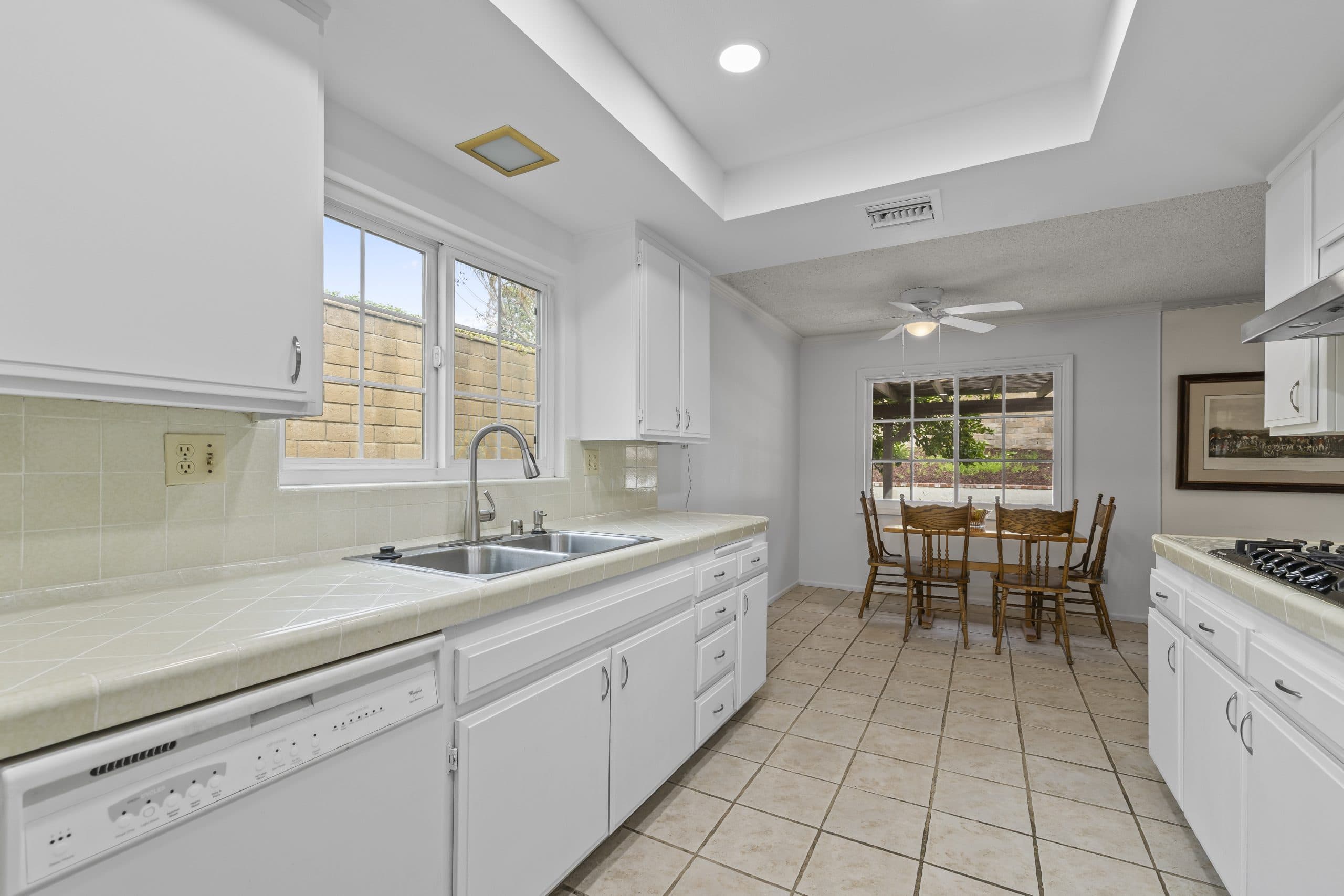
Kitchens and baths. These move condition, and condition moves value. What does not translate is spending far past the level of finish the street supports. A Claremont bungalow finished to the standard of a custom foothill home is not competing with foothill homes; it is a bungalow with an expensive kitchen.
Added living area. Generally the strongest performer, because it changes the fundamental comparison. But only if it counts, and counting depends on being permitted, finished to the standard of the main house, accessed conventionally and measured as living area. Space that fails those tests is treated separately or discounted heavily, which is the subject of the unpermitted space guide. How living area gets measured at all sits in the square footage guide.
Pools, hardscape and landscaping. Highly market-dependent. These typically contribute something, and typically much less than they cost, because a portion of the buyer pool actively does not want the maintenance.
Solar, batteries and EV charging. The treatment depends heavily on ownership structure, which is a large enough subject to have its own place in the cluster.
Personal taste. Wine rooms, elaborate built-ins, unusual finishes. Sometimes they contribute. Sometimes they narrow the buyer pool. Neither outcome is predictable in advance.
Over-improvement is a real thing
There is a ceiling in every neighborhood, and past it additional spending stops converting. Appraisers describe this as functional obsolescence caused by over-improvement, and it is not a moral judgment. If you renovate for your own enjoyment over a long tenure, the arithmetic is different and the pleasure is the return.
What causes real distress is renovating shortly before a sale on the assumption that the spending will be recovered. That is the moment to get a candid market read first, which is exactly what a comparative market analysis is for.
What to do with this before you list
Document everything. Work that cannot be seen cannot be credited, and an appraiser walking a house has no way to know the walls were re-piped or the foundation was retrofitted. Dated invoices and permits, assembled in one file and handed over as information. The preparation guide covers building it.
Then set expectations honestly. Being told in advance that a renovation is unlikely to be credited at cost is far better received than discovering it in a report during escrow.
Roles, stated plainly: Mr. Claremont is a licensed real estate salesperson, not a licensed appraiser. He prepares a comparative market analysis, a broker's opinion of value used for pricing and negotiation, and coordinates independent, state-licensed appraisers when a formal appraisal is needed for lending, estate or legal purposes. He does not perform appraisals, does not set adjustments, and cannot influence an appraiser's conclusion. The distinction between the two documents is covered in the appraisal versus CMA guide.
Start at the appraisal hub for the full cluster, and read the pre-listing appraisal guide next if you are weighing a substantial renovation before a sale. Anthony Grynchal has been licensed in California since November 2009. This is general information, not appraisal, lending or investment advice.
Frequently asked questions
Why did my remodel not add what it cost?
Because appraisers measure contributory value, meaning what the feature adds to the value of the whole property, rather than what the work cost to perform. That amount is drawn from what the market has paid for comparable homes with and without the feature. Cost and value are separate quantities and they routinely differ.
Which improvements tend to hold their value best?
Permitted, properly finished additional living area generally performs most strongly because it changes the fundamental comparison. Maintenance and system replacements usually work defensively, protecting the condition rating rather than adding a line item. Highly personal finishes and amenities with ongoing maintenance costs are the least predictable.
Will the appraiser credit work I cannot show?
Not reliably. Work hidden behind finished surfaces, such as a re-pipe, a sewer line or a foundation retrofit, is invisible on inspection day. Dated invoices and permit records supplied as factual information are how that work becomes visible to the analysis. Supplying facts is permitted; requesting a value is not.
Can Mr. Claremont tell me what my upgrades are worth?
He can prepare a comparative market analysis, which is a broker's opinion of value used for pricing and negotiation, and give a candid read on how the market has treated similar work. He is not a licensed appraiser, does not perform appraisals, and coordinates independent, state-licensed appraisers when a formal appraisal is required.

Written by
Anthony Grynchal
Anthony Grynchal is a California real estate professional with eXp Realty, licensed since November 2009 (California DRE# 01873626), and the Designated Local Expert™ for Claremont — where he has lived for more than 33 years.
More about AnthonyPublished · Updated