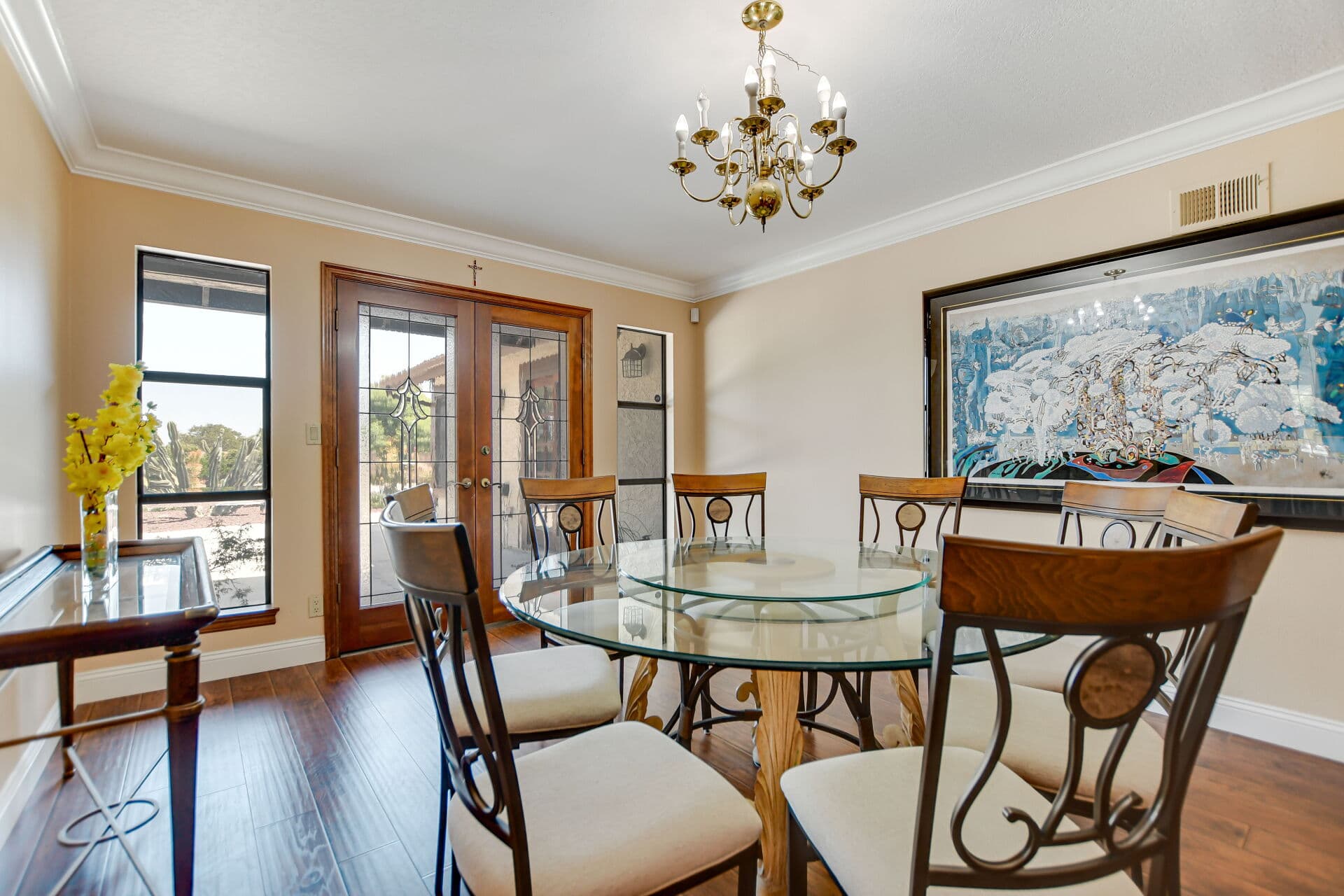
A house in Claremont is on the market. The deed carries one name. The two people getting divorced both assume, for opposite reasons, that this settles something.
It generally does not settle as much as either of them thinks, and the gap between what a deed says and what a family court concludes is one of the most common surprises in this whole area.
Let me set the boundaries before going further. Characterising property, which is what family lawyers call the question of whose it is, is legal work. It depends on facts, documents, dates, and California statutes and case law that an agent has no business interpreting. I do not tell either party what their interest is, I do not form a private view about it, and I will not run a listing in a way that advantages one of them. Both parties receive the same information at the same time. Take the characterisation question to a family law attorney, and take the tax side to a CPA.
Title and character are different questions
Title is a recording question: whose name is on the document at the county. Character, in California family law, is the question of whether an asset is community property, separate property, or some combination.
Those two questions are related but they are not the same, and the second is decided under California's community property framework rather than by reading the deed alone. The framework is sketched in Who Gets the House? California Community Property in Claremont, and it is worth reading precisely because it explains why the recorded name is a starting point rather than an ending.
What that means in practice is that a spouse whose name is not on the deed may nonetheless have a claim, and a spouse whose name is on the deed alone may find that the property, or some part of its value, is treated as shared. Whether any of that is true in a particular case is genuinely and entirely a legal determination.
How homes end up in one name
The reasons are usually mundane rather than sinister, and I mention them only to make clear that a one-name deed is not by itself evidence of anything.
- The property was bought before the marriage.
- It was inherited or received as a gift.
- One spouse's credit made the loan work and the escrow was papered accordingly.
- A lender required a particular vesting.
- A refinance changed the vesting and nobody thought about it afterwards.
- Someone signed a document at a closing without understanding what it did.
That last one is more common than people expect. Interspousal transfer documents get signed at refinances routinely, sometimes with very little explanation. What such a document did or did not accomplish is exactly the sort of thing an attorney examines rather than something to be reasoned out from memory.
What it means for actually listing the house
Here the practical questions become sharper, and they arrive early.
Escrow and title companies care about who has authority to convey. If a non-titled spouse may have an interest, a title company may want that addressed before it will insure. The mechanism is usually paperwork obtained through counsel, and the important thing is that it is identified at the start rather than three days before a scheduled closing.
There is also the question of whether a sale can proceed at all right now. In California dissolution proceedings, standard restraining orders take effect and constrain what can be done with property. Those apply regardless of whose name is on the deed, and they are covered in Automatic Restraining Orders and Your Claremont Home Sale. This is not a formality to work around. It is a thing to confirm with counsel before doing anything.
The conversation that tends to go badly
The predictable friction is a titled spouse saying the house is theirs and a non-titled spouse saying it is not, each of them sincere.
I stay out of that entirely, and I say so out loud at the first meeting. It is not diplomacy. It is the only defensible position: I am not qualified to characterise property, an agent's opinion has no legal weight, and offering one would compromise the neutrality that makes it possible to serve both people at once. The reasoning behind that stance is set out in Choosing a Neutral Realtor for a Claremont Divorce Sale.
What I will do is describe the property accurately, market it properly, communicate identically with both parties and their counsel, and let the ownership question be resolved by the people whose job it is.
Documents worth gathering early
Whatever the eventual answer, the same paperwork tends to matter, and collecting it early costs nothing.
The deed and any subsequent recorded documents. Closing statements from the original purchase and any refinance. Loan documents. Records of who paid the down payment and from what source. Records of significant improvements and how they were funded. Anything signed at a refinance.
Give that material to counsel and let them work. It is often the paperwork rather than anyone's recollection that decides how the question resolves.
Where to go next
Start with an attorney. Then, when the property side is ready to move, the broader process is at the Claremont divorce sales hub, and the practical overview is Selling a House During Divorce in Claremont: The Basics. There is no deadline in this article and none from me. Anthony Grynchal has been licensed in California since November 2009.
Frequently asked questions
The deed has only my name, so is the Claremont house mine?
Not necessarily. Title is a recording question; whether property is community or separate is decided under California's community property framework and depends on facts and documents. Only a family law attorney can characterise it, and an agent should not offer a view.
Can a home titled in one name be sold during a divorce?
That depends on the standard restraining orders in effect and on any other orders in your case, and a title company may want a potential interest addressed before insuring. Confirm with counsel and raise it with escrow at the start, not near closing.
What is an interspousal transfer deed and did I give up my interest?
It is a document that transfers an interest between spouses, often signed during a refinance. What a specific one accomplished depends on its wording and the surrounding circumstances, and it is a question for your attorney rather than one to reason out from memory.
Will the agent take a position on who owns the house?
No. Characterising property is legal work, an agent's opinion carries no legal weight, and offering one would destroy the neutrality that lets a single agent serve both parties. Both sides get the same information at the same time.

Written by
Anthony Grynchal
Anthony Grynchal is a California real estate professional with eXp Realty, licensed since November 2009 (California DRE# 01873626), and the Designated Local Expert™ for Claremont — where he has lived for more than 33 years.
More about AnthonyPublished · Updated