
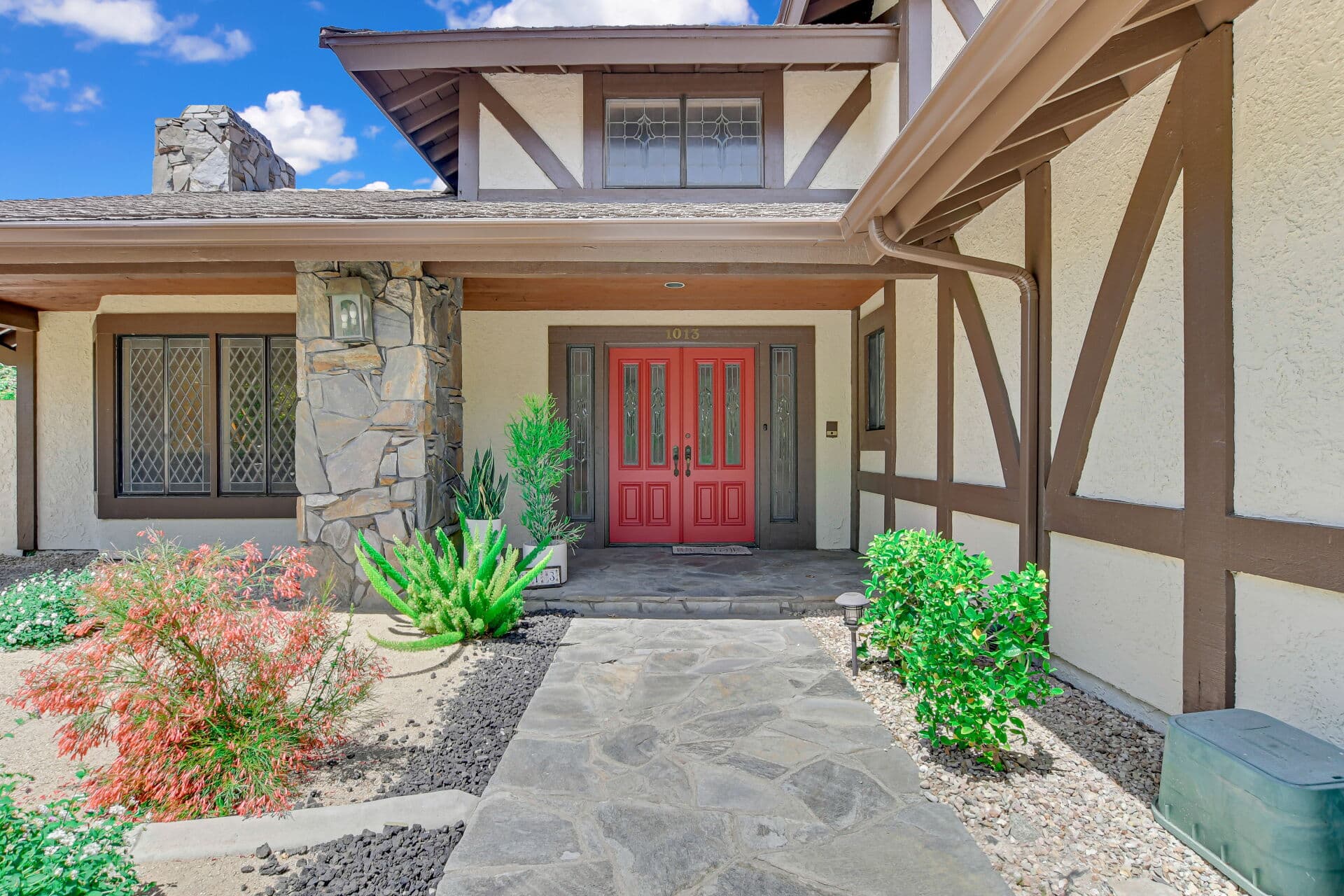
The quiet problem with insuring a period home is that a standard homeowner's policy is designed to rebuild a STANDARD house. It calculates a replacement cost from square footage and ordinary construction, and that arithmetic has very little to do with what it would actually take to rebuild a 1920s Craftsman with its millwork, its plaster, its divided-light windows, and its craftsmanship — or with what a city would require of that rebuild today. The gap between those two numbers is invisible until a claim, which is exactly when it is impossible to fix. This article covers the concepts that close it. It deepens the historic homes guide and the bungalow guide, and borrows the standing frame of the insurance guide: this is general information, coverage names and availability vary by carrier and change, and your own broker and policy documents govern. In California's hardened market the sequencing rule from that guide applies with extra force — quote early, before you are committed.
Where the gap comes from
Three separate shortfalls stack on a historic home. REPLACEMENT-COST ESTIMATION: automated valuation tools price ordinary construction. Hand-run millwork, plaster over lath, period-appropriate windows, tile, and the skilled trades that can execute them are neither ordinary nor cheap, and a policy limit built from a generic calculator can be well short of what the rebuild would cost. ORDINANCE OR LAW: this is the one owners most often have never heard of. When a damaged building is repaired or rebuilt, current codes generally apply — so the rebuild may require upgrades the original never had (electrical, seismic, energy, accessibility in some cases), and the cost of complying with those codes is frequently EXCLUDED or sharply limited under a standard policy. Ordinance-or-law coverage is the endorsement that addresses it, and on an older home it is arguably the single most important coverage conversation there is. AND THE PRESERVATION LAYER: where a property is designated or under a preservation contract like the Mills Act, a rebuild may be required to match historic character rather than simply restore function — which is a further cost a standard policy has no reason to anticipate.
The coverage concepts worth asking about
Discuss these by name with a broker who writes older homes; the labels vary by carrier, the ideas do not. GUARANTEED OR EXTENDED REPLACEMENT COST: coverage that goes beyond the stated dwelling limit, which matters precisely because the limit is the number most likely to be wrong on a period home. ORDINANCE OR LAW COVERAGE, in meaningful amounts, per the above. HISTORIC OR RESTORATION-COST provisions where a carrier offers them: coverage contemplating restoration to historic character rather than generic replacement — genuinely specialist, and not universally available. FUNCTIONAL REPLACEMENT COST, which is the honest alternative in the other direction: coverage to rebuild with modern equivalent materials rather than period reproductions. It is cheaper and it is a real choice, but an owner should make it knowingly rather than discover it in a claim. ADEQUATE LIMITS ON OTHER STRUCTURES AND CONTENTS. And the whole conversation should be informed by an ACCURATE VALUATION of the rebuild: a contractor or a replacement-cost specialist familiar with period construction gives a far better number than a calculator, and that number is what the policy should be built around. Note the California context the non-renewal guide describes: the market has tightened, older homes and foothill-adjacent locations draw more scrutiny, and the documented-condition file — roof age, electrical updates, plumbing, defensible space — is what keeps a property insurable at all.
Practical steps for owners and buyers
OWNERS: request a coverage review specifically framed around this problem, ask directly whether your dwelling limit reflects period construction, ask what your ordinance-or-law coverage actually is, and keep the documentation file current — it serves the insurance conversation, the appraisal, and eventually the sale. Photograph and document distinctive features while they are intact; a claim is much easier to prove with a record of what existed. BUYERS: get insurance quotes DURING the investigation period, not after closing, because on an older or foothill-adjacent Claremont home the answer can materially change your monthly cost or, occasionally, your willingness to proceed — the buying guide's insistence on modelling true cost of ownership is exactly this. Ask the seller what they currently pay and with whom, as a starting data point rather than a promise. AND EVERYONE: treat the rebuild question as the real one. The purpose of insuring a historic home is not to receive a cheque; it is to be able to put back a building that cannot be bought again — and that outcome depends on decisions made at policy time, not at claim time. This is general information, not insurance advice; your broker, your carrier, and your policy documents govern.
Anthony Grynchal has been licensed in California since November 2009 and asks buyers of period homes one question early: have you priced the insurance yet? On this housing stock it is the number most likely to move, and the one most often left until last.
Frequently asked questions
Why are historic homes underinsured by default?
Because standard replacement-cost estimation prices ordinary construction. Hand-run millwork, plaster over lath, period windows, and the skilled trades that execute them are neither ordinary nor cheap, so a limit generated by a generic calculator can fall well short of what the rebuild would actually cost.
What is ordinance or law coverage?
Coverage for the cost of complying with current building codes when a damaged building is repaired or rebuilt — upgrades the original never had, such as electrical, seismic, or energy requirements. Standard policies frequently exclude or sharply limit it, which makes it arguably the most important coverage conversation on an older home.
What coverage should I ask about for a period home?
By concept rather than label: guaranteed or extended replacement cost, meaningful ordinance-or-law limits, historic or restoration-cost provisions where a carrier offers them, and adequate other-structures and contents limits. Functional replacement cost — rebuilding with modern equivalents — is a legitimate cheaper choice if made knowingly.
When should a buyer get insurance quotes on an older home?
During the investigation period, never after closing. On an older or foothill-adjacent Claremont home the quote can materially change your monthly cost or occasionally your willingness to proceed, and California's tightened market gives older properties more scrutiny.

Written by
Anthony Grynchal
Anthony Grynchal is a California real estate professional with eXp Realty, licensed since November 2009 (California DRE# 01873626), and the Designated Local Expert™ for Claremont — where he has lived for more than 33 years.
More about AnthonyPublished · Updated