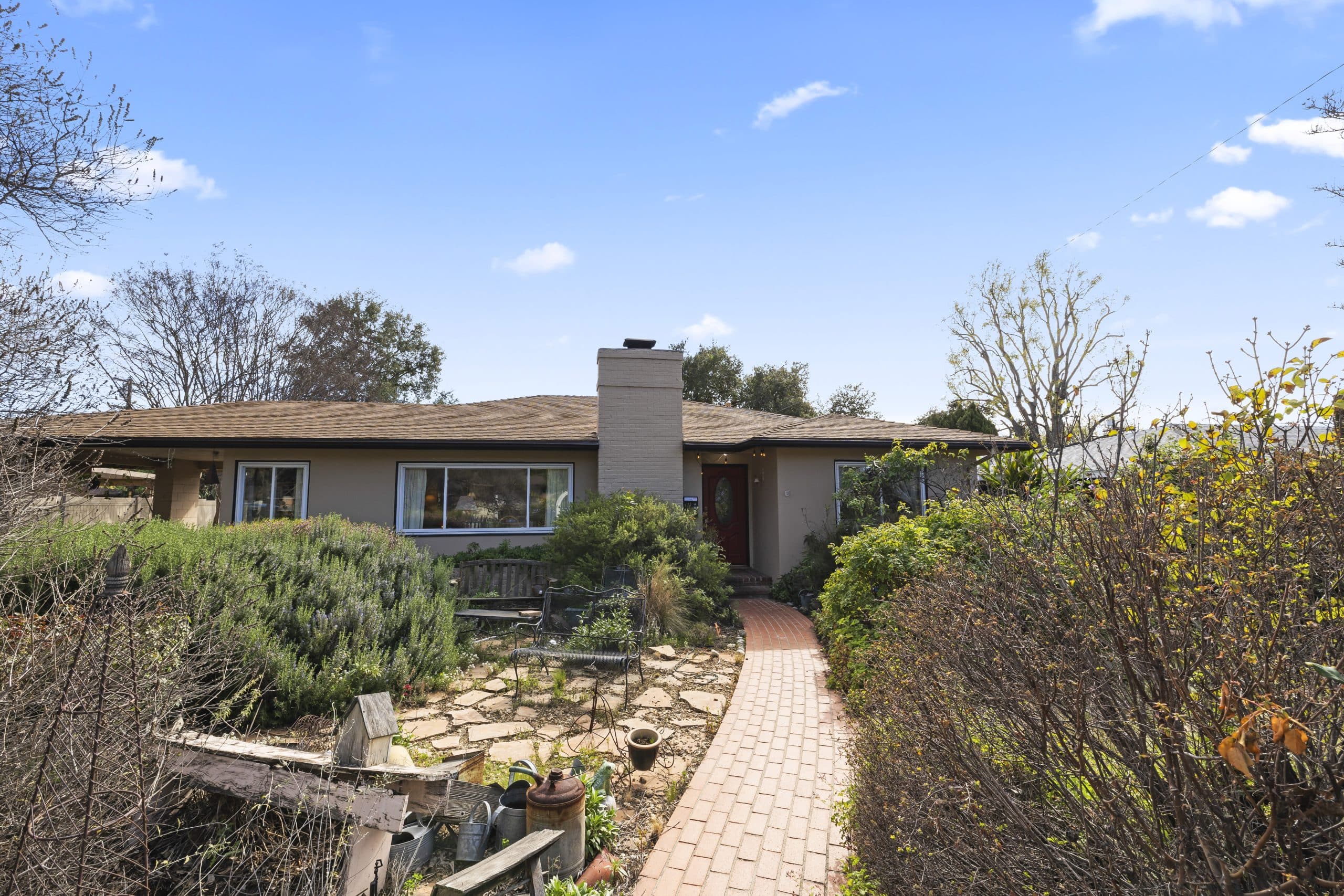
An older Claremont house sells on its character. It gets underwritten on its systems. Those are two different conversations about the same building, and owners are frequently surprised that a carrier has no interest in the fireplace, the millwork or the mature planting, and a great deal of interest in a panel in the garage.
The logic is not aesthetic. Insurance prices the probability of a loss, and in a house that has been standing for decades the most reliable predictors of loss are the systems that carry electricity and water. This article extends the insurance guide. It is written by a real estate professional, not an insurance broker, an electrician, a plumber or an adjuster. Whether any particular property is insurable, what a carrier will accept and what work would be required are questions for a licensed insurance professional and the relevant licensed trade, and consumer questions can be taken to the California Department of Insurance.
The four questions
THE WIRING. What the branch wiring is made of and how it is run. Older methods and materials, and any wiring that has been extended or modified without permit over the decades, raise questions. So does the visible state of the work in an attic or a crawlspace, where an underwriting photograph can see it.
THE PANEL. The service capacity and the equipment itself. Certain older panel and breaker equipment has a documented history that underwriting treats seriously, and identifying what a house actually has is an electrician's job rather than an owner's guess.
THE PLUMBING. Supply material and age. Some materials corrode from the inside on a schedule and eventually fail, and a supply failure is a water claim, which is among the most common claims a house produces. The mechanics of what a policy does and does not do with water are in the article on how water damage exclusions work.
THE WATER HEATER AND THE HEATING PLANT. Age, condition, location and, in a seismic region, whether the water heater is strapped. This is the smallest and cheapest item on the list and the one most often left undone.
Why it is systems and not cosmetics
A kitchen renovation does not make a house less likely to burn. Replacing early-era branch wiring does. Underwriting is not judging the house as a place to live; it is estimating how often and how expensively it is likely to fail. The features that make an older Claremont home lovely are largely irrelevant to that estimate, and the features hidden behind plaster are most of it.
There is a second reason, and it is worth naming plainly. Systems questions are ANSWERABLE. A carrier can ask about a panel and receive a document. It cannot easily ask about the general soundness of a house built ninety years ago, so it asks about the parts that produce paperwork.
The documentation is usually the actual problem
This cluster keeps arriving at the same conclusion from different directions, and it holds here. Most system objections are not objections to the system. They are objections to the absence of evidence about it. The owner knows the house was rewired at some point. The file contains nothing that says so. Underwriting reasons conservatively from what it can see, and what it can see is a house of a certain age.
What resolves it is a PROPERTY FILE that lives with the house rather than with the owner: permits pulled, contractor invoices, panel upgrade documentation, repipe paperwork, the water heater's installation record, and dated photographs of work while it was open. A file that transfers at sale is worth considerably more than one that leaves in a moving box.
Where the history is genuinely unknown, an inspection by the appropriate licensed trade produces a professional opinion, which is a far better thing to hand an underwriter than an estimate. It is also information the owner benefits from having regardless of any policy. The broader question of what an underwriting inspection looks at is covered in the article on carrier inspections.
Inside a Claremont transaction
For BUYERS, systems belong in the week-one insurance conversation, not in the final week. If a panel or a plumbing material is going to be a placement obstacle, that is a fact worth having while the inspection period is open and the ordinary negotiating machinery is still available. Run the home inspection and the insurance conversation in parallel and let each inform the other; the sequence is in the article on binding coverage in escrow.
For SELLERS, an older house with undocumented systems is a known variable, not a secret. Assembling the file before listing removes an entire category of mid-escrow friction. And the application questions a buyer's broker will ask are matters of fact, not marketing; a policy issued on inaccurate information is a fragile thing at exactly the moment its owner needs it to be sturdy.
What is worth doing, and what is not
Worth doing: find out what the house actually has, by asking a licensed electrician and a licensed plumber rather than by reading a listing description. Strap the water heater if it is not strapped. Collect and keep the paperwork. Report completed upgrades to the carrier, because an improvement nobody knows about earns nothing.
Not worth doing: guessing at materials in an application, treating a cosmetic refresh as an underwriting answer, or assuming that because a property is currently insured it always will be. Whether upgrading a particular system changes an eligibility outcome is a question only a licensed insurance professional can answer for a specific address, and no article should imply an outcome.
The takeaway
An older Claremont home is not an underwriting problem. An UNDOCUMENTED older home frequently is. Learn what the house actually has, get the trades to say so on paper, keep the file with the property, and raise the systems in week one of an escrow rather than in the last week. Then take every specific about coverage, eligibility and what any policy would pay to the licensed insurance professional and the carrier.
The rebuild-cost side of owning an older house is in the article on ordinance and law coverage. Anthony Grynchal has been licensed in California since November 2009.
Frequently asked questions
What systems do insurance underwriters ask about on an older home?
Typically the branch wiring, the electrical panel and service, the plumbing supply material and age, and the water heater and heating plant. These are the components most closely tied to fire and water losses, and they are the ones that produce documentation.
Why does the electrical panel matter so much?
Certain older panel and breaker equipment has a documented failure history that underwriting treats seriously. Identifying what a house actually has is work for a licensed electrician, not an owner's guess, and what any carrier requires is a question for a licensed insurance professional.
My house was rewired years ago. Does that help?
It helps if you can prove it. Most system objections are really objections to missing evidence. Permits, contractor invoices, upgrade documentation and dated photographs kept with the house are what turn an assumption into a documented fact.
Should a seller upgrade systems before listing?
That is a deliberate decision about the property and the market rather than an insurance rule. What helps in every case is documentation, because a known and evidenced system is a manageable variable while an undocumented one becomes a mid-escrow surprise.
Does having older systems mean a home cannot be insured?
No article can say whether a specific property is insurable. That depends on the property, the carrier and current underwriting guidelines, which change. Take the address and the system details to a licensed insurance broker early in a transaction.

Written by
Anthony Grynchal
Anthony Grynchal is a California real estate professional with eXp Realty, licensed since November 2009 (California DRE# 01873626), and the Designated Local Expert™ for Claremont — where he has lived for more than 33 years.
More about AnthonyPublished · Updated