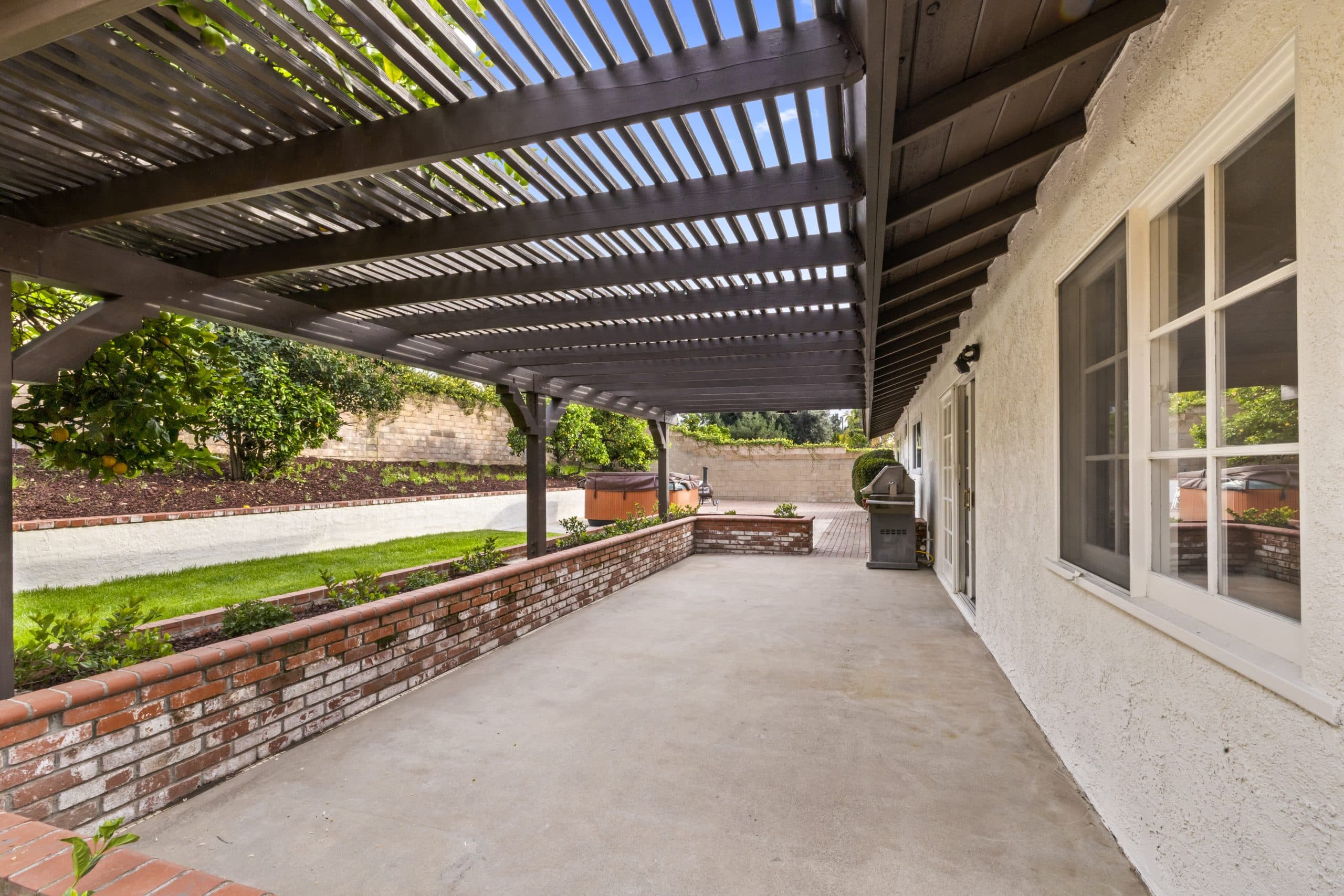
Masonry is the part of a property that looks permanent and is not. Brick planters, block walls, concrete steps, chimney stacks, porch piers and stone veneer all wear, move and eventually need attention, and because they look solid the attention usually arrives late.
The good news is that masonry gives long warning. It cracks, spalls, stains and leans well before it does anything dramatic. Reading those signals is a skill worth having, and this piece extends the Claremont home maintenance guide into the hard surfaces around a house.
The materials, and why they behave differently
Older brick is generally softer and more porous than modern brick, and it was laid with lime-rich mortar that was deliberately weaker than the units it joined. That is not primitive construction; it is the design. Soft mortar lets a wall move and puts any resulting damage into the joint, which is repairable, rather than into the brick, which is not.
Concrete block is dimensionally stable, strong in compression, and dependent on its reinforcement and its footing for anything else. Poured concrete is stronger still and cracks anyway, because concrete always cracks - the question is where, how wide, and whether anything is moving.
Stone and manufactured veneer are cladding, not structure. Their failures are usually about attachment, the drainage plane behind them, and water finding a way in at the top.
The cracks that matter
Not all cracks are equal, and the distinction is mostly about pattern and movement.
Hairline shrinkage cracking in concrete flatwork and thin crazing in a stucco-over-block wall are ordinary. So is a crack that follows a control joint - that is the joint doing its job.
Worth attention: cracks that are wider at one end than the other, cracks that step diagonally through mortar joints, cracks that continue through both the units and the mortar, any displacement where one side sits proud of the other, and any wall that has begun to lean or bulge.
Cracks that pass from a hardscape element into the house, or that appear on a foundation or stem wall, move out of masonry maintenance entirely and into the questions the foundation guide deals with. When in doubt, that is where the doubt belongs.
The single most useful owner habit is monitoring. Photograph a crack with a ruler or a coin in frame, date it, and repeat in a few months. A crack that has not changed is a different animal from one that has, and no amount of staring at it on one afternoon will tell you which it is.
Repointing, and the mistake that damages old brick
When mortar joints erode, crumble or wash out, the repair is repointing - raking out the failed material and replacing it. Done properly it can last for decades.
Done with the wrong mortar it does real harm. Modern high-cement mortar is harder and less permeable than the soft lime mortar in an older wall. Put it into old joints and the wall can no longer move or breathe through the joint, so stress and moisture go into the brick instead. The result is spalled faces - brick surfaces popping off - which is permanent damage in exchange for a repair that was supposed to help.
The principle is simple: the mortar should be softer than the units around it. Matching an existing historic mortar is specialist work, and on an older Claremont home it is worth finding someone who has done it rather than someone who has not.
Sealers, and the same trap
Sealing masonry sounds protective and often is not. A film-forming sealer applied to older brick traps moisture inside the wall, and trapped moisture is the mechanism behind spalling and efflorescence rather than the cure for them.
Efflorescence - the white powdery bloom on brick and block - is dissolved salt left behind as water evaporates out of the masonry. It is a symptom of water moving through the assembly. The productive response is to find the water: a leaking downspout, irrigation spraying the wall, a planter holding soil against masonry, a missing cap on top of a wall. Sealing the face without fixing the source usually makes it worse.
Concrete flatwork is a different case, where breathable penetrating sealers have a legitimate role. Even there, the joints and the drainage matter more than the coating.
Water is the whole story
Almost every masonry failure is a water story with a delay. Wall caps and copings that shed water keep it out of the core. Flashing at the top of a veneer keeps it out of the wall. Weep holes, where present, let it out again - blocking them with sealant is a common and costly mistake.
Outside the wall, the culprits are familiar: downspouts discharging at masonry, irrigation heads throwing against a wall every morning, planters built directly against brick, and grade that has crept up over the years until soil sits above the base. The watering layout in particular is a maintenance decision as much as a landscape one, which is the argument the landscaping guide makes on other grounds.
The seismic dimension, stated plainly
Unreinforced masonry behaves poorly in an earthquake, and Southern California is not a place to be casual about that. Older chimneys, freestanding brick walls, tall garden walls and masonry porch piers deserve a professional look rather than an owner's guess.
This is not a cosmetic judgement and it is not a maintenance task. Evaluation belongs to a licensed contractor experienced with masonry or to a structural engineer, and any strengthening, rebuilding or removal work almost certainly involves permitting, which is a question for the City of Claremont. Chimney specifics have their own considerations in the chimney and fireplace guide.
The bottom line
Masonry warns before it fails. Photograph cracks and date them, watch for widening, stepping and displacement, and treat any lean or bulge as urgent. Fix the water source before you touch the surface. Never point old brick with hard modern mortar, and be sceptical of film-forming sealers. Send structural, chimney and seismic questions to a licensed professional with permitting questions to the City.
The wider inspection habit lives in the owner's guide. This is general information rather than a structural or masonry opinion on your property. Anthony Grynchal has been licensed in California since November 2009.
Frequently asked questions
Which masonry cracks should worry a Claremont homeowner?
Cracks that are wider at one end than the other, that step diagonally through mortar joints, that pass through both the units and the mortar, or that show one side displaced relative to the other. Any wall that leans or bulges deserves immediate professional attention. Hairline shrinkage cracking and cracks following a control joint are generally ordinary.
Why is repointing old brick with modern mortar a problem?
Because older walls were built with soft, lime-rich mortar that is deliberately weaker than the brick, so movement and moisture are absorbed by the repairable joint. Hard modern mortar reverses that: the wall can no longer move or breathe through the joint, so stress goes into the brick faces instead and they spall. The mortar should always be softer than the units.
Should I seal brick or block to protect it?
Be careful. Film-forming sealers on older masonry can trap moisture inside the wall, and trapped moisture is what causes spalling and efflorescence in the first place. The white bloom on a wall is a sign water is moving through it, so the productive step is finding the source such as a downspout, irrigation spray, a planter against the wall or missing coping.
Do I need a permit for masonry work in Claremont?
Often, particularly for anything structural, for chimneys, and for freestanding walls above a certain height. Unreinforced masonry also carries genuine seismic considerations in Southern California, so evaluation belongs to a licensed contractor experienced with masonry or a structural engineer, and permitting questions should go to the City of Claremont before work begins.

Written by
Anthony Grynchal
Anthony Grynchal is a California real estate professional with eXp Realty, licensed since November 2009 (California DRE# 01873626), and the Designated Local Expert™ for Claremont — where he has lived for more than 33 years.
More about AnthonyPublished · Updated